What to Wear Kayak Fishing in Summer: A Sun-Smart Gear Guide
Kayak fishing looks simple from the shore: a small boat, a rod, and a quiet stretch of water. Once you are out there, however, clothing becomes part of your equipment. You sit close to reflective water, have limited space to change layers, and may spend hours paddling, casting, and handling wet gear under an open sky.
The right kayak fishing clothing should help you manage sun, heat, spray, and movement without adding bulk. For summer trips, that usually means lightweight UPF coverage, quick-dry fabric, and a few carefully chosen accessories.
This guide explains what to wear kayak fishing in warm weather and how to build an outfit that stays practical from launch to landing. Start With a UPF 50+ Fishing Hoodie Your upper body receives steady sun exposure while you paddle and fish. The shoulders, arms, neck, and back are especially difficult to protect with sunscreen alone because sweat, water, and repeated movement can wear it away.
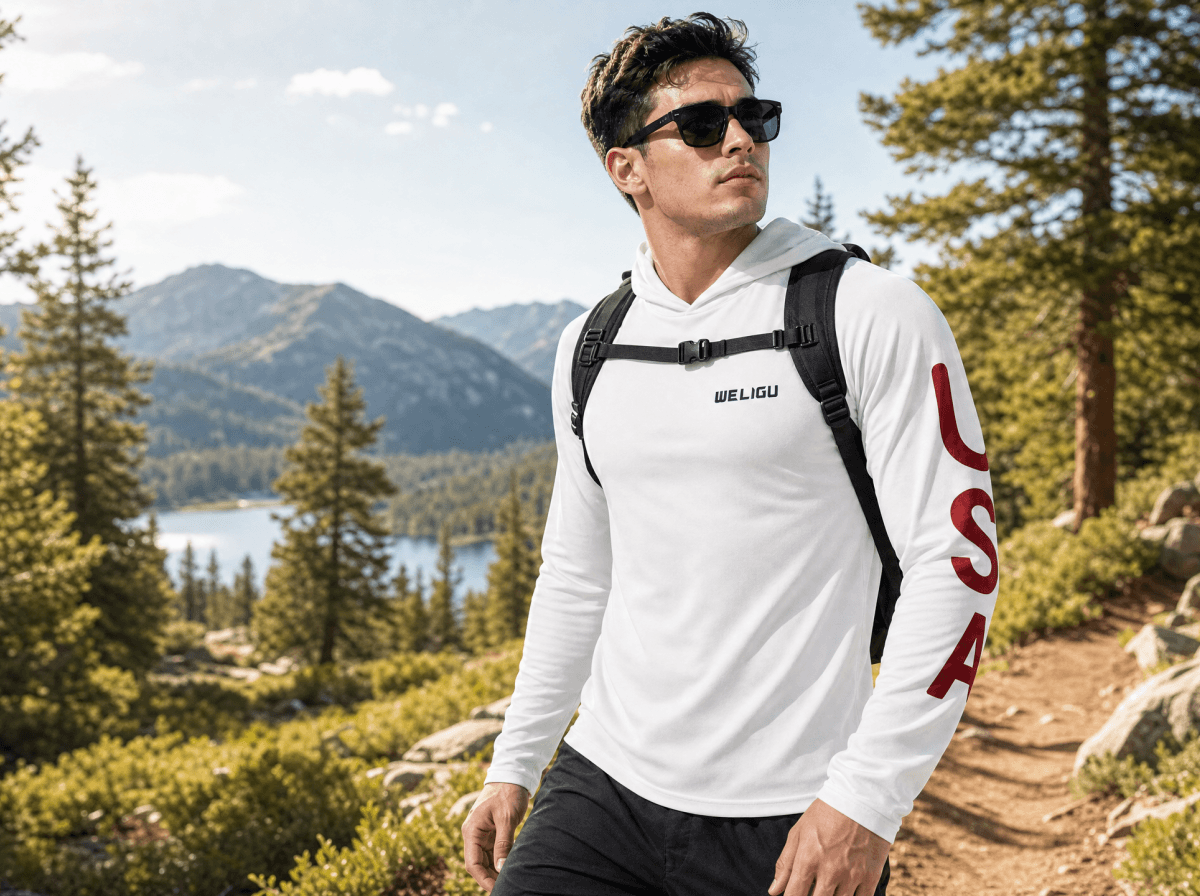
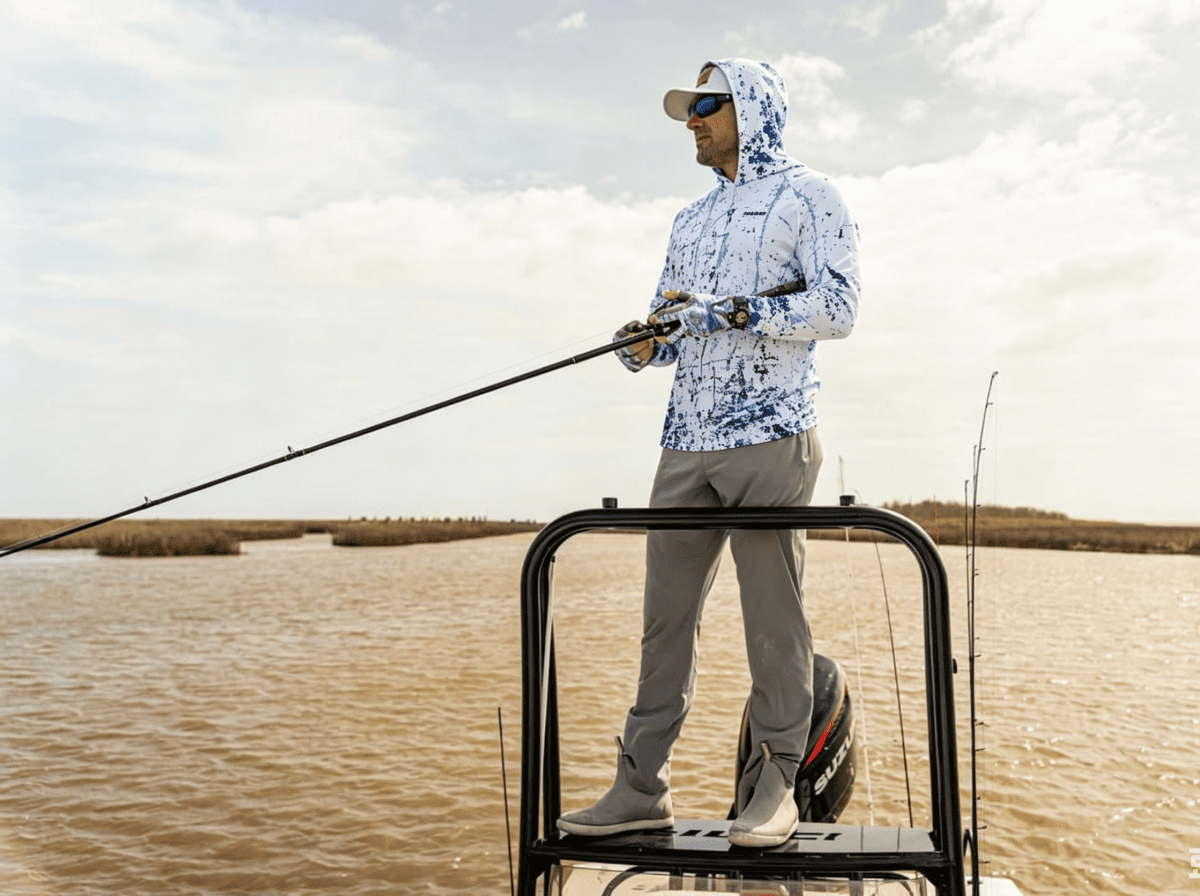
A UPF 50+ fishing hoodie gives these areas a consistent layer of coverage. Unlike a heavy casual hoodie, a summer sun hoodie should be made from lightweight performance fabric. It should feel breathable, move easily through the shoulders, and dry quickly after paddle splash or sweat. The hood is particularly useful in a kayak.
There may be no shade nearby, and wind can make a wide-brim hat awkward. A fitted hood can help cover the neck and ears while allowing you to keep paddling and casting. Look for Coverage That Stays in Place Kayak fishing involves more upper-body movement than many people expect. You paddle, reach behind the seat, lift gear from storage, tie knots, and cast from a seated position.
Loose sleeves can slide up, while a short shirt may expose the lower back when you lean forward. Useful design details include: - Long sleeves with thumb holes - A hood that covers the neck and sides of the face - A comfortable fit through the shoulders - Enough body length for seated movement - Lightweight fabric that does not feel bulky under a life jacket Thumb holes are more than a cosmetic detail.
They help keep sleeves extended over the wrists and part of the hands while paddling or casting. That small amount of extra coverage can be valuable during a full day on the water. Choose Quick-Dry Materials Instead of Cotton Cotton may feel comfortable at the launch, but it holds moisture.
Once wet, it can become heavy, cling to the skin, and take a long time to dry. That is inconvenient on a hot day and potentially uncomfortable when wind picks up. Quick-dry fishing clothing is a better match for kayaking. Performance fabrics are designed to handle sweat and spray without staying waterlogged.
They also make it easier to wash and reuse your gear during multi-day trips. For warm conditions, choose a breathable fishing hoodie or shirt that manages moisture without sacrificing coverage. The goal is not to avoid getting wet.
The goal is to stay comfortable when you do. Wear a Proper Personal Flotation Device A personal flotation device, or PFD, is the most important wearable item in a kayak. Select one designed for paddling so the back panel works with your kayak seat and the arm openings allow a natural paddle stroke.
Your clothing should fit comfortably underneath it. Avoid thick layers or bulky pockets in areas where the PFD straps sit. A lightweight UPF hoodie works well because it adds sun coverage without creating a heavy layer between your body and the flotation device. Always adjust the PFD before launching.
It should feel secure without restricting breathing or shoulder movement. Protect Your Legs and Feet It is easy to focus on the face and arms while forgetting that your legs can remain exposed for hours in a sit-on-top kayak. Lightweight fishing pants provide broader coverage and often dry faster than casual pants.