Article: What to Wear Fishing in Cool Weather: A Practical Guide for Men

What to Wear Fishing in Cool Weather: A Practical Guide for Men
Cool-weather fishing can be some of the best fishing of the year. The water is quieter, popular spots are often less crowded, and you can spend hours outside without dealing with the intense heat of midsummer.
But cooler weather creates a different problem: what should you actually wear?
A chilly morning can turn into a surprisingly warm afternoon. Add wind, spray, shade, and long periods of sitting still, and the temperature you feel on the water can change quickly.
The solution isn't simply to wear the heaviest jacket you own. For most mild-to-cool fishing days, a flexible layering system works much better.
Here's how to build one.
Start With the Conditions, Not the Calendar
October doesn't feel the same everywhere.
A fall morning in Minnesota might require considerably more insulation than an October afternoon along the Gulf Coast. Even within the same area, conditions can change dramatically from one week to another.
Before deciding what to wear, consider four things:
- Air temperature
- Wind
- Chance of rain or spray
- How active you'll be
Wind deserves particular attention. A temperature that feels comfortable on land can feel noticeably colder once you're standing on an exposed shoreline or moving across the water in a boat.
That's why versatile layers are usually more useful than one extremely heavy piece.
Build Around a Lightweight Base Layer
The layer closest to your body has an important job: keeping you comfortable as your activity level changes.
Traditional heavy cotton shirts can become uncomfortable once they absorb sweat or moisture. A lightweight performance shirt is often more practical when you're moving between cool and warmer conditions.
Look for something breathable that doesn't feel bulky underneath another layer.
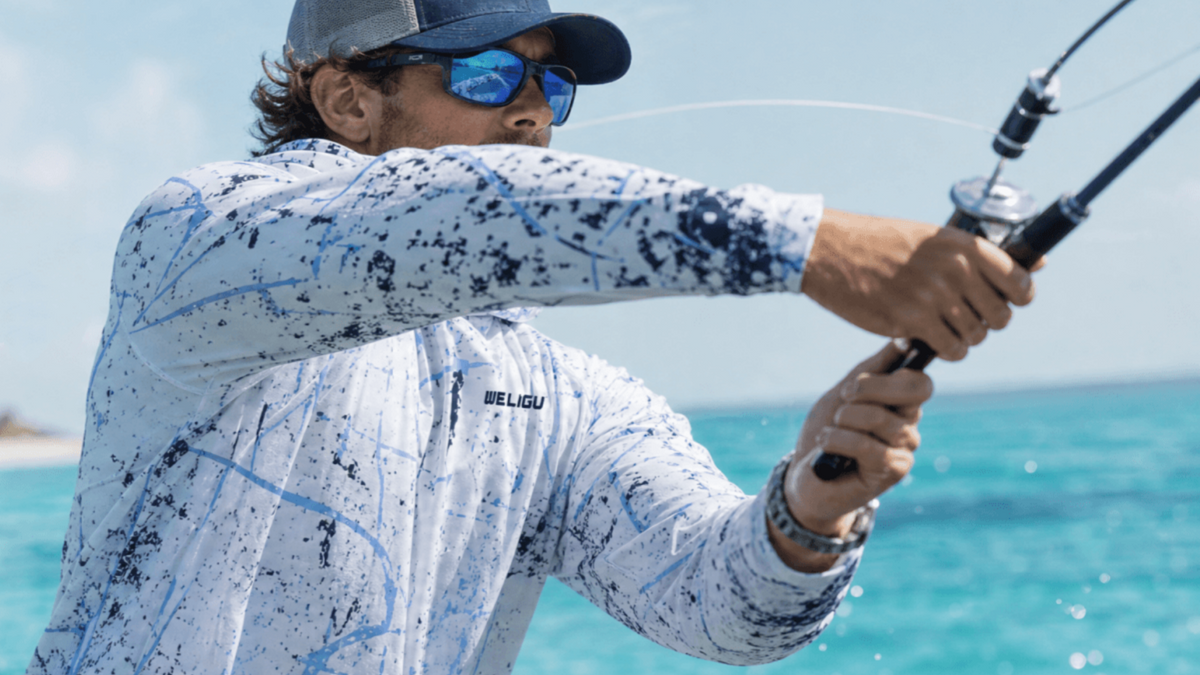
A lightweight performance fishing shirt can work particularly well because you can wear it alone when temperatures rise or keep it underneath an outer layer when the morning is cool.
This flexibility matters more than maximum warmth on many transitional-weather fishing days.
Long Sleeves Make Sense in Cooler Conditions
Once temperatures begin dropping, long sleeves become an easy choice.
They provide additional coverage without necessarily requiring a heavy garment. They're also useful when you're exposed to wind or spending long periods in open areas.
But don't automatically assume thicker means better.
If you're casting repeatedly, paddling, walking the shoreline, or moving around a boat, your body will generate heat. An overly heavy shirt can quickly become uncomfortable.
A lightweight long-sleeve top gives you coverage while leaving room to add insulation when conditions actually require it.
Add a Mid Layer When the Morning Is Cold
On genuinely cool mornings, your performance shirt can become the foundation rather than the entire outfit.
Add a fleece, light sweatshirt, vest, or similar insulating layer over it.
The advantage of this approach becomes obvious later in the day.
When the temperature rises, you can remove the mid layer instead of being stuck in a heavy shirt for the rest of the trip.
A simple system might look like:
Base: Lightweight long-sleeve performance shirt
Mid layer: Light fleece or sweatshirt
Outer layer: Wind or rain shell when necessary
You don't need every layer on every trip.
The point is having options.
Don't Underestimate Wind on the Water
Temperature forecasts can be misleading when you're fishing.
A 60°F afternoon with calm conditions can feel comfortable. The same temperature with persistent wind across open water can feel very different.
This becomes especially noticeable when you're boating.
Even if the air temperature seems mild, moving across the water exposes you to continuous airflow. If your clothing is damp at the same time, you may cool down surprisingly quickly.
For windy days, carry a lightweight wind-resistant outer layer.
It doesn't need to be heavily insulated. Its main purpose is to reduce the amount of cold air passing through your clothing.
A Hood Adds Useful Flexibility
A lightweight hood can be particularly useful during transitional weather.
Pull it up during a chilly boat ride or windy morning. Put it down once the sun comes out.
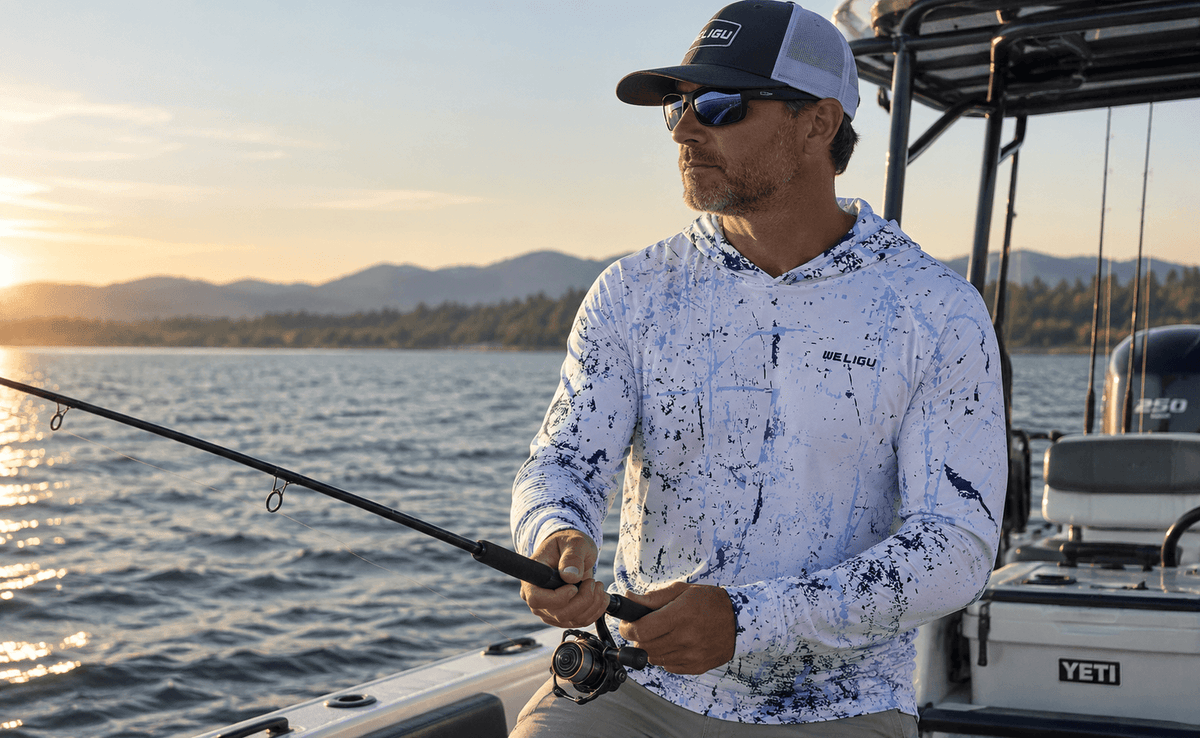
That's one reason a lightweight fishing hoodie can be useful beyond summer.
Unlike a traditional heavyweight sweatshirt, a performance hoodie can provide head and neck coverage without adding substantial insulation.
It can therefore function as a base layer, standalone shirt, or part of a larger layering system depending on the conditions.
Sun Protection Still Matters in Cool Weather
One common mistake is associating sun protection only with hot weather.
Cool air doesn't mean UV exposure has disappeared.
You may still spend several hours in direct sunlight, and water can increase your overall exposure by reflecting sunlight upward.
Long sleeves, hats, sunglasses, and appropriate sunscreen remain useful even when the temperature is comfortable.
If you prefer clothing-based coverage, consider a UPF-rated long-sleeve shirt or hoodie as part of your fishing setup.
That gives you a combination of coverage and lightweight comfort rather than forcing you into heavier clothing simply because the season has changed.
Think About Your Hands, Head, and Feet
Your shirt gets most of the attention, but smaller clothing choices can make a big difference when temperatures fall.
A cap may be enough on a mild afternoon, while colder mornings may call for a beanie.
Your footwear should also match the environment. Wet shoes and socks can make an otherwise comfortable day miserable very quickly.
If you're fishing from shore, consider the ground conditions as well. Mud, wet grass, slippery rocks, and cold surfaces can all affect what footwear makes sense.
Keeping a spare pair of dry socks in your vehicle or boat is a simple habit that can save a trip.
Boat Fishing and Shore Fishing Require Different Thinking
Where you're fishing matters.
Boat Fishing
On a boat, you're more exposed to wind and spray. Temperatures can also feel much colder while the boat is moving.
Bring an additional outer layer even if you don't expect to wear it all day.
Shore Fishing
Shore anglers often move more.
Walking banks, carrying equipment, changing locations, and casting can generate enough heat that heavy clothing becomes uncomfortable.
Lighter layers that can be removed or packed away are usually easier to manage.
Kayak Fishing
Kayak fishing combines physical activity with direct exposure to water and wind.
Breathability becomes particularly important because paddling generates heat even when the surrounding air is cool.
Again, adaptable layers tend to outperform one bulky garment.
Keep an Extra Layer Nearby
One of the easiest ways to prepare for cool-weather fishing doesn't involve buying anything special.
Keep an extra layer in your truck, tackle bag, or boat.
You may never need it.
But weather changes, wind picks up, trips run longer than expected, and clothing gets wet.
Having one additional layer available gives you considerably more flexibility than trying to predict the entire day perfectly before leaving home.
What Should You Wear Fishing in Cool Weather?
For many mild fall and spring fishing days, a practical setup is surprisingly simple:
Start with a lightweight long-sleeve performance shirt. Add a light insulating layer when temperatures require it. Carry a wind or rain shell when conditions are uncertain.
Then adjust throughout the day.
You don't need to dress for the coldest possible scenario from the moment you leave home.
You need clothing that allows you to respond when conditions change.
That's ultimately the advantage of layering.
Instead of asking one shirt to handle every situation, you build a simple system where each piece has a purpose—and remove what you don't need as the day warms up.