How to Stay Cool While Fishing in Hot and Humid Weather
Choose Lightweight UPF 50+ Coverage
It may seem logical to wear as little clothing as possible in heat, but exposed skin creates another problem: prolonged UV exposure. Sunscreen helps, yet sweat, water, and contact with gear can wear it away. Reapplication is also easy to forget when your hands are wet or the fishing becomes active.
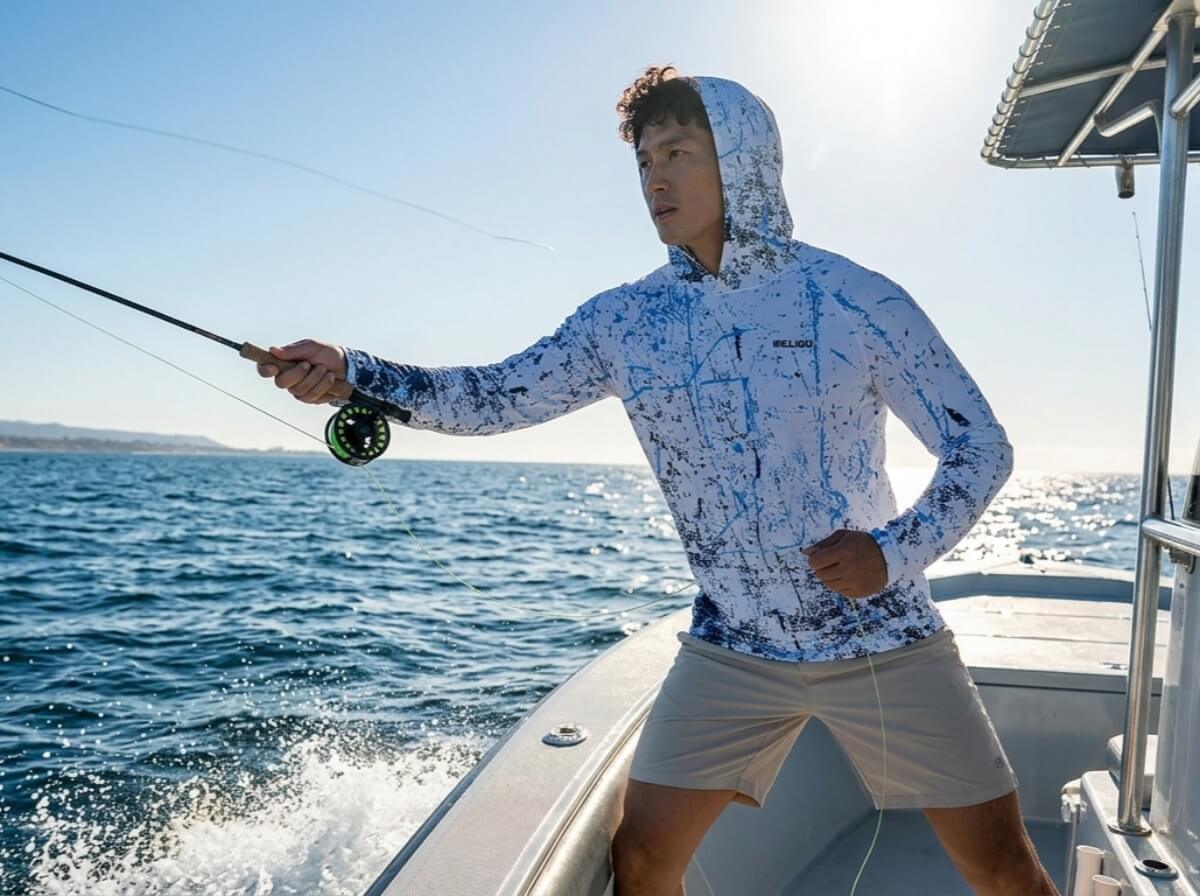
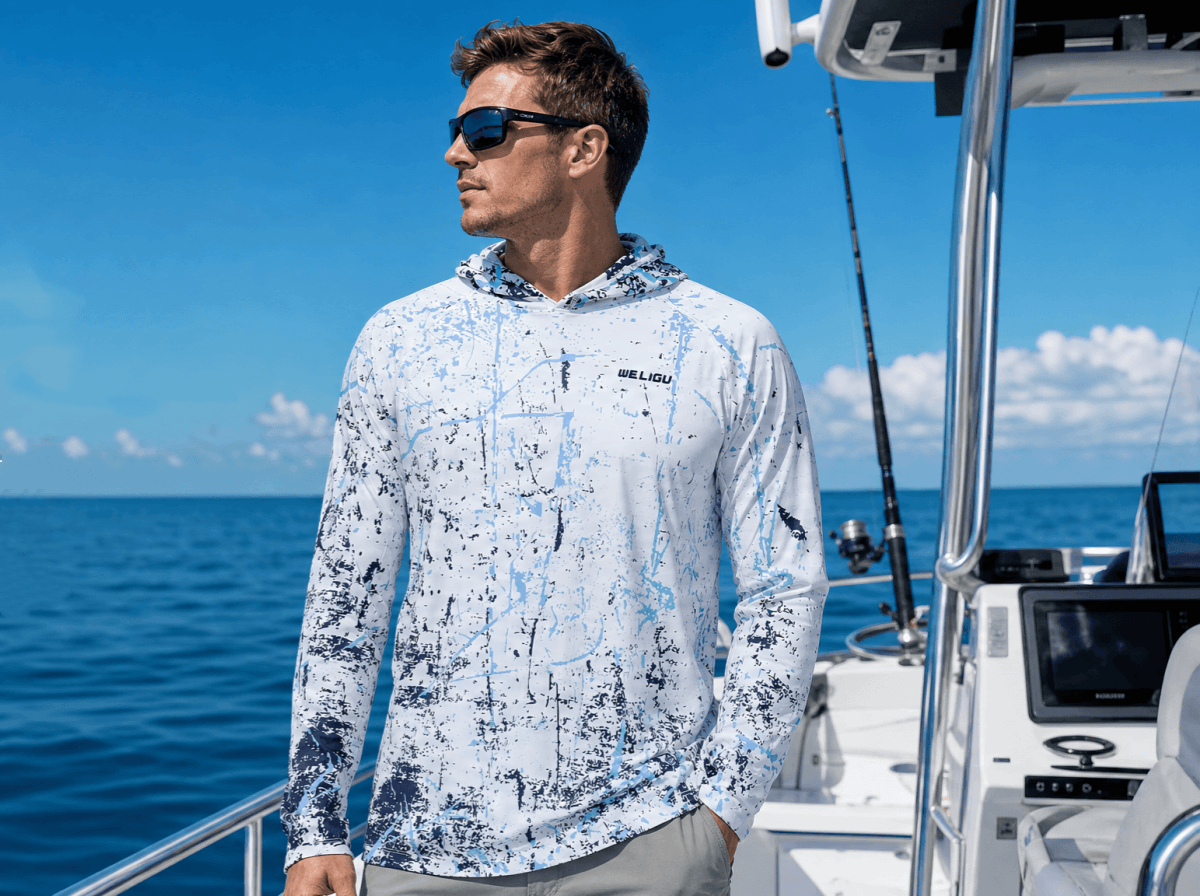
A lightweight UPF 50+ fishing hoodie provides broad coverage over the shoulders, back, arms, neck, and part of the hands. Unlike a casual sweatshirt, a summer sun hoodie should be made from thin performance fabric that allows movement and dries quickly.
The goal is coverage without insulation. Look for a garment that feels light against the skin, does not restrict the shoulders, and fits comfortably beneath a personal flotation device when boating or kayaking.
Useful hot-weather features include:
- A clearly stated UPF 50+ rating
- Breathable, moisture-wicking fabric
- Quick-dry performance after sweat or spray
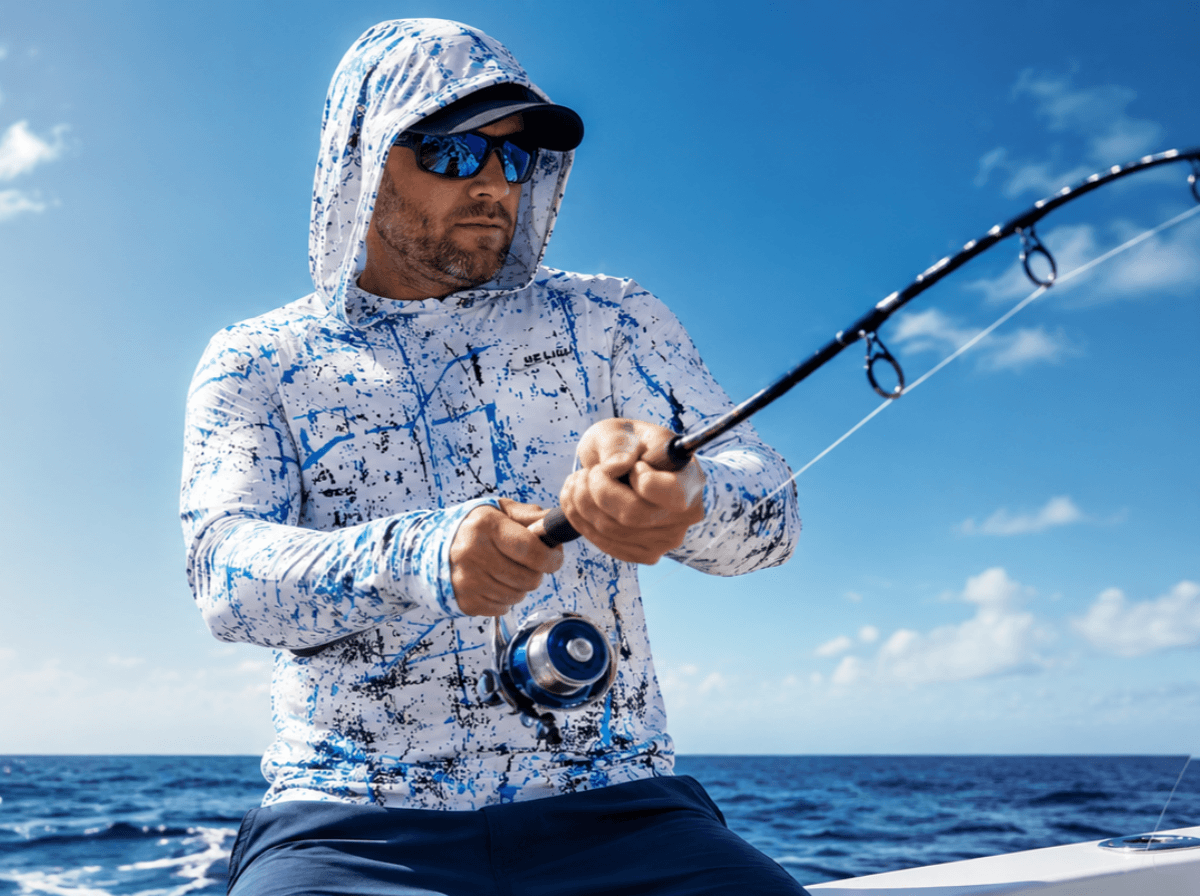
- A built-in hood for the neck and ears
- Thumb holes that help keep sleeves in place
- A relaxed fit that does not cling or over-stretch
Why Quick-Dry Fabric Matters in Humidity
Cotton can feel soft at the beginning of a trip, but it absorbs moisture and may remain wet for a long time. A soaked cotton shirt becomes heavier, sticks to the body, and can feel uncomfortable beneath PFD straps or a backpack.
Quick-dry performance fabric is designed to manage moisture more efficiently. It cannot change the humidity, but it can reduce the heavy, waterlogged feeling associated with absorbent casual clothing. It also recovers faster after boat spray, light rain, or a rinse at the end of the day.
Moisture-wicking fabric works best when it is not overloaded with detergent residue or fabric treatments. Follow the garment care label, use the recommended amount of detergent, and dry the shirt completely before placing it back in a gear bag.
Pick a Color That Fits the Conditions
Light and medium colors often feel more comfortable under intense summer sunlight because they reflect more incoming energy than very dark colors. White, pale blue, light gray, and muted tones are common choices for open-water fishing.
Color, however, should not replace a verified UPF rating. A thin white T-shirt is not automatically more sun protective than a purpose-built UPF 50+ hoodie. Fabric density, construction, stretch, moisture, and condition also matter.
Choose the protection first, then the color. If stains are a concern, a medium shade may offer a useful balance between heat management and easy maintenance.
Fish Early or Late When Possible
One of the most effective cooling strategies does not involve clothing at all: avoid the most demanding part of the day. A dawn launch often provides lower temperatures, less direct sun, and calmer conditions. An evening session may offer similar benefits, depending on local weather and water access.
If you must remain outside through midday, plan a real break rather than waiting until you feel exhausted. Move into shade, reduce physical effort, drink, eat a light snack, and allow your body to cool before continuing.
Remember that cloudy weather is not a guarantee of low UV exposure. Keep your UPF clothing and sunscreen routine even when the sun does not feel intense.
Build a Consistent Hydration Routine
Thirst is easy to ignore while fishing. You may not want to stop casting, open a hatch, or reach behind the kayak seat. By the time you feel strongly thirsty, you may already be behind on fluid intake.
Bring more water than you expect to need and keep it accessible. Take regular drinks throughout the trip instead of consuming a large amount only at the beginning or end. On extended, sweaty outings, food and electrolyte replacement may also be relevant, depending on your health needs and conditions.
Alcohol can impair judgment and complicate hydration, making it a poor match for demanding heat. People with medical conditions or fluid restrictions should follow guidance from their healthcare professional rather than general hydration advice.
Before launching, check that you have:
- Enough drinking water for the full trip and the return journey
- An insulated bottle or cooler where practical
- Easy access to water without unpacking other equipment
- A backup plan if the trip runs longer than expected
Use Shade Strategically
Shade is equipment. On a boat, a canopy can provide meaningful relief when used safely. From shore, trees, bridges, shelters, and vehicles can become planned rest points. Kayak anglers may have fewer options, which makes trip timing and route selection even more important.
A hood and cap shade small areas but do not cool the entire body. Combine personal coverage with regular breaks away from direct sun. Even a short pause can reduce cumulative heat load when it happens before symptoms begin.
Do not rely on sitting under an umbrella while continuing strenuous work. Cooling requires reducing effort as well as reducing direct radiation.
Keep Your Lower Body and Feet Comfortable
The torso receives most of the attention, but heavy pants and poor footwear can trap heat. Choose lightweight quick-dry fishing pants or shorts suited to the environment. When wearing shorts, protect exposed legs with sunscreen and remember the knees, calves, ankles, and tops of the feet.
Water shoes or secure sandals can improve grip at slippery launches while allowing drainage. Avoid footwear that becomes dangerously loose when wet. On rocky or muddy banks, protection and traction may matter more than maximum ventilation.
Kayak anglers should consider how clothing feels while seated. Waistbands, pockets, and seams that seem comfortable while standing may create pressure after several hours in a seat.
Manage the Hood, Hat, and Sunglasses Together
A fishing hood can cover the neck and ears, while a cap adds shade over the eyes. Many anglers wear both, adjusting the hood according to wind and sun direction. The combination should feel secure without blocking peripheral vision or hearing.
Polarized sunglasses reduce glare and make it easier to see into the water. Choose lenses with UV protection and use a retainer around boats or kayaks. Sunglasses do not cool the body, but reducing glare can make a bright day feel less tiring.
Apply sunscreen to any gaps around the face, ears, hairline, and neckline. Clothing shifts during movement, so check coverage after paddling, removing a hat, or adjusting a PFD.
Reduce Unnecessary Physical Effort
Heat management begins before the first cast. Organize tackle so frequently used items are easy to reach. Use a cart when moving heavy gear to a distant shoreline. Load the boat efficiently, and avoid repeated trips across an exposed parking area.
On the water, slow the pace when conditions become oppressive. A fishing trip does not need to become a fitness test. Shorter casts, planned rest periods, and a less ambitious route can preserve energy for the return journey.
Always account for wind and current. The easy trip away from the launch may become a demanding paddle back, precisely when heat and fatigue are at their highest.
Know the Warning Signs of Heat Illness
Feeling warm and sweaty is expected in summer. Dizziness, confusion, unusual weakness, nausea, a severe headache, fainting, or worsening muscle cramps are not signs to push through. Stop the activity, move to a cooler place, and seek appropriate help.
Heat stroke is a medical emergency. Confusion, loss of consciousness, seizures, or very high body temperature require immediate emergency assistance. Do not wait for symptoms to improve on their own.
Fishing with another person provides an extra layer of safety because people do not always recognize their own decline. Share the route and expected return time with someone on land, especially when kayaking or fishing remote areas.
A Practical Hot-Weather Fishing Checklist
- Check temperature, humidity, heat index, wind, and storms.
- Choose an early or late fishing window when possible.
- Wear a breathable UPF 50+ fishing hoodie.
- Use sunscreen on all remaining exposed skin.
- Carry accessible water and appropriate food.
- Wear polarized sunglasses, a cap, and secure footwear.
- Plan shade and cooling breaks before you need them.
- Shorten the trip if conditions become more demanding.
- Tell someone where you are going and when you will return.
A Lightweight Sun Layer for Summer Fishing
The WELIGU Men's UPF 50+ Sun Protection Fishing Hoodie is designed for anglers who need coverage without the weight of a conventional hoodie. Its ultra-light, breathable, moisture-wicking, quick-dry fabric is suited to hot-weather fishing, boating, kayaking, hiking, running, gardening, and beach days.
A built-in hood helps cover the neck and ears, while thumb holes help keep the sleeves extended over the wrists during casting and paddling. The UPF 50+ rating provides a dependable foundation for a broader sun-protection routine.
Pair it with sunscreen on exposed areas, polarized sunglasses, a cap, breathable bottoms, water, and regular breaks from direct sun.