What Color Fishing Shirt Is Best for Sun Protection?
Why UPF Rating Matters More Than Color Alone
UPF stands for Ultraviolet Protection Factor. It is a rating used for clothing and fabric to describe how effectively the material limits ultraviolet radiation from reaching the skin. Unlike a visual guess based on darkness or thickness, a UPF rating gives shoppers a specific standard to look for.
A regular shirt may provide some protection, but the level can vary considerably. Fiber type, weave density, stretch, moisture, wear, and manufacturing treatments all play a role. Two shirts in the same color can perform very differently if one is a lightweight casual knit and the other is engineered as UPF 50+ sun-protection clothing.
This is why anglers should not select a fishing sun shirt by color alone. Start with the rating and construction. Once those essentials are covered, color becomes a useful way to manage comfort, visibility, maintenance, and personal style.
Dark Fishing Shirts: Benefits and Trade-Offs
Dark navy, charcoal, black, and deep green are popular because they look practical and hide many stains. In otherwise identical fabrics, darker dyes can absorb more UV radiation. This is one reason dark clothing is often discussed in sun-protection advice.
The trade-off is heat. A dark surface generally absorbs more energy from sunlight than a light one. On a still, cloudless day, a black or deep navy shirt may feel warmer on the shoulders and back, particularly if the fabric is heavy or does not breathe well.
That does not make dark fishing clothing a bad choice. A lightweight, breathable, quick-dry UPF hoodie in a dark shade can still be comfortable, especially in breezy conditions, during early morning trips, or in cooler seasons. Fabric performance and ventilation determine whether the absorbed heat becomes noticeable.
Dark colors may work well when:
- You fish in mild or cool weather.
- The fabric is lightweight and highly breathable.
- You want a shirt that hides dirt, bait marks, or sunscreen residue.
- You spend part of the day in shade or under a boat canopy.
- You prefer a versatile color that also works away from the water.
Light Fishing Shirts: Benefits and Trade-Offs
White, pale gray, light blue, and other soft shades are common in hot-weather fishing clothing. They reflect more sunlight than dark colors and can feel less intense during long periods under an open sky. This makes them attractive for summer boating, shore fishing, and outdoor work.
The important distinction is that a light shirt should still have a reliable UPF rating. A pale color does not automatically block UV well, and a very thin casual shirt can become less dependable when stretched or wet.
Light colors also show stains more easily. Fish residue, mud, sunscreen, and dirty boat surfaces can leave visible marks. For some anglers, that is a minor inconvenience. Others prefer a medium shade that offers a cooler appearance without displaying every mark from the day.
Light colors may work well when:
- You fish in hot, bright conditions.
- You spend hours in direct sunlight with little shade.
- You prefer clothing that feels visually lighter in summer.
- The garment has a clear UPF 50+ rating.
- You do not mind washing visible outdoor stains promptly.
Are Medium Colors the Most Practical Choice?
For everyday fishing, medium colors often provide an appealing compromise. Heather gray, medium blue, muted green, and similar shades may feel less heat-absorbing than black while hiding wear better than pure white.
They also coordinate easily with fishing pants, shorts, PFDs, hats, and outer layers. If you use one shirt for several activities, a medium neutral can move comfortably from the boat to a trail, campsite, garden, or casual stop on the way home.
There is no universal perfect shade. A medium color is simply a practical option for people who want balanced comfort and maintenance without making color the main performance feature.
What About Bright Colors and Patterns?
High-visibility yellow, orange, coral, and vivid blue can help a person stand out around water. Visibility can be useful when fishing from a kayak, walking a busy shoreline, or spending time around moving boats. A bright garment is not a substitute for a personal flotation device or other safety equipment, but being easier to see can be a practical advantage.
Patterns may also hide stains and make technical outdoor clothing feel more personal. Camouflage, fish graphics, flags, and abstract prints are popular because anglers often want a shirt that reflects how and where they fish.
As with solid colors, the pattern itself is not the deciding sun-protection feature. Look for the garment's UPF rating, coverage, fabric performance, and fit first.
Five Factors More Important Than Shirt Color
1. A Verified UPF Rating
Choose a garment that clearly states its UPF protection. UPF 50+ is a strong option for long exposure during fishing, boating, hiking, beach trips, and outdoor work.
2. Complete, Comfortable Coverage
Long sleeves protect more skin than short sleeves, while a built-in hood can cover the neck and ears. Thumb holes help keep sleeves extended over the wrists during casting, paddling, or reaching for gear.
3. Breathable, Quick-Dry Fabric
Sun protection only works when the shirt stays on. Lightweight, moisture-wicking fabric helps manage sweat and dries more quickly after spray or rain. A heavy shirt that feels unbearable at noon is unlikely to provide consistent protection.
4. A Fit That Does Not Overstretch
Fabric stretched tightly across the shoulders or back may not perform as intended and can restrict movement. Choose a fit that allows a natural casting motion without excessive loose material around reels or boat equipment.
5. Good Condition
Inspect outdoor clothing for thin spots, holes, damaged seams, and permanently stretched areas. Even a well-rated garment should be replaced when wear prevents it from delivering the original coverage.
Does a Wet Shirt Offer the Same Protection?
Moisture can affect some fabrics. An ordinary shirt may become more transparent, cling to the skin, or stretch when soaked. This is another reason to choose clothing designed for water-adjacent activities rather than relying on a casual T-shirt.
A quick-dry fishing hoodie manages spray and sweat more comfortably, but it should still be cared for according to its label. After saltwater use, rinse it in fresh water. Wash it when it is sweaty or dirty, and let it dry fully before storing it in a tackle bag or vehicle.
If a shirt becomes visibly thin or transparent when wet, do not assume that its original coverage remains unchanged. Use shade, sunscreen, and another dry layer when necessary.
How to Choose a Color for Your Fishing Conditions
Instead of searching for one universally “best” color, match the shade to the place, season, and way you fish.
- Hot open-water fishing: Consider light or medium shades in breathable UPF 50+ fabric.
- Cool mornings and shoulder seasons: Darker colors can be comfortable and easy to maintain.
- Kayak fishing: A brighter color may improve visibility around other water users.
- Muddy banks and bait-heavy trips: Medium or dark colors hide stains more easily.
- Multi-purpose outdoor use: Neutral gray, blue, or green can work across fishing, hiking, and travel.
Personal preference matters more than it may seem. If you like the color and feel comfortable wearing it, you are more likely to keep the shirt on throughout the day.
Build a Complete Sun-Protection System
No fishing shirt should carry the entire burden of sun safety. Clothing is most useful as the foundation of a broader routine. Cover large areas with UPF fabric, then protect the remaining exposed skin and eyes.
A practical setup includes:
- A UPF 50+ fishing hoodie or long-sleeve sun shirt
- Broad-spectrum sunscreen for exposed skin
- Polarized sunglasses with UV protection
- A cap or brimmed hat
- Lightweight pants or sunscreen on exposed legs
- Water, shade breaks, and attention to the UV index
Reapply sunscreen according to its directions, especially after sweating, swimming, or towel drying. Pay attention to easy-to-miss areas such as the nose, lips, ears, ankles, and tops of the feet.
A Practical UPF 50+ Option for Anglers
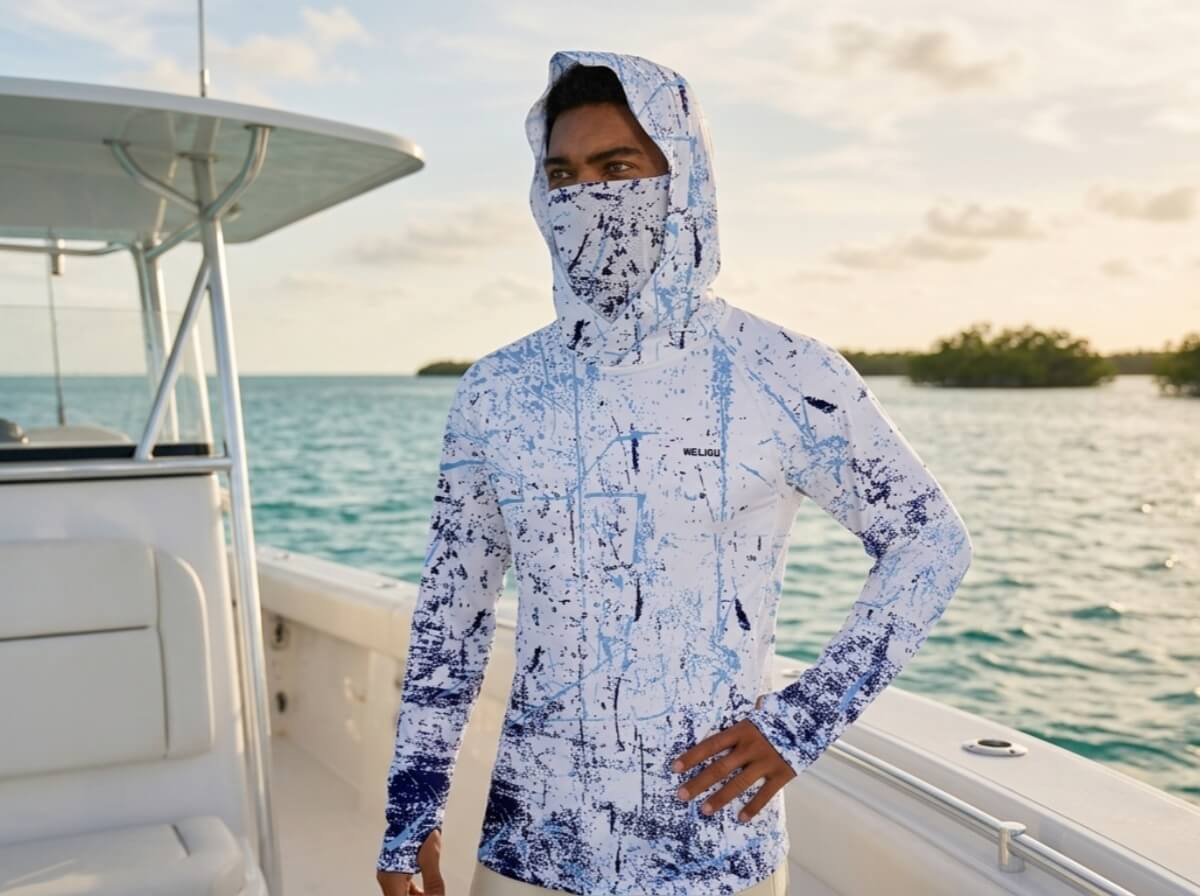
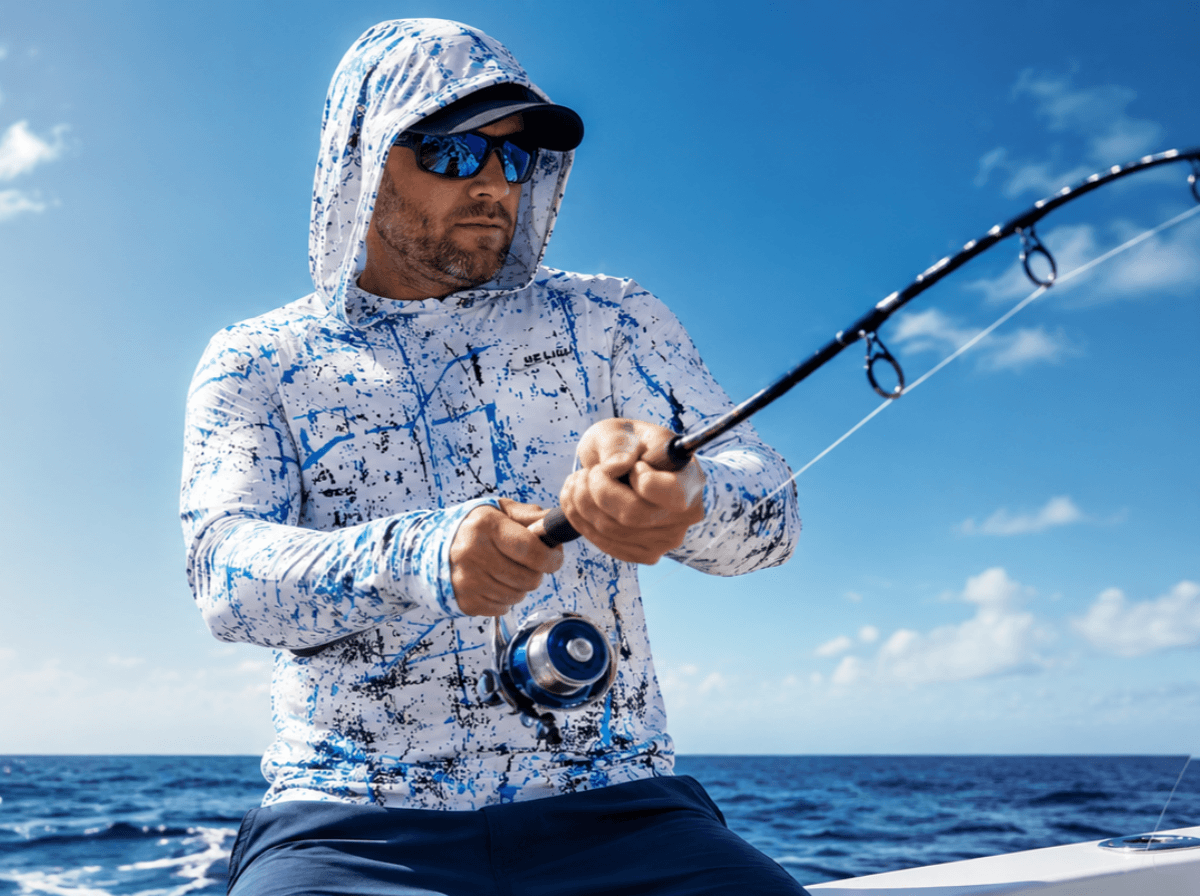
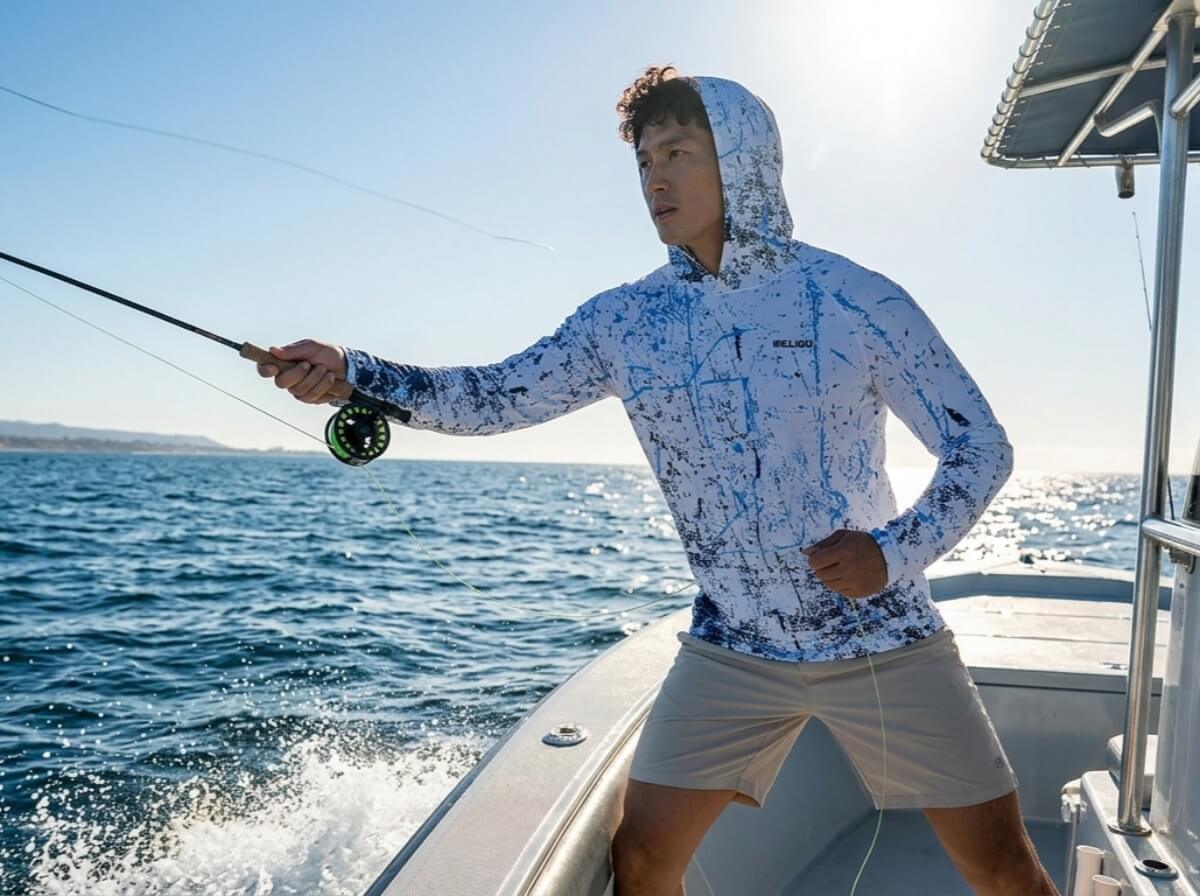
The WELIGU Men's UPF 50+ Sun Protection Fishing Hoodie is designed for long days outdoors. It combines UPF 50+ protection with ultra-light, breathable, moisture-wicking, quick-dry fabric. The built-in hood helps cover the neck and ears, while thumb holes help keep the sleeves in place over the wrists.
Its performance features make color a preference rather than a guess about protection. Anglers can focus on the shade and design they enjoy while relying on a garment made specifically for fishing, boating, hiking, running, gardening, beach trips, and outdoor work.
Choose a color suited to your climate and routine, then pair the hoodie with sunscreen, sunglasses, a hat, and sensible breaks from direct sun.