Article: How to Choose Camouflage for Different Hunting Environments
How to Choose Camouflage for Different Hunting Environments
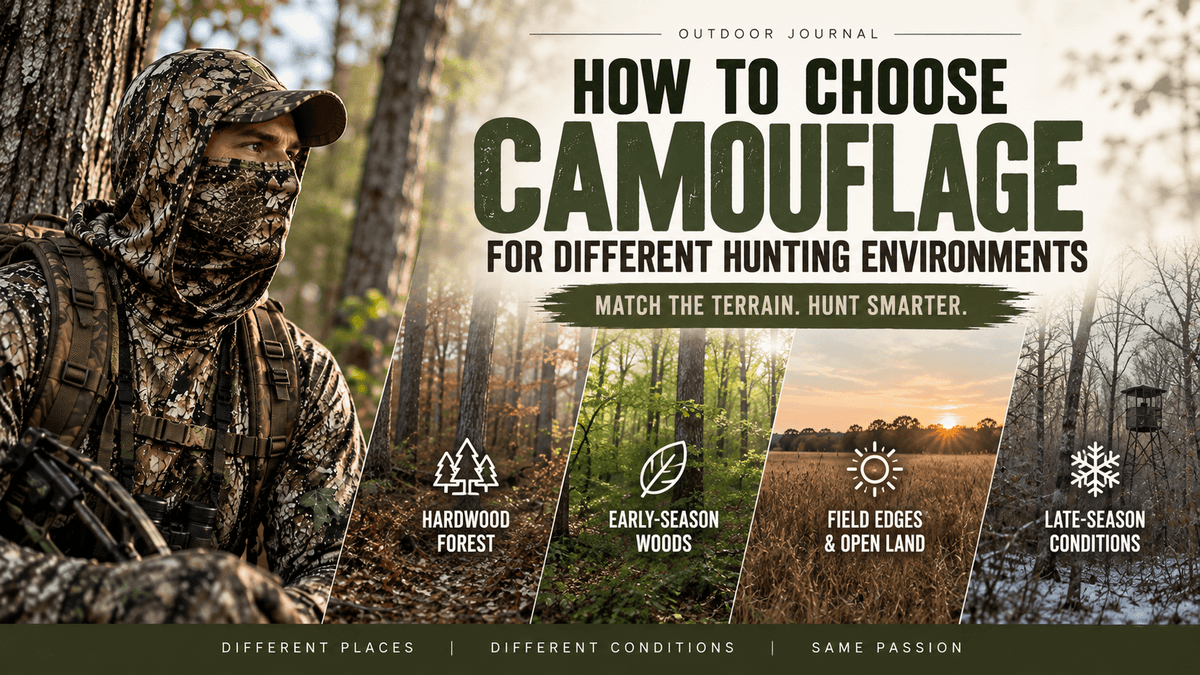
1. Hardwood Forests
Hardwood forests are one of the most common hunting environments across much of the United States.
These areas typically contain a mixture of:
- tree bark
- branches
- fallen leaves
- patches of shadow
- brown and gray ground cover
For these environments, camouflage containing bark textures, branches, leaves, brown, gray, and muted green tones can work particularly well.
The goal isn't necessarily to look exactly like one tree.
Instead, the pattern should help your body disappear into the irregular combination of trunks, branches, and shadows around you.
This type of camouflage can be particularly useful when hunting from the base of a tree or moving through mature timber.
2. Early-Season Green Woods
Early hunting seasons can look completely different.
Trees may still carry dense foliage, undergrowth can remain green, and the forest floor may contain much more vegetation than it does later in fall.
In these conditions, extremely brown or gray camouflage can sometimes appear darker than the surrounding vegetation.
Look instead for patterns that combine:
olive green + muted brown + natural branch patterns.
You don't necessarily need bright green camouflage. Natural environments contain enormous variation, so patterns combining several subdued colors often blend better than a single dominant shade.
Lightweight hunting clothing also becomes especially important during early season.
Warm temperatures combined with long periods outdoors can make heavy traditional hunting garments uncomfortable.
Breathable layers allow hunters to adjust more easily as conditions change throughout the day.
3. Late-Season Timber
As leaves disappear and vegetation dies back, forests become noticeably more gray and brown.
Tree trunks and bare branches dominate the visual environment.
This is where darker bark-style camouflage can become particularly effective.
Patterns featuring:
- gray
- charcoal
- dark brown
- bark textures
- irregular high-contrast shapes
can help break up the body's outline against mature trees and shaded timber.
Late-season hunters should also think beyond pattern alone.
As temperatures drop, camouflage needs to work as part of a layering system.
Instead of relying on one extremely heavy camouflage garment, many hunters prefer flexible layers that can be added or removed as temperatures change.
4. Brush and Field Edges
Not every hunt takes place deep inside the woods.
Field edges, brush lines, agricultural land, and transitional habitat often contain lighter colors than dense forests.
Here you may encounter:
- dry grass
- tan vegetation
- light brown branches
- scattered green brush
- open sunlight
Very dark woodland camouflage can create unnecessary contrast in these areas.
A better choice is often a lighter camouflage pattern containing tan, olive, muted green, and medium brown.
Large irregular shapes can also help at greater distances because extremely detailed patterns tend to visually merge into one solid color when viewed from far away.
5. Tree Stand Hunting
Tree stand hunters face another challenge: elevation.
Instead of always being viewed against vegetation at ground level, parts of the hunter's body may appear against branches, leaves, or even open sky.
This makes silhouette management especially important.
Camouflage with a mixture of light and dark areas can help disrupt the body outline better than an extremely dark pattern.
But clothing fit matters too.
A hunting shirt should allow enough movement to:
- climb comfortably
- reach equipment
- draw a bow
- shoulder a firearm
- adjust position quietly
Camouflage doesn't help much if uncomfortable clothing forces constant movement.
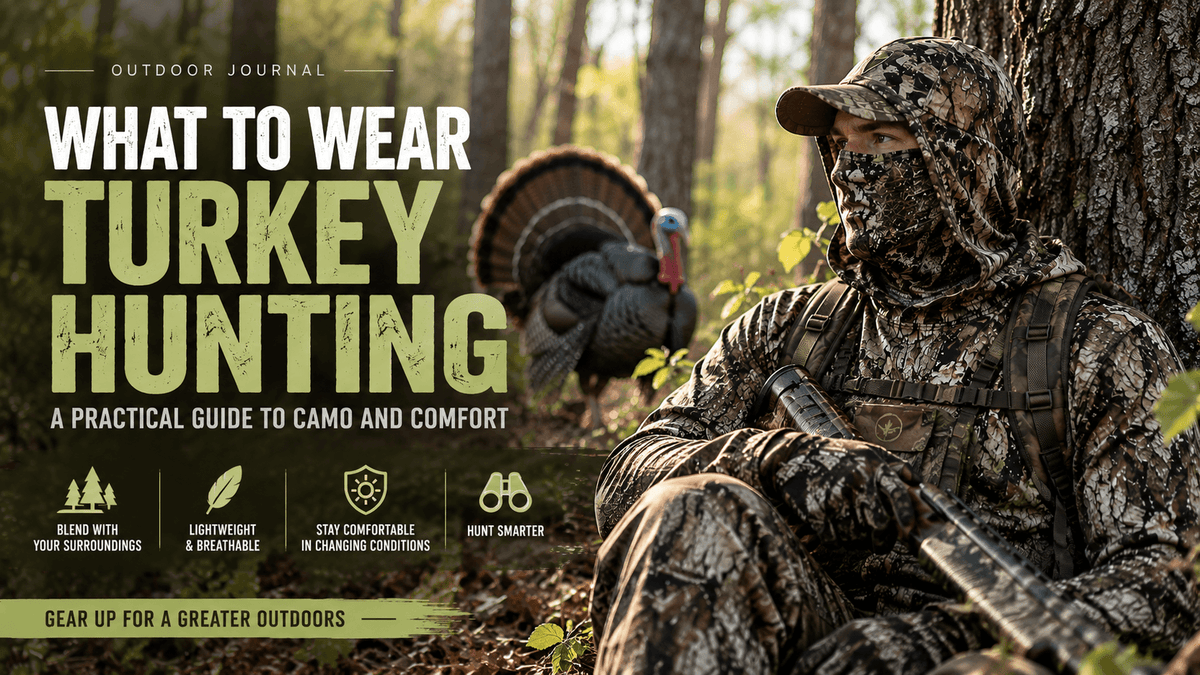
6. Turkey Hunting
Turkey hunting often places greater emphasis on concealment because turkeys have excellent vision and hunters may be positioned relatively close to the birds.
Covering obvious areas of exposed skin can therefore become important.
Many turkey hunters use:
- camouflage shirts
- gloves
- face coverings
- camouflage hats or hoods
A hunting hoodie with an integrated face covering can simplify this setup by reducing the number of separate pieces of gear a hunter needs to manage.
It also allows the face covering to be pulled into position when necessary and moved out of the way when it isn't needed.
For warmer spring hunts, lightweight and breathable materials are especially useful.
7. Dove and Early-Season Hunting
Dove seasons often begin while temperatures are still high.
That changes the clothing equation considerably.
Heavy camouflage designed for cold-weather deer hunting may simply be unnecessary.
Instead, early-season hunters often benefit from clothing that prioritizes:
breathability, sun coverage, lightweight construction, and freedom of movement.
Camouflage still matters, particularly when hunting near field edges or vegetation, but comfort becomes equally important.
A hunter who overheats will move more, adjust clothing more often, and generally have a less comfortable day in the field.
Don't Choose Camo Based on Appearance Alone
It's easy to judge camouflage while looking at it indoors or on a product page.
But hunting camouflage isn't really designed to look impressive from three feet away.
It needs to work at hunting distances.
One useful test is to step back from the pattern.
Ask yourself:
Does the pattern still contain recognizable light and dark shapes from a distance?
If all of the small details merge into one dark block, the camouflage may lose some of its ability to break up the body's outline.
This is one reason patterns combining different scales—large background areas with smaller branches, leaves, or bark details—can work effectively.
Comfort Is Part of Concealment
Hunters sometimes focus so heavily on camouflage patterns that they overlook clothing performance.
But staying concealed also means staying still.
If you're constantly adjusting sleeves, wiping sweat, pulling at your collar, or removing uncomfortable layers, even excellent camouflage becomes less useful.
For warmer conditions, look for hunting clothing that offers:
- lightweight fabric
- breathable construction
- moisture management
- unrestricted movement
- optional face coverage
- sun protection
These features won't replace good camouflage, but they can help you remain comfortable enough to stay still when it matters.
One Camouflage Pattern Doesn't Need to Do Everything
There isn't a single "best" camouflage pattern for every hunter.
Someone hunting dense southeastern woods may need something completely different from a hunter sitting along a dry field edge.
Instead of searching for one universal pattern, think about where you spend most of your hunting time.
Mostly timber?
Look toward bark, branch, brown, and gray patterns.
Green early-season woods?
Choose patterns incorporating subdued greens and natural vegetation.
Open brush or field edges?
Consider lighter tan, olive, and brown combinations.
Mixed environments?
A balanced woodland pattern with several natural tones can offer greater versatility.
Matching camouflage to the environment is ultimately more important than following whichever pattern happens to be popular.