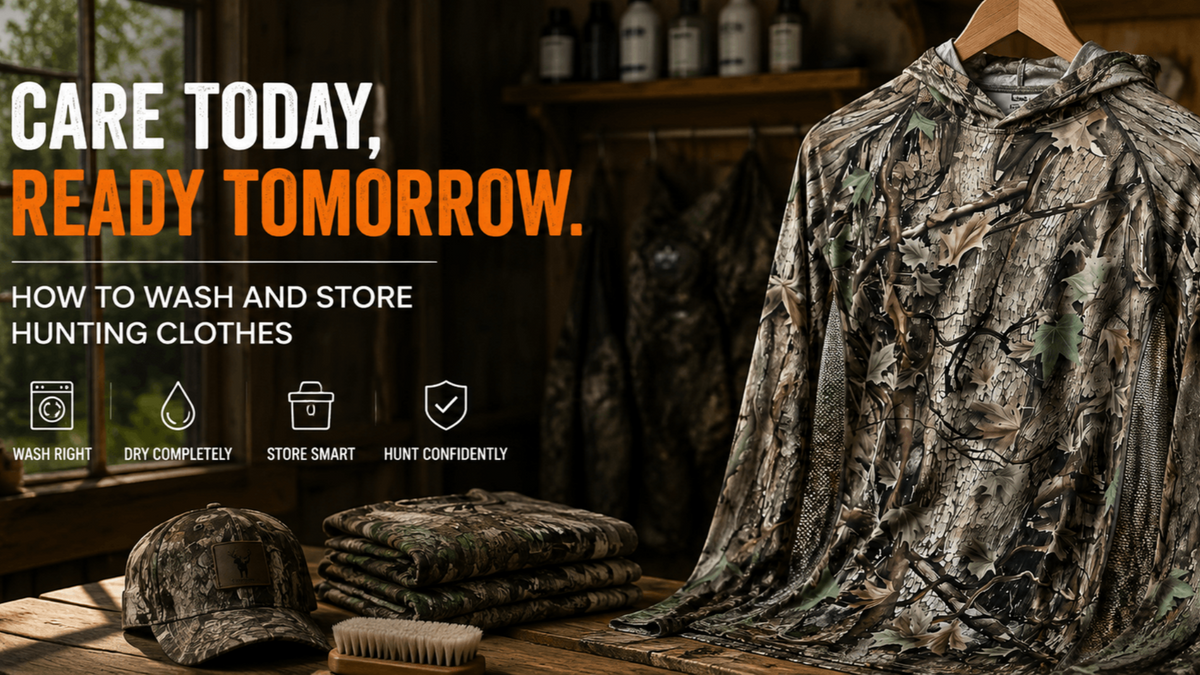
How to Wash and Store Hunting Clothes?
Start With a Clean Washing Machine
Before worrying about special hunting detergent, take a look at the machine doing the washing.
A washer that regularly handles heavily fragranced detergent, fabric softener, scent boosters, or dryer sheets can retain some of those fragrances.
If scent control matters to you, running an empty rinse cycle before washing hunting gear is a simple precaution.
You do not need to turn laundry day into a science experiment. The goal is simply to avoid adding unnecessary fragrance to clothes that are headed into the woods.
And before anything goes into the machine, always check the garment's care label. Technical fabrics, printed hunting shirts, waterproof layers, and insulated garments may require different care.
Use Unscented Detergent
This was one of the clearest themes among hunters discussing the subject.
A fragrance-free or “free & clear” detergent is a practical choice for most washable hunting clothes. Some hunters prefer detergent marketed specifically for hunting because those formulas are often designed without added fragrance and may also avoid optical brighteners.
You do not necessarily need an expensive hunting-specific product.
What matters more is what is not in the detergent.
Look for something without strong perfume, and avoid adding scent boosters just because they are part of your normal household laundry routine.
The woods do not smell like “Mountain Spring.”
Your hunting clothes probably do not need to either.
What About UV Brighteners?
This is where hunting laundry gets a little more specialized.
Some conventional detergents contain optical brighteners. These compounds are designed to make everyday clothing appear brighter or whiter.
Some hunters deliberately avoid detergents containing them when washing camouflage. That concern also came up repeatedly in the Reddit discussion you shared.
Whether optical brighteners make a meaningful difference in every hunting situation is debated, and scent-control practices vary considerably among hunters.
Fortunately, you do not need to settle that debate to make a sensible choice.
If you already want a fragrance-free detergent and can easily choose one without optical brighteners, there is little reason to add something to camouflage clothing that was designed to make fabric appear brighter.
Keep it simple.
Should You Use Baking Soda?
Baking soda is frequently mentioned in hunting conversations because of its association with odor control.
But dumping it into every load is not automatically the best solution.
One hunter in the discussion specifically warned that plain baking soda could affect the appearance of clothing.
For performance shirts and printed camouflage in particular, we would rather follow the garment's washing instructions than improvise with aggressive home remedies.
If your hunting clothes simply need routine cleaning, a mild fragrance-free detergent is usually the better starting point.
Save experimentation for an old piece of gear—not the hunting shirt you just bought.
Skip the Fabric Softener
Fabric softener makes everyday laundry feel nice, but it is not necessarily helpful for technical outdoor clothing.
Some softeners can leave a coating on synthetic fibers, potentially interfering with the moisture-management properties that performance fabrics are designed to provide.
That matters particularly with lightweight early-season hunting shirts.
If your shirt is designed to breathe, wick moisture, and dry quickly, there is little sense in covering those fibers with an unnecessary laundry additive.
Unless the garment manufacturer specifically recommends otherwise, keeping the wash routine simple is usually the safest approach.
Wash Hunting Clothes Separately
You probably do not want your hunting shirt sharing a load with towels soaked in scented detergent, work clothes carrying garage odors, or the blanket your dog sleeps on.
Wash hunting gear separately when practical.
Before washing, check pockets and remove:
- Leaves
- Grass
- Burrs
- Mud
- Twigs and debris
For printed garments, turning the shirt inside out can also help reduce unnecessary abrasion against the outer printed surface.
Use the water temperature and cycle recommended on the care label.
For many lightweight synthetic performance shirts, that means a relatively gentle wash rather than the hottest, most aggressive cycle available.
Air Dry or Use the Dryer?
There is no universal answer because hunting garments use very different materials.
For a lightweight performance shirt, air drying is often a simple option if the care label permits it.
Make sure the garment dries completely.
That last word matters.
Putting slightly damp clothes into an airtight plastic tote is an excellent way to create a completely different odor problem.
Some specialized hunting garments may have manufacturer instructions that call for machine drying or particular heat settings, so once again, check the label rather than assuming every piece of hunting clothing should receive identical treatment.
Where You Store Hunting Clothes Matters
This was another practical point raised by hunters in the discussion.
Several described storing hunting clothing in a dedicated plastic tote, large plastic bag, or duffel bag rather than leaving it exposed with normal household items.
That makes sense.
After you have deliberately washed your gear without fragrance, leaving it hanging beside strongly scented laundry products defeats much of the purpose.
A clean storage tote with a reasonably good seal is an inexpensive solution.
The important part is what surrounds it.
Avoid storing clean hunting clothes next to:
- Gasoline
- Paint
- Solvents
- Lawn equipment
- Strong cleaning products
- Smoke
- Scented laundry products
A garage can be convenient, but it is not automatically the best location if it smells strongly of gasoline and lawn equipment.
A basement can work perfectly well too—provided your gear stays clean, dry, and away from strong household odors.
What If You Have Dogs or Cats?
This was actually part of the original hunter's question in the Reddit discussion.
Pets introduce hair, dander, and household odors, so keeping freshly cleaned hunting clothes in a closed container makes sense if dogs or cats regularly spend time where your gear is stored.
You do not necessarily need to ban hunting equipment from the house.
A dedicated tote or bag solves much of the practical problem.
Wash it.
Dry it completely.
Put it away.
Close the container.
Done.
Consider Getting Dressed at the Hunting Area
One of the more useful pieces of real-world advice in the discussion had nothing to do with laundry.
Some hunters keep their clean hunting clothes packed until they arrive, then change before heading toward the stand.
Think about what your clothes encounter during the drive:
Coffee.
Breakfast.
Gas stations.
Vehicle upholstery.
Heaters.
Air fresheners.
Smoke.
Your hunting clothes can pick up all of those odors before you even reach the woods.
If scent management is important for the hunt, keeping your main hunting layers stored during the drive and changing when you arrive is a straightforward habit.
It may accomplish more than obsessing over another laundry additive.
Don't Forget the Rest of Your Gear
There is not much point in carefully washing your hunting shirt and then throwing it into a backpack that has spent six months sitting beside a gas can.
Your clothing is only one part of the system.
Think about:
- Backpack
- Hat
- Gloves
- Boots
- Seat cushion
- Outer layers
- Towels
- Gear bags
Not everything needs to go through the washing machine.
In fact, some equipment absolutely should not.
But dirty or damp equipment should at least be cleaned according to its manufacturer's instructions and allowed to dry thoroughly before storage.
Don't Let Scent Control Distract You From the Wind
This may be the most useful lesson from the entire discussion.
Hunters disagreed about how far scent-control routines should go, but several came back to the same basic point:
You are still a human standing in the woods.
Your body produces scent regardless of how carefully you washed your shirt.
One commenter put the practical issue clearly: if the deer is downwind of you, what detergent you used may not be the deciding factor. Another hunter with a much more elaborate scent-control routine still finished by emphasizing the importance of wind direction.
That is a useful perspective.
Wash your clothes properly.
Avoid unnecessary artificial fragrances.
Store your gear carefully.
Then hunt the wind.
Laundry is part of preparation—not a replacement for fieldcraft.
Between Hunts vs. End-of-Season Storage
During hunting season, you are preparing clothing for another trip in a few days or weeks.
At the end of the season, storage becomes a little different.
Before putting your gear away for several months:
Wash what needs washing.
Dry everything thoroughly.
Inspect shirts and pants for damage.
Clean out pockets.
Repair loose seams.
Check zippers and other closures.
Then place the gear in a clean, dry container somewhere protected from moisture and strong odors.
When next season rolls around, you will be glad you did.