Can You Get Sunburned Through a Shirt? What Anglers Need to Know
Why an Ordinary Shirt May Not Be Enough
Most clothing offers at least some barrier between the sun and your skin. The problem is that protection varies widely. Fabric construction, color, weight, stretch, moisture, wear, and fit can all affect how much UV radiation passes through.
A lightweight cotton T-shirt may feel comfortable at the start of a fishing trip, but it was not necessarily designed for prolonged sun exposure. When the fabric becomes damp with sweat or spray, it may cling to the skin and become more transparent. Stretching across the shoulders can also open small spaces between fibers.
None of this means that a regular shirt provides no protection. It means that you cannot judge UV protection by sleeve length alone. If you regularly spend four, six, or eight hours outdoors, a clearly rated sun-protective garment gives you more useful information than an untested casual shirt.
What Does UPF 50+ Mean?
UPF stands for Ultraviolet Protection Factor. It is a clothing rating that describes how effectively a fabric limits ultraviolet radiation from passing through to the skin. A higher rating indicates stronger protection.
UPF and SPF are related ideas, but they are used differently. SPF is associated with sunscreen, while UPF is used for fabric and clothing. For outdoor clothing, UPF 50+ is widely considered an excellent level of protection and is commonly used for fishing shirts, sun hoodies, rash guards, and performance apparel.
A UPF rating is especially helpful because it removes some of the guesswork. Instead of assuming that a shirt is protective because it is dark, thick, or long sleeved, you can choose a garment made and rated for sun exposure.
Why Fishing Creates Extra Sun Exposure
Fishing often combines several conditions that make sun protection easy to underestimate. You may leave before sunrise, when the air feels cool, then remain outside through the strongest part of the day. A breeze can keep your skin from feeling hot even while UV exposure continues.
Water also reflects light. Anglers can receive exposure from above and from glare bouncing off the surface. The face, ears, neck, shoulders, forearms, wrists, and backs of the hands are particularly vulnerable because they remain exposed while casting, paddling, steering, or handling tackle.
There is also a practical problem: sunscreen requires attention. It can wear away with sweat, spray, towel drying, and repeated contact with gear. Reapplication is easy to forget when the fish are active or your hands are wet. UPF clothing does not eliminate the need for sunscreen, but it can reduce the amount of exposed skin you have to manage.
What Makes a Good UPF Fishing Shirt?
A useful fishing sun shirt needs to do more than cover your arms. If it feels hot, stiff, or restrictive, it will stay in the closet. Look for a balance of verified protection, breathable comfort, dependable coverage, and freedom of movement.
1. A Clear UPF Rating
Choose clothing with a stated UPF rating rather than vague phrases such as “sun friendly.” UPF 50+ is a strong option for long fishing sessions, boating, kayaking, hiking, beach days, and outdoor work.
2. Lightweight, Breathable Fabric
A summer fishing hoodie should not feel like a sweatshirt. Performance fabric should be light enough for warm conditions and breathable enough to release heat. A comfortable garment is more likely to remain on your body throughout the day, which is where its protective value comes from.
3. Quick-Dry and Moisture-Wicking Performance
Fishing clothing will get damp. Sweat, boat spray, rain, and wet hands are part of the day. Quick-dry fabric helps prevent the heavy, sticky feeling associated with wet cotton. Moisture-wicking construction can also improve comfort by moving perspiration away from the skin.
4. Coverage for the Neck, Ears, and Hands
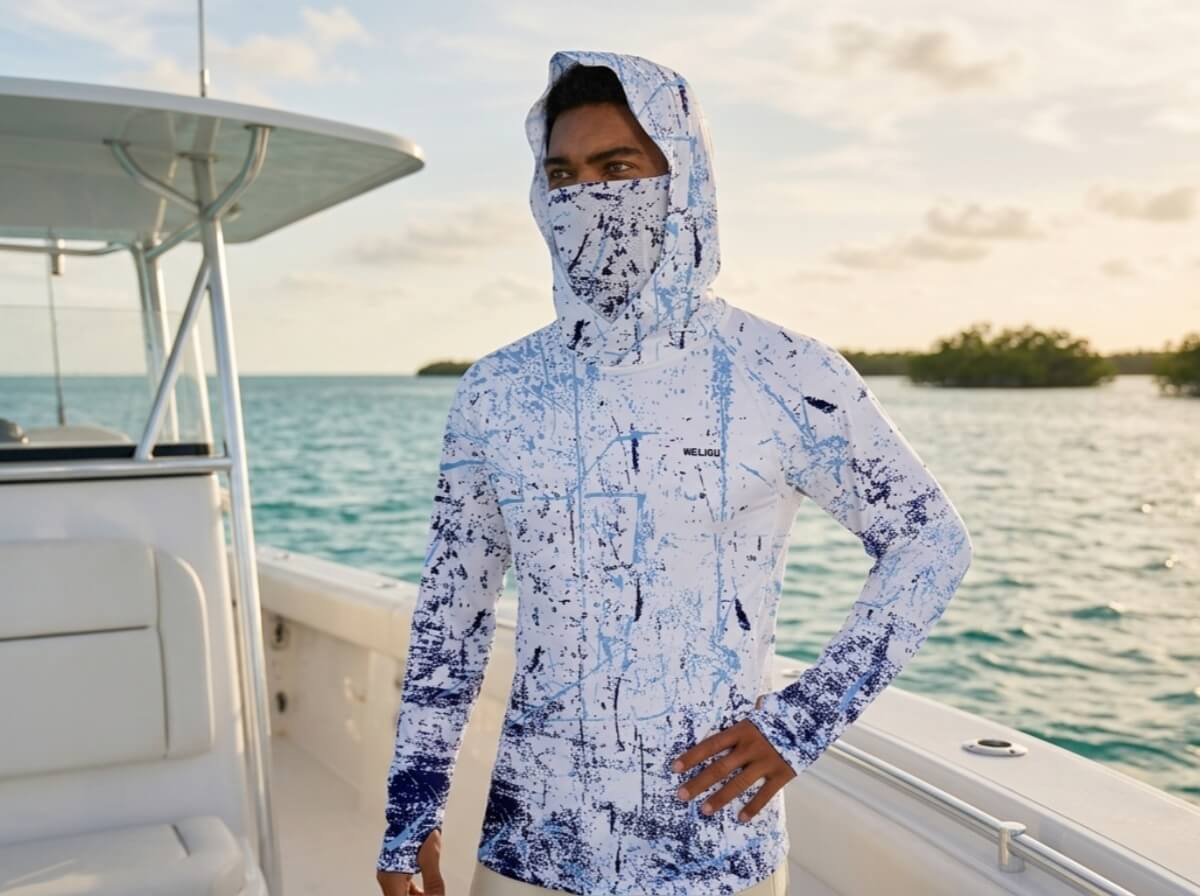
A built-in hood adds coverage around the neck and ears, two areas that are often missed during sunscreen application. Thumb holes help keep long sleeves extended when you cast, paddle, or reach for gear. These details are small, but they make the garment more useful during real movement.
5. A Fit That Moves Naturally
The shirt should allow a full casting motion without pulling across the shoulders. A slightly relaxed fit often works well, but excess fabric should not interfere with reels, PFD straps, or boat equipment. The right fit feels secure without becoming tight when you sit, bend, or reach.
Does a Darker Shirt Provide Better UV Protection?
Color can influence how fabric handles UV radiation, and darker or more saturated colors may absorb more UV than very light colors made from the same material. However, color is only one factor. Weave, fiber type, fabric treatment, stretch, moisture, and garment construction all matter.
A dark shirt without a tested UPF rating is not automatically a better choice than a lighter UPF 50+ shirt. Dark colors can also absorb more visible heat in direct sunlight. For hot-weather fishing, it is usually smarter to prioritize the stated UPF rating and overall fabric performance rather than choosing by color alone.
Does UPF Clothing Replace Sunscreen?
No. UPF clothing and sunscreen work best as a team. Clothing provides broad, consistent coverage over areas such as the torso, shoulders, arms, and neck. Sunscreen remains important for skin that clothing does not cover.
Before a long fishing trip, pay attention to:
- The face, nose, and cheeks
- The lips and ears
- The lower legs when wearing shorts
- The ankles and tops of the feet
- Any gap between gloves, sleeves, hats, or collars
Add polarized sunglasses and a hat for the eyes and face, and follow the directions on your sunscreen for application and reapplication. Shade, timing, hydration, and local weather conditions also belong in a complete outdoor plan.
How to Care for a UPF Fishing Hoodie
Good care helps performance clothing last. Always follow the garment label, because fabrics and treatments differ. In general, wash the shirt after sweaty or saltwater use, avoid harsh products unless the label permits them, and inspect the fabric periodically for thinning, stretching, or damage.
Do not assume that a badly worn shirt will perform exactly as it did when new. If an area becomes noticeably thin or transparent, especially across the shoulders or upper back, it may be time to replace the garment.
For travel or multi-day fishing trips, quick-dry clothing is particularly convenient. It can be rinsed, hung overnight, and packed again without the long drying time of heavy cotton.
A Practical Sun-Protection Checklist for Anglers
Before leaving the dock, bank, or launch point, use this simple checklist:
- Wear a lightweight UPF 50+ fishing hoodie or sun shirt.
- Use sunscreen on all remaining exposed skin.
- Bring polarized sunglasses and a secure hat.
- Carry enough water for the full trip.
- Check the UV index, forecast, wind, and water conditions.
- Pack an extra dry layer in a waterproof bag.
- Take shade breaks when conditions allow.
This approach is easier to maintain than relying on a single product. Each layer handles a different part of the problem, and together they make long outdoor days more comfortable.
A Practical Pick for Long Days Outdoors
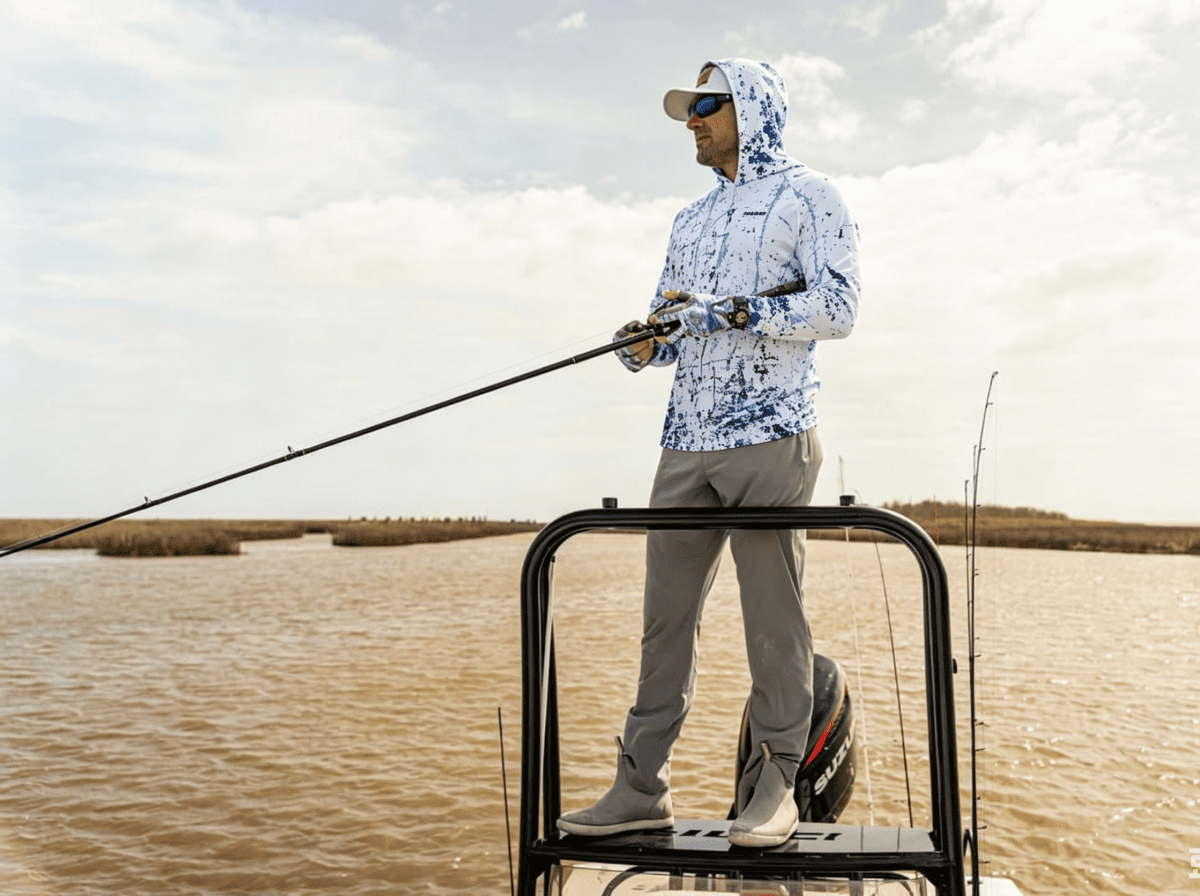
The WELIGU Men's UPF 50+ Sun Protection Fishing Hoodie is designed for anglers and outdoor users who want dependable coverage without the weight of a conventional hoodie. It combines UPF 50+ protection with lightweight, breathable, quick-dry fabric, a built-in hood, and thumb holes.
Those features make it useful for fishing, boating, kayaking, hiking, beach trips, gardening, and outdoor work. The hood adds coverage around the neck and ears, while the thumb holes help keep the sleeves in place during active movement.
Most importantly, it is designed to make sun protection feel like a normal part of getting dressed, rather than another task you have to remember throughout the day.