
Article: What Is a Moisture-Wicking Shirt and When Should You Wear One?
What Is a Moisture-Wicking Shirt and When Should You Wear One?
Spend enough time outdoors and you quickly learn that temperature is only part of what determines whether you feel comfortable.
A mild morning can become surprisingly warm after an hour on the trail. A calm day on the water can turn humid by noon. Even when the weather feels cool, walking, casting, paddling, setting up camp, or working outside can generate enough body heat to leave your shirt damp.
That is where moisture-wicking clothing becomes useful.
The term appears on everything from hiking shirts to running gear, but what does “moisture-wicking” actually mean? More importantly, when does it make a noticeable difference outdoors?
Here is a practical explanation.
What Does Moisture-Wicking Mean?
A moisture-wicking shirt is designed to move moisture away from your skin and spread it across the fabric, where it can evaporate more efficiently.
It does not mean that the shirt prevents sweating.
Your body will still sweat when it needs to regulate temperature. The difference is what happens to that moisture afterward.
Traditional absorbent fabrics can hold a significant amount of moisture close to your body. Performance fabrics are generally designed to move it through the material rather than simply allowing it to remain concentrated in one area.
For outdoor activities, that can make a shirt feel more comfortable during changing conditions.
Moisture-Wicking Is Not the Same as Quick-Dry
These two terms are often used together, but they describe slightly different things.
Moisture-wicking refers primarily to how fabric moves moisture away from the skin.
Quick-dry refers to how quickly the fabric releases that moisture and dries afterward.
A good outdoor performance shirt often combines both characteristics.
Imagine hiking uphill for 30 minutes. You begin to sweat across your back and chest. Once the trail levels out, your activity level drops.
A shirt that manages moisture effectively can help reduce the amount of wet fabric sitting directly against your skin.
That becomes especially noticeable when a breeze picks up or temperatures begin to fall.
Why Cotton Can Feel Different Outdoors
Cotton is comfortable for everyday use, but active outdoor conditions create a different set of demands.
Cotton absorbs moisture readily. Once wet, it can remain damp longer than many synthetic performance fabrics.
That may not matter much while walking around town.
On a trail, boat, campsite, or long outdoor trip, however, staying in a damp shirt for several hours can become uncomfortable.
This is one reason many outdoor performance shirts use polyester or other synthetic materials instead of relying entirely on cotton.
The objective is not simply to make the shirt lighter. It is to help it handle heat and moisture more efficiently.
When Does Moisture-Wicking Clothing Matter Most?
You do not need technical clothing every time you walk outside.
The benefits become more noticeable when three things are present: movement, heat, and time outdoors.
Hiking
Hiking is a good example because your activity level constantly changes.
You may begin on flat ground, climb a steep section, stop for several minutes, and then continue along an exposed ridge.
During the climb, your body produces considerably more heat.
Once you stop, that changes quickly.
A lightweight moisture-wicking shirt helps create a more adaptable base layer for these changing conditions.
This is particularly useful during spring and fall, when air temperatures may feel cool even though physical activity still makes you sweat.
Fishing
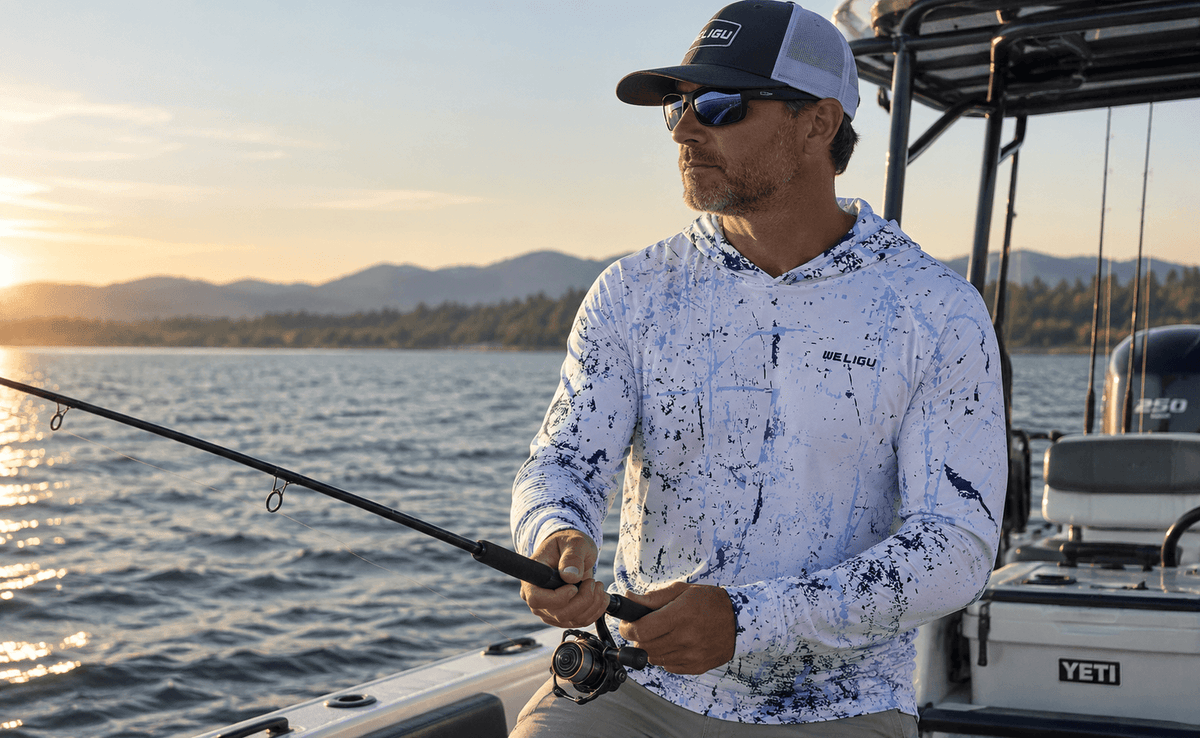
Fishing may look less physically demanding than hiking, but anglers spend long periods exposed to sun, humidity, and changing weather.
Casting, paddling, handling equipment, moving around a boat, or walking a shoreline all generate heat.
On warm days, a lightweight long-sleeve performance shirt can provide coverage while helping moisture move away from the body.
A hooded design can also provide additional head and neck coverage when conditions call for it.
The important distinction is that a performance hoodie is not necessarily the same thing as a traditional sweatshirt.
Some are designed specifically to remain lightweight and breathable.
Camping
Camping creates another challenge: your activity level can change dramatically throughout the day.
You may spend the morning walking, gathering gear, preparing food, or exploring nearby trails, then spend the evening sitting relatively still.
That is why a lightweight base layer works well within a larger clothing system.
Wear it alone when you are active.
Add a fleece, vest, or jacket when temperatures fall.
Rather than expecting one heavy garment to handle every situation, layering allows each piece to perform a specific job.
Yard Work and Everyday Outdoor Activities
Performance clothing does not need to be reserved for major adventures.
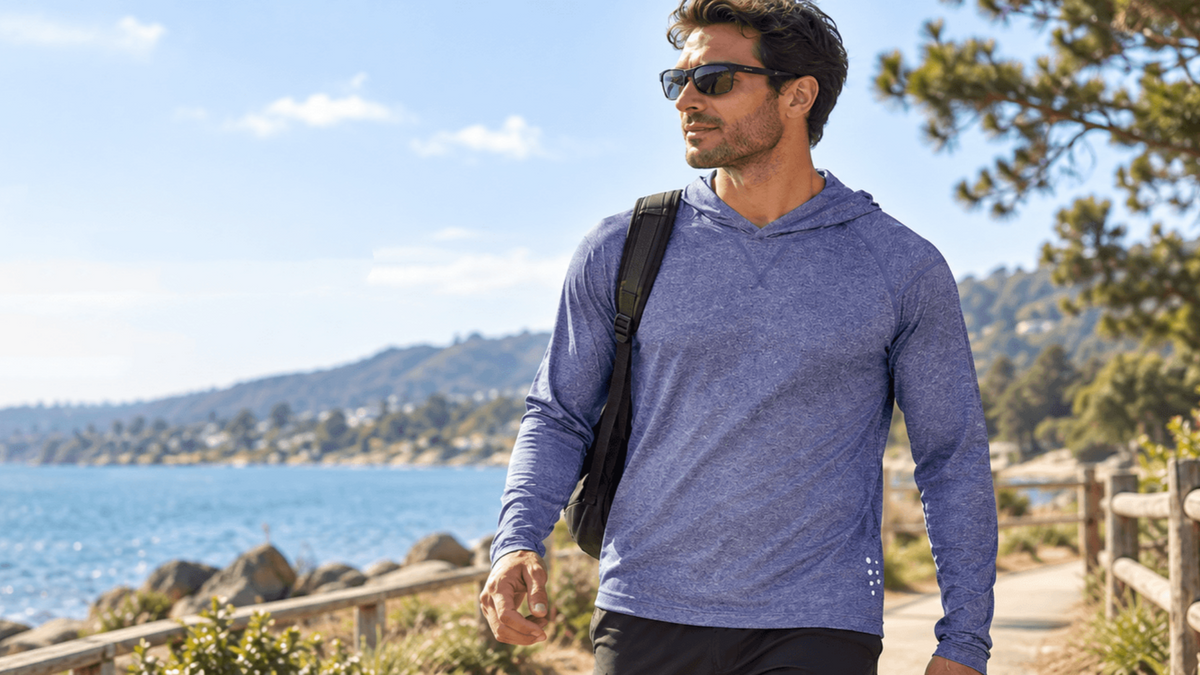
Mowing the lawn, washing a vehicle, working around a property, walking the dog, or spending an afternoon outside can create many of the same conditions: movement, sun, heat, and perspiration.
For someone who spends a lot of time outdoors, a moisture-wicking shirt can simply become a practical everyday option.
That versatility is one reason performance clothing has moved well beyond traditional sportswear.
Why Long Sleeves Can Still Work in Warm Weather
At first, long sleeves may sound counterintuitive when the weather is warm.
But warmth is influenced by more than sleeve length.
Fabric weight, airflow, moisture management, fit, and sun exposure all affect how clothing feels.
A lightweight long-sleeve performance shirt can sometimes feel more comfortable outdoors than a heavier short-sleeve cotton shirt, particularly during prolonged sun exposure.
The goal is not maximum insulation.
It is lightweight coverage.
That distinction matters when choosing clothing for hiking, fishing, boating, camping, or other extended outdoor activities.
What Should You Look for in a Moisture-Wicking Shirt?
You do not need an endless list of technical features.
Start with the fundamentals.
Look for lightweight fabric that feels comfortable against the skin. Check whether the material is designed to dry relatively quickly. Consider whether the fit gives you enough freedom of movement for the activity you have planned.
For sunny outdoor conditions, additional coverage can also be useful.
A performance hoodie combines long sleeves and a hood without necessarily adding the weight of a conventional sweatshirt.
Thumbholes can also help keep sleeves positioned over the wrists during movement.
None of these features is complicated on its own.
The value comes from how they work together during a full day outdoors.
Moisture Management Matters in Cooler Weather Too
Moisture-wicking clothing is often associated with summer, but it can be just as useful when temperatures begin dropping.
Why?
Because people still sweat in cool weather.
Hike uphill while wearing several heavy layers and you may become surprisingly warm. If those layers become damp, you can feel much colder when you stop moving.
A better approach is often to use a lightweight performance shirt as your base and add insulation separately.
This gives you more control.
When activity increases, remove an outer layer.
When you stop or temperatures fall, put it back on.
If you are building a fall outdoor wardrobe, our Outdoor Living guides cover this layering approach in more detail.
Is a Moisture-Wicking Shirt Worth It?
For someone who spends most of the day indoors, the difference may not be particularly important.
For someone who regularly hikes, fishes, camps, travels, works outside, or simply spends long periods in warm weather, it becomes much more noticeable.
A good outdoor shirt does not need to be complicated.
It needs to stay comfortable while conditions change.
That means managing moisture, allowing movement, providing useful coverage, and working with the rest of your clothing rather than trying to replace every other layer.
In many outdoor situations, those simple characteristics matter more than adding another pocket, zipper, or technical feature.
The Bottom Line
Moisture-wicking shirts are designed to help move perspiration away from your skin so it can spread through the fabric and evaporate more efficiently.
They are particularly useful when you are active for extended periods or dealing with changing temperatures.
For hiking, fishing, camping, travel, and everyday outdoor use, a lightweight performance shirt can provide a practical foundation.
Wear it alone when conditions are warm.
Layer over it when conditions cool down.
The best outdoor clothing often works that way—not by doing everything at once, but by doing the basics well.

