
Article: Best Shirts for Outdoor Work: What to Look for in a Long Day Outside
Best Shirts for Outdoor Work: What to Look for in a Long Day Outside
Outdoor work puts different demands on clothing than a short walk or a few hours at the gym. A shirt that feels comfortable indoors can quickly become heavy, restrictive, or uncomfortable after hours of movement, heat, and changing weather.
Whether you are working around the yard, maintaining property, handling equipment, working near the water, or spending most of the day outside, the right shirt should do more than simply cover your skin.
It should help you stay comfortable while you move.
So what actually makes a good shirt for outdoor work? Here are the features worth paying attention to.
1. Lightweight Fabric Matters More Than You Think
Heavy fabric may feel durable when you first put it on, but weight becomes much more noticeable after several hours outdoors.
This is especially true when temperatures rise or your work involves constant movement.
For warm conditions, lightweight performance fabrics can be a practical alternative to traditional heavy cotton. They put less bulk around the upper body and are generally easier to move in during repetitive tasks.
The goal isn't necessarily to find the thinnest shirt possible. Instead, look for a balance between coverage, comfort, and fabric weight.
A lightweight men's outdoor shirt can also work well as a base layer when temperatures begin to drop.
2. Breathability Becomes Important During Physical Work
Standing outside and working outside are two very different things.
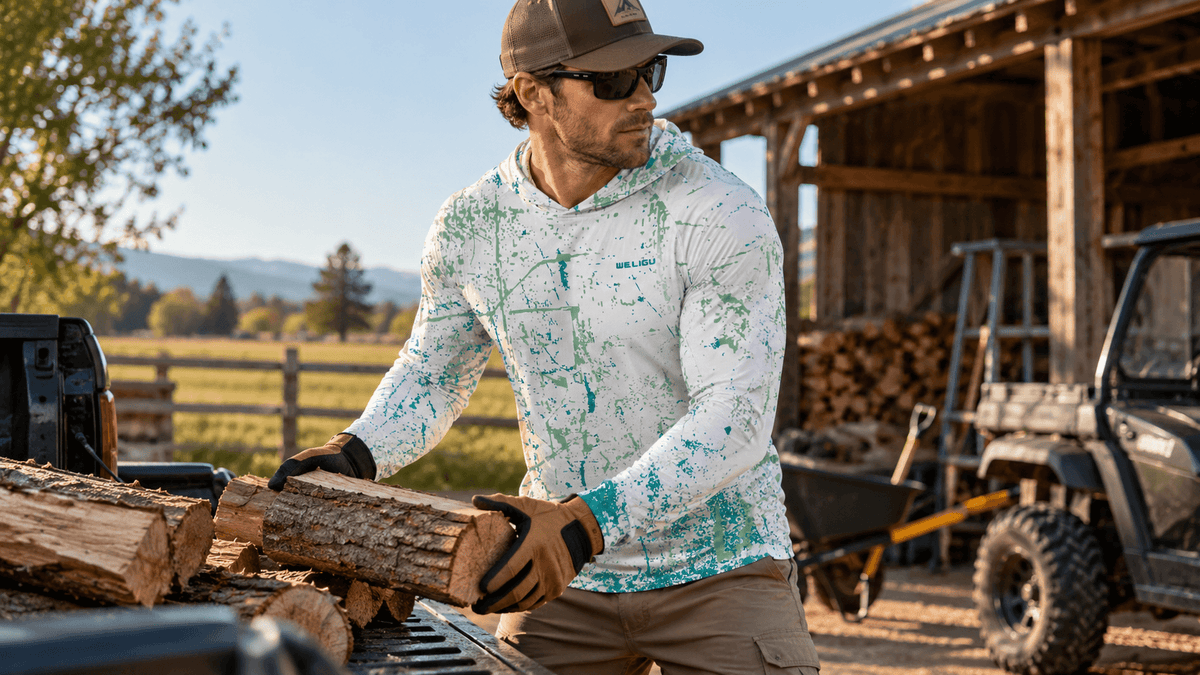
Carrying equipment, walking across uneven ground, loading a truck, working around a property, or performing repetitive tasks can generate plenty of body heat even on a relatively mild day.
That makes airflow important.
Breathable fabrics allow heat and moisture to escape more easily instead of trapping everything against the body.
Some performance shirts also use strategically placed breathable panels or fabric structures to increase ventilation around areas where heat tends to build up.
For anyone spending several hours outdoors, this can make a noticeable difference in overall comfort.
3. Quick-Drying Fabric Helps Manage Sweat and Unexpected Moisture
Sweat isn't the only reason an outdoor shirt gets wet.
Morning dew, light rain, splashes, damp equipment, and changing weather can all leave clothing holding moisture.
Cotton can absorb a significant amount of water and may remain damp for a long time. Performance fabrics are generally designed to move moisture and dry more quickly.
That is useful during long days because you may not have an opportunity to change clothes halfway through the day.
A quick-drying shirt won't prevent you from sweating, but it can reduce the amount of time you spend wearing wet, heavy fabric.
4. Long Sleeves Can Be Useful Even in Warm Weather
It sounds counterintuitive: if it's hot outside, why wear long sleeves?
Because temperature isn't the only consideration.
Long sleeves provide physical coverage for the arms when you're working around vegetation, dirt, insects, equipment, or prolonged sunlight.
The important distinction is the fabric.
A heavy long-sleeve shirt can obviously become uncomfortable in warm weather. A lightweight performance long sleeve, however, can provide coverage without the same amount of bulk.
For extended periods outdoors, a lightweight performance top can therefore make more sense than automatically reaching for a short-sleeve cotton tee.
5. Sun Coverage Should Be Part of the Decision
If your work keeps you outside for several hours, sun exposure adds up.
Your shoulders, arms, neck, and face can receive substantial exposure throughout the day, particularly when there is little shade.
Clothing can be one part of a broader sun-protection routine. Long sleeves provide more physical coverage than short sleeves, while certain outdoor garments are specifically designed with UPF-rated fabrics.
A hood can add additional coverage around the head and neck when needed.
Of course, clothing shouldn't replace other sensible sun-protection measures. Sunscreen, shade, hats, and appropriate timing still matter.
But choosing clothing with outdoor exposure in mind can reduce the amount of uncovered skin you need to manage throughout the day.
6. Freedom of Movement Is Essential
An outdoor work shirt shouldn't fight against your movements.
Think about the motions you perform throughout a typical day:
Reaching overhead. Bending. Lifting. Carrying. Pulling. Driving. Walking. Working with your hands.
A shirt may look perfectly comfortable while you're standing still but become restrictive once you start moving.
Look for a cut that provides enough room through the shoulders and torso without excessive loose fabric getting in the way.
Stretch can also help, particularly during activities involving frequent reaching or bending.
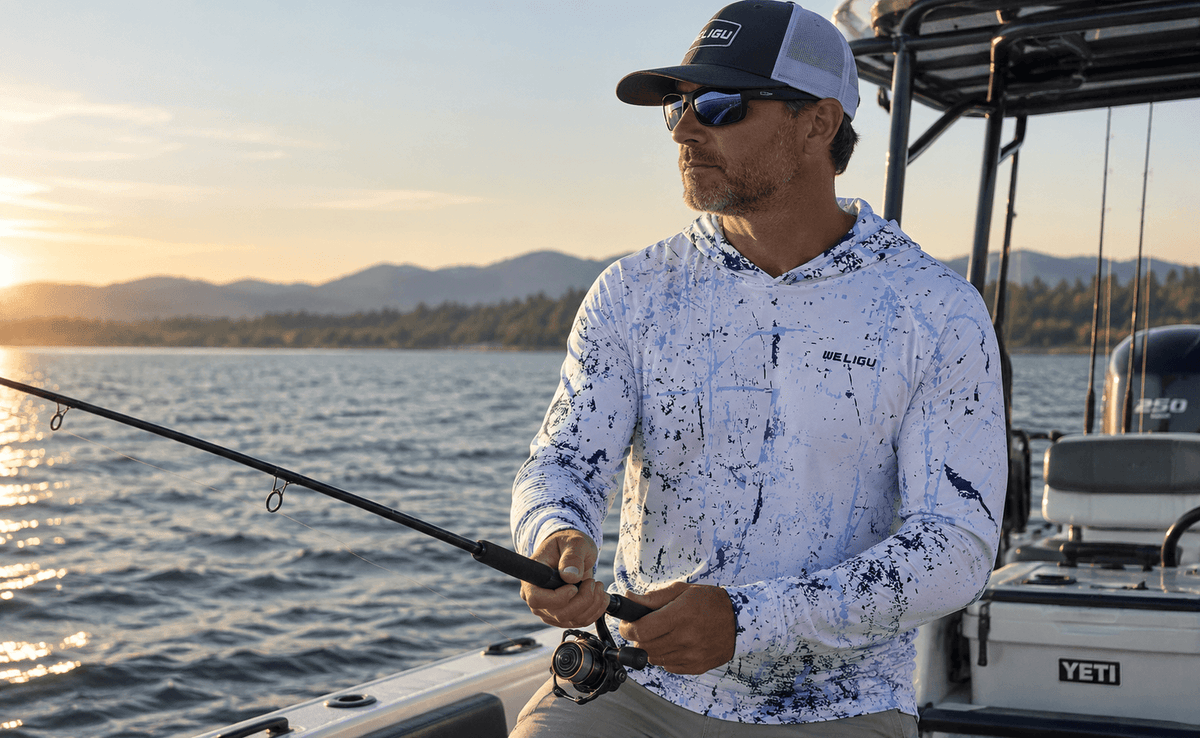
This is one reason performance shirts originally associated with activities such as fishing and hiking can work well for many other outdoor situations. The same characteristics—mobility, moisture management, lightweight construction, and coverage—translate naturally into everyday outdoor use.
7. A Hood Can Be More Practical Than It Looks
A lightweight hood isn't just a style feature.
When conditions change, it gives you another coverage option without requiring an additional garment.
It can be useful during windy mornings, bright afternoons, or situations where you simply want additional coverage around your neck and ears.
Unlike the hood on a traditional sweatshirt, a performance hood doesn't necessarily add significant insulation.
That distinction matters.
A heavy hoodie is designed primarily for warmth. A lightweight performance hoodie is designed more around coverage and versatility.
8. Think Beyond One Specific Activity
Outdoor clothing is often marketed around individual activities.
Fishing shirts.
Hiking shirts.
Work shirts.
Boating shirts.
But real life doesn't always fit neatly into those categories.
You might spend Saturday morning working around the property, drive somewhere in the afternoon, walk a trail later in the day, and end up near the water before sunset.
Buying highly specialized clothing for every situation isn't always necessary.
Instead, look for characteristics that work across different environments:
Lightweight construction, breathability, quick-drying fabric, comfortable movement, useful coverage, and a fit you can wear for hours.
That's the philosophy behind versatile outdoor clothing.
Choosing the Right Outdoor Shirt
Before buying your next shirt, think about where and how you will actually wear it.
If most of your time outdoors involves warm temperatures and movement, prioritize lightweight and breathable construction.
If you're frequently exposed to sunlight, consider long sleeves and UPF-rated fabrics.
If conditions change throughout the day, a hooded design can provide additional versatility.
And if you regularly move between work, recreation, and everyday activities, choose something comfortable enough to handle all three.
The best outdoor shirt isn't necessarily the one with the longest list of features.
It's the one you can put on in the morning, wear through a full day outside, and barely have to think about.

