
Why Lightweight Hoodies Work So Well for Fall Outdoor Activities
Fall weather has a habit of changing faster than expected. A cool morning can turn warm by noon, while a comfortable afternoon can quickly become chilly once the sun drops.
That makes dressing for fall less about wearing the warmest clothing possible and more about choosing pieces that can handle changing conditions.
For many outdoor activities, a lightweight hoodie sits in a useful middle ground. It provides more coverage than a short-sleeve shirt without the bulk and insulation of a traditional sweatshirt or heavy jacket.
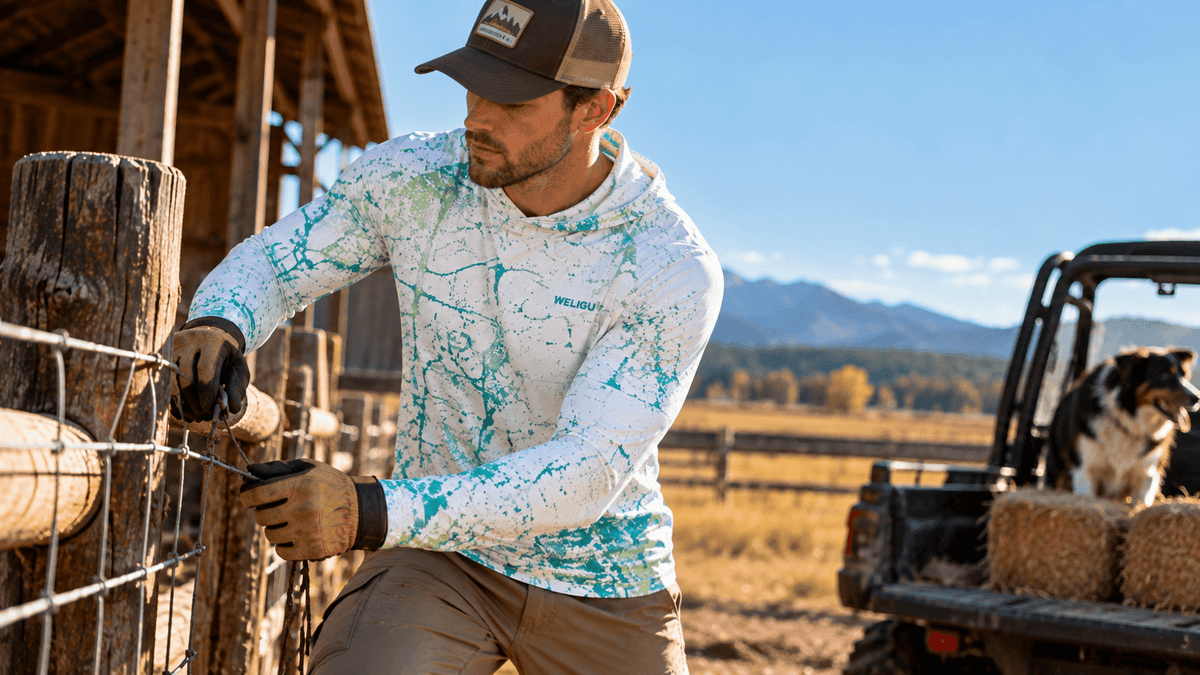
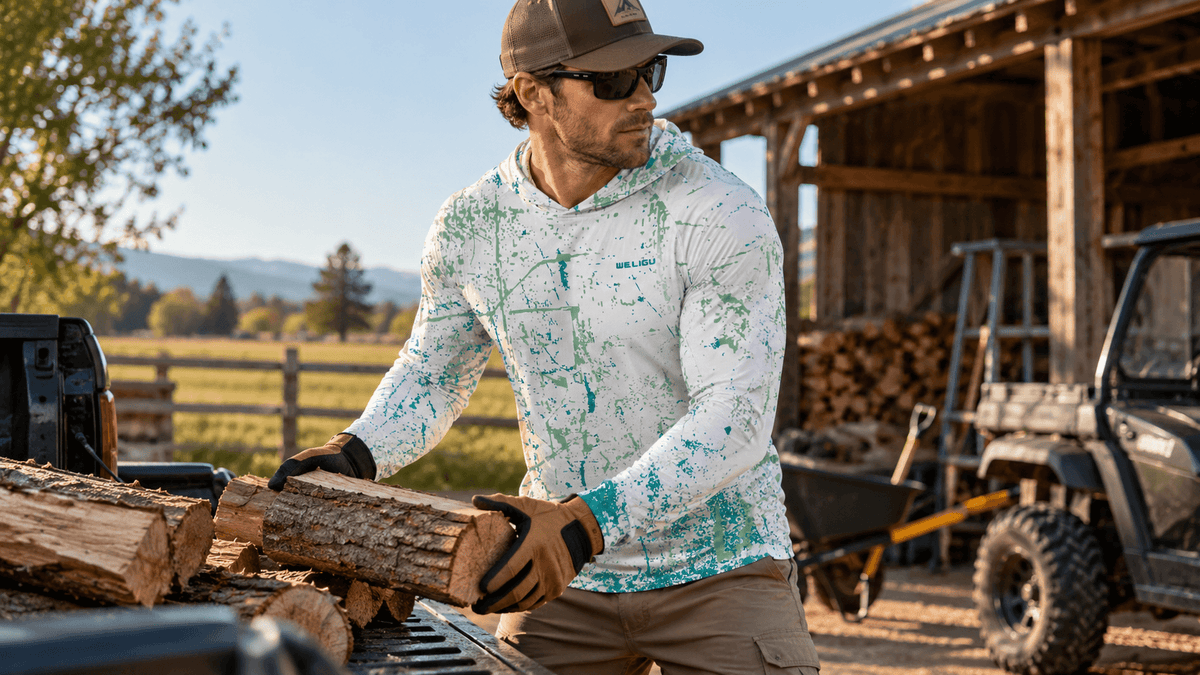
Whether you're spending a morning near the water, walking a trail, working outside, or simply staying outdoors through changing temperatures, the right lightweight hoodie can become one of the most practical pieces in your fall wardrobe.
What Makes a Lightweight Hoodie Different?
When most people hear "hoodie," they picture a thick cotton sweatshirt designed for cold weather.
A lightweight performance hoodie is different.
Instead of relying on heavy fleece for warmth, it typically uses lighter synthetic fabric designed to remain comfortable during movement. The result is a garment that provides coverage while still allowing heat and moisture to escape.
This distinction matters during fall.
Temperatures may be cool enough to make a T-shirt uncomfortable early in the morning, but not cold enough to justify wearing a heavy sweatshirt all day.
A lightweight hoodie fills that gap.
It can be worn by itself in mild conditions or used as part of a simple layering system when temperatures drop.
Fall Weather Is About Temperature Changes
One of the biggest challenges of fall outdoor clothing is not necessarily cold weather. It is temperature variation.
Consider a typical fall morning outdoors.
You might leave home when the temperature is cool and the sun is still low. A few hours later, direct sunlight and physical activity can make the same outfit feel considerably warmer.
Then the temperature begins falling again toward evening.
Heavy clothing can become uncomfortable during the warmest part of the day. Very light clothing, on the other hand, may leave you reaching for another layer every time the temperature changes.
A lightweight hoodie offers a practical compromise.
The sleeves provide consistent coverage, while the lighter construction makes it easier to remain comfortable as activity levels and temperatures change.
Why Breathability Matters in Cooler Weather
Breathability is often associated with summer clothing, but it remains important during fall.
Hiking uphill, carrying equipment, paddling, setting up camp, or working around the yard can generate considerable body heat even when the air feels cool.
That creates a common problem: you dress for the temperature rather than your activity level.
After twenty minutes of movement, the sweatshirt that felt comfortable at the beginning may suddenly feel too warm.
Breathable performance fabrics help reduce that problem by allowing excess heat and moisture to move away from the body more efficiently.
This is one reason lightweight performance tops can remain useful beyond summer.
The season changes, but the need to manage heat and moisture does not disappear.
A Hood Adds Coverage Without Adding Much Bulk
The hood is another reason this style works well during transitional weather.
Fall conditions can bring wind, light drizzle, cooler mornings, and sudden changes in cloud cover. A hood provides quick additional coverage around the head and neck without requiring you to carry another piece of clothing.
You may not need it most of the day.
That is exactly the point.
When the hood isn't needed, it stays out of the way. When conditions change, the extra coverage is already available.
For fishing, hiking, camping, boating, and other activities where you may be away from your vehicle or home for several hours, that flexibility can be particularly useful.
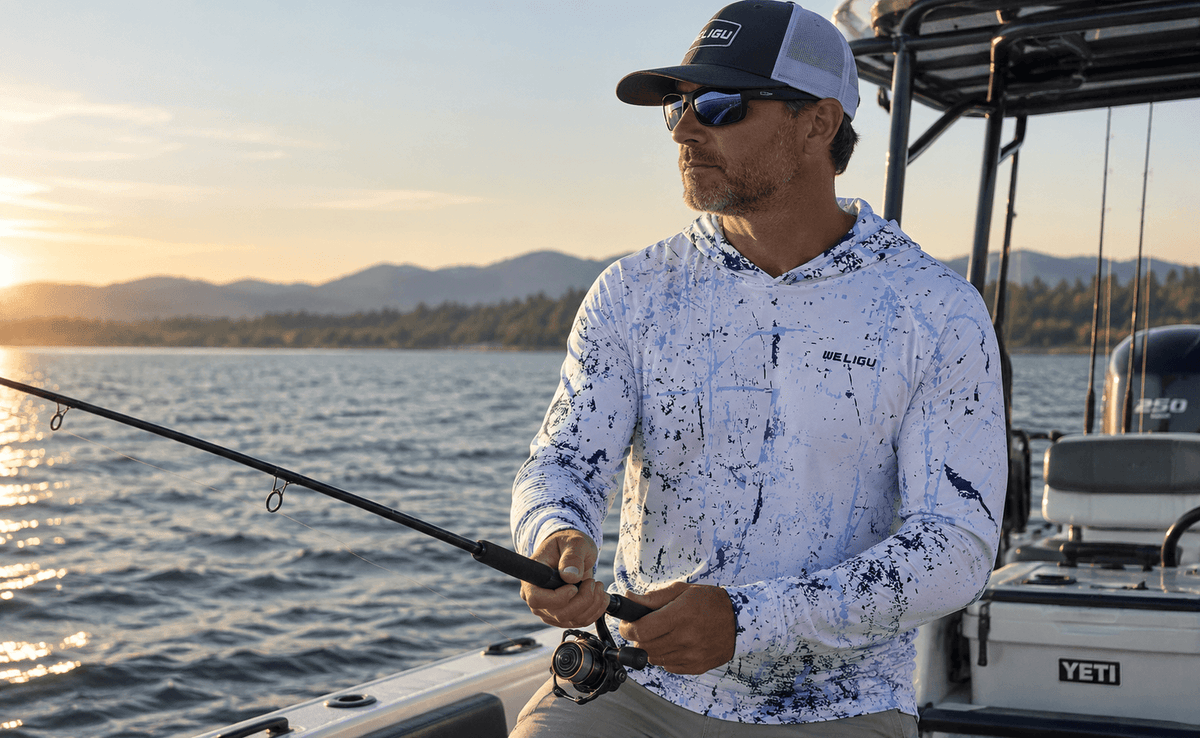
Lightweight Hoodies for Fall Fishing
Early fall can be one of those periods when summer and cooler weather overlap.
The afternoon may still feel warm, while mornings on the water can be noticeably cooler.
This is where a lightweight long-sleeve hoodie makes sense.
It provides arm and upper-body coverage during cooler starts without immediately forcing you into heavier cold-weather fishing clothing.
It can also be combined with a vest or jacket later in the season.
Rather than replacing your entire outdoor wardrobe when summer ends, versatile pieces allow you to extend what you already own into another season.
For anglers who spend long periods outside, our men's outdoor performance collection includes lightweight options designed around movement, coverage, and everyday outdoor comfort.
Lightweight Hoodies for Hiking and Walking
Fall hiking creates a similar challenge.
Standing at the trailhead may feel cold.
Twenty minutes into an uphill section, it may not.
This is why experienced hikers often think in terms of layers rather than a single heavy garment.
A lightweight hoodie can work as a standalone top during mild conditions or as a base/mid layer when temperatures become cooler.
The goal is not maximum insulation.
The goal is adaptability.
If you're planning a longer day outside, combine a lightweight performance hoodie with a packable outer layer. You can then adjust your clothing as weather and activity levels change instead of being committed to one heavy piece all day.
They Work Beyond the Trail
Outdoor clothing does not have to be reserved for major outdoor adventures.
In reality, many people spend more time doing ordinary outdoor activities than hiking mountains or spending entire days on a boat.
That might include:
- Walking the dog
- Doing yard work
- Driving to a campsite
- Working around the garage
- Taking an evening walk
- Watching an outdoor event
- Traveling
- Running errands on a cool morning
This is where simple performance clothing becomes particularly useful.
A garment that works for several situations usually earns more time in your regular rotation than something designed for one very specific activity.
That versatility is an important part of the WELIGU approach to outdoor clothing: practical pieces that work without making everything feel overly technical.
What to Look for in a Fall Outdoor Hoodie
Not every hoodie needs to be heavy.
For transitional weather, look for a few practical characteristics.
Lightweight fabric helps prevent overheating when temperatures rise or your activity level increases.
Breathability becomes important during hiking, walking, fishing, or physical work.
Long-sleeve coverage provides an additional barrier against wind, sun, vegetation, and changing temperatures.
A comfortable hood gives you optional head and neck coverage without requiring another garment.
Easy layering allows the hoodie to work alone during mild weather and underneath heavier outerwear as the season progresses.
Fit matters too.
You want enough room for natural movement without so much excess fabric that the shirt becomes cumbersome during active use.
Don't Retire Your Performance Shirts When Summer Ends
It is easy to think of lightweight performance clothing as strictly summer gear.
That unnecessarily limits its usefulness.
During transitional seasons, the same properties that make a shirt comfortable during warm weather—low weight, breathability, moisture management, and freedom of movement—can make it an effective layering piece.
The difference is simply how you wear it.
In warmer conditions, a lightweight hoodie may be your only layer.
As fall progresses, add a vest, overshirt, or jacket over it.
When winter arrives, it can move farther down your layering system instead of disappearing into storage.
That gives one piece of clothing a much longer useful season.
Keep Fall Clothing Simple
You do not need a completely different wardrobe every time the weather changes.
For most everyday outdoor activities, a small number of adaptable pieces can handle a surprisingly wide range of conditions.
A lightweight hoodie is useful precisely because it isn't extreme.
It isn't a heavy winter layer, and it isn't a minimal summer shirt. It occupies the space between the two.
And during fall—when the weather itself sits somewhere between summer and winter—that can be exactly what you need.