
What Makes a Good Outdoor Shirt? 7 Things That Actually Matter
Outdoor shirts come with a long list of features.
Moisture-wicking. Quick-dry. Breathable. Lightweight. Sun protection. Stretch. Ventilation.
Read enough product descriptions and almost every shirt starts to sound the same.
But when you are actually outside—walking a trail, spending a day near the water, setting up camp, traveling, or working around the yard—some features matter much more than others.
A good outdoor shirt does not need to be overloaded with technical details. It needs to remain comfortable when the weather, your activity level, and your surroundings change.
So what should you actually look for?
Here are seven things worth paying attention to.
1. Start With Fabric, Not Features
Before comparing pockets, hoods, thumbholes, or other details, look at the fabric.
The material affects almost everything else: how heavy the shirt feels, how quickly it dries, how much moisture it holds, and how comfortable it remains after several hours outside.
Traditional cotton is comfortable for casual use, but it absorbs moisture easily and can remain damp once wet.
Performance fabrics such as polyester are commonly used in outdoor performance shirts because they can be made lightweight and are generally better suited to managing moisture during active use.
That does not mean one fabric is universally better.
It means the fabric should match what you are doing.
For a relaxed evening around the house, the difference may barely matter. For several hours of hiking, fishing, boating, or working outside, it can become much more noticeable.
2. Breathability Matters More Than You Think
People often focus on temperature when deciding what to wear outdoors.
Activity level can be just as important.
A 65°F day may feel cool when you are standing beside your truck. After 30 minutes of walking uphill, it can feel completely different.
Your body generates heat as you move, and your clothing needs somewhere for that heat to go.
That is why breathability is so important.
A breathable shirt helps prevent heat and moisture from becoming trapped against your body during activity.
This matters particularly during transitional seasons such as early fall, when cool mornings frequently become warmer afternoons.
Instead of choosing the warmest shirt that feels comfortable when you leave home, consider how it will feel once you have been moving for an hour.
3. Moisture Management Makes Long Days More Comfortable
Sweating outdoors is normal.
The question is what happens afterward.
A shirt that becomes saturated and stays wet can feel increasingly uncomfortable as the day continues. This becomes even more noticeable when your activity level drops or a breeze develops.
Moisture-wicking performance fabrics are designed to move perspiration away from the skin and distribute it through the material so it can evaporate more efficiently.
Quick-drying fabric helps complete that process.
The two features are closely related, but they are not exactly the same.
Moisture-wicking describes how moisture moves through the fabric. Quick-dry describes how efficiently that moisture leaves it.
For activities where you repeatedly alternate between moving and resting, both characteristics are useful.
4. Lightweight Does Not Mean Flimsy
There is a common assumption that heavier clothing is automatically more durable or better suited to outdoor use.
That is not always the case.
For many activities, extra weight simply means extra fabric to carry around.
A lightweight long-sleeve performance shirt can be particularly useful for hiking, fishing, camping, travel, and other activities where conditions change throughout the day.
It can be worn by itself when temperatures are mild and used underneath a fleece or jacket when temperatures fall.
That versatility becomes valuable during fall.
Instead of expecting one heavy garment to handle the entire day, you can adjust individual layers as conditions change.
The result is usually more comfortable and easier to manage.
5. Think About Coverage
Short sleeves may be the obvious choice when temperatures rise, but temperature is not the only consideration outdoors.
Long sleeves provide additional coverage for your arms.
A hood adds coverage around the head and neck.
Thumbholes can help keep sleeves positioned around the wrists when you are moving.
These small design choices can become useful when you spend several hours exposed to sun, wind, brush, or changing weather.
That is one reason lightweight hooded shirts have become common across different outdoor activities.
They offer more coverage than a traditional T-shirt without necessarily providing the insulation or bulk of a sweatshirt.
For warm or mild conditions, that can be a useful middle ground.
6. Your Shirt Should Move With You
Outdoor clothing looks different when you are standing in front of a mirror than it does when you are actually using it.
Think about the movements involved in a typical day outside.
You might reach overhead to adjust gear, cast a fishing rod, climb over rocks, paddle, bend down to tie a boot, carry equipment, or reach into the back of a truck.
A shirt that feels fine while standing still can become restrictive once you begin moving.
That is why fit should be evaluated around movement rather than appearance alone.
The shirt should provide enough room through the shoulders, arms, and torso to move naturally without feeling excessively loose.
Raglan sleeves, flexible fabrics, and athletic cuts can help, but the fundamental goal is simple:
You should not spend the day thinking about your shirt.
7. Versatility Is Often More Valuable Than Specialization
There is plenty of highly specialized outdoor clothing available.
Some of it is genuinely useful.
But most people do not need a different shirt for every activity they do.
If you fish on Saturday, hike on Sunday, work in the yard during the week, and occasionally take a camping trip, buying four completely different wardrobes does not make much sense.
A versatile performance shirt can cover a surprising amount of ground.
That is especially true when the design is relatively understated.
A simple performance hoodie can work beside the water, on a trail, around a campsite, during a road trip, or simply while spending the day outside.
For many people, versatility becomes more valuable than having a highly specialized feature they rarely use.
What About Sun Protection?
Sun exposure deserves consideration whenever you spend extended periods outdoors.
Clothing provides a physical barrier between your skin and direct sunlight, and some performance garments are specifically designed and tested for ultraviolet protection.
You may see these products described using a UPF rating.
UPF stands for Ultraviolet Protection Factor and indicates how effectively a fabric reduces ultraviolet radiation passing through it.
However, clothing should be only one part of your approach to sun protection.
Exposed areas still require appropriate protection, and conditions such as time of day, duration outdoors, shade, and reflected sunlight all matter.
The practical advantage of a lightweight long-sleeve shirt is simple: it provides more physical coverage than a short-sleeve shirt while still being designed for active outdoor use.
Different Activities Have Different Priorities
There is no single feature ranking that works for everyone.
A hiker may prioritize low weight, breathability, and moisture management.
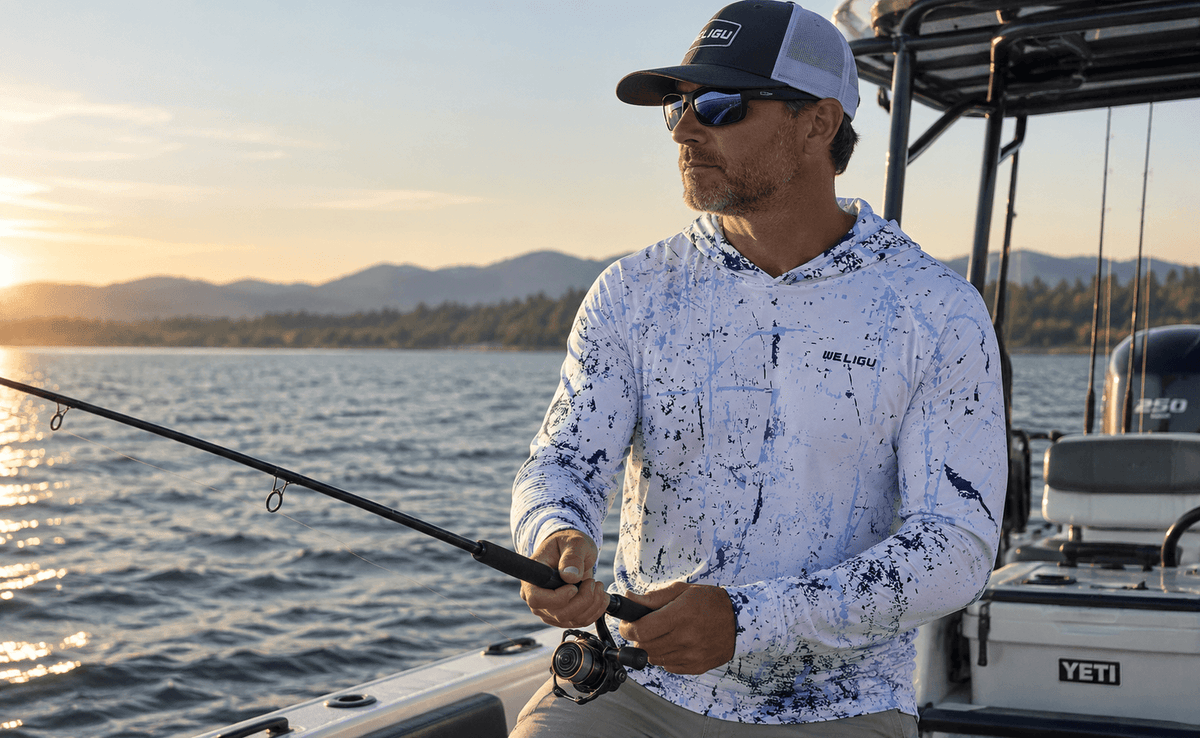
An angler spending hours near the water may place greater importance on coverage, quick-drying fabric, and a hood.
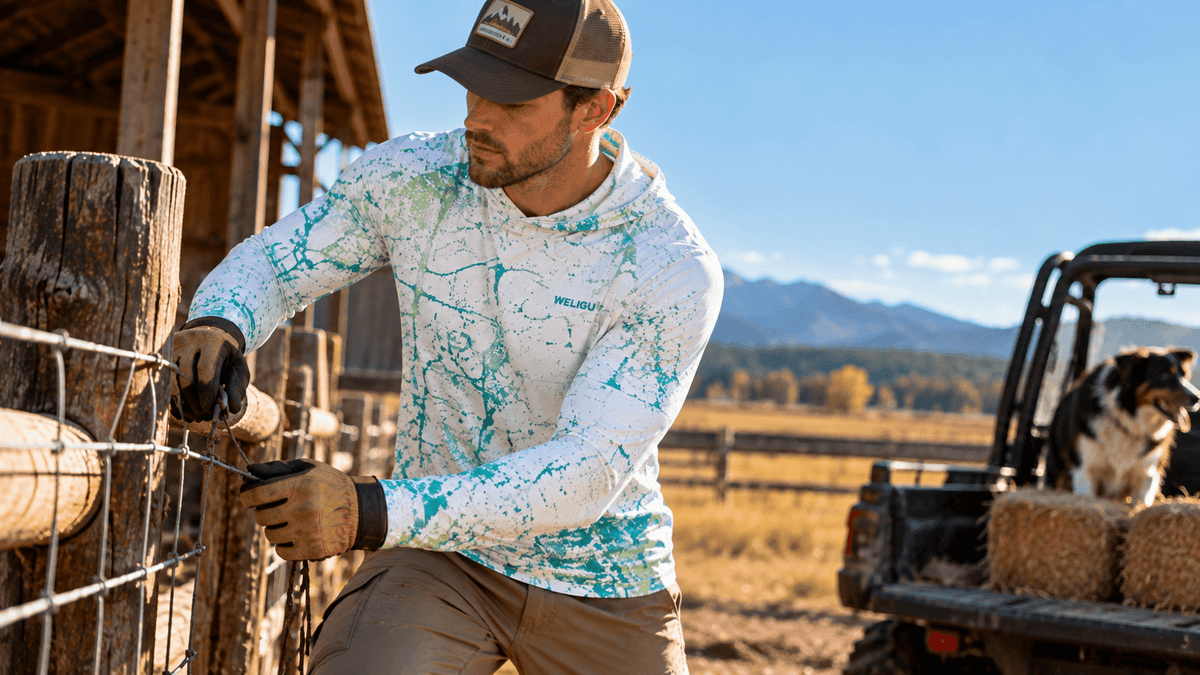
Someone working outdoors may care most about comfort, freedom of movement, and durability.
A traveler may simply want something lightweight that packs easily and can be worn in several different situations.
Before buying another outdoor shirt, ask yourself one question:
Where will I actually wear it?
That answer is more useful than choosing whichever product has the longest list of technical features.
A Simple Way to Choose an Outdoor Shirt
You can simplify the decision considerably.
For warm and mild weather, prioritize:
- lightweight fabric
- breathability
- moisture management
- quick-drying performance
- comfortable movement
- useful coverage
For cooler weather, start with those same characteristics and add insulation separately.
A lightweight performance shirt underneath a fleece, vest, or jacket gives you the ability to remove layers as your body warms up.
That is generally more adaptable than relying on one thick garment.
If you regularly deal with changing weather, our Outdoor Living guides cover layering and outdoor clothing choices in more detail.
Don't Buy Features You Won't Use
Outdoor clothing has become increasingly technical, but more technology does not automatically create a better shirt.
For most people, the fundamentals still matter most.
The fabric should feel comfortable.
The shirt should breathe when you move.
It should handle moisture reasonably well.
It should provide the amount of coverage you need.
And it should work across more than one situation.
Everything else is secondary.
A good outdoor shirt is not the one with the longest specification sheet.
It is the one you keep reaching for when you know you are going to spend the day outside.


