
Lightweight vs. Heavyweight Outdoor Shirts: Which One Should You Wear?
Choosing an outdoor shirt often comes down to more than short sleeves versus long sleeves. One of the most important—and often overlooked—differences is fabric weight.
A heavyweight shirt may feel reassuring when temperatures drop, but heavier does not automatically mean better. For hiking, fishing, camping, travel, yard work, and other active days outdoors, a lightweight shirt can often be the more practical choice.
The right option depends on the weather, your activity level, and how you plan to layer.
Here is how lightweight and heavyweight outdoor shirts compare, and when each one makes sense.
What Is a Lightweight Outdoor Shirt?
A lightweight outdoor shirt is designed to provide coverage without adding unnecessary bulk.
Unlike a traditional heavy cotton sweatshirt or thick long-sleeve tee, lightweight performance shirts typically use synthetic or blended fabrics engineered for active use. They are intended to move with the body, manage moisture, and remain comfortable during long periods outside.
That makes them particularly useful during transitional weather.
September and early fall are good examples. A morning may start cool enough for long sleeves, while the afternoon becomes warm and sunny. Wearing something too heavy can quickly become uncomfortable once you start moving.
A lightweight performance top gives you coverage while leaving more room to adjust throughout the day.
Lightweight vs. Heavyweight Shirts: The Main Differences
The most obvious difference is warmth, but there is more to consider.
Breathability
When you are walking uphill, casting repeatedly, setting up camp, or working outdoors, your body generates heat even when the air feels cool.
Lightweight fabrics generally allow that heat to escape more easily.
A heavier shirt may feel comfortable while you are standing still, but it can become too warm once your activity level increases.
For active outdoor use, breathability often matters just as much as insulation.
Moisture Management
Sweat becomes more noticeable in changing weather.
During summer, getting sweaty is expected. In cooler conditions, however, a damp shirt can become uncomfortable surprisingly quickly when you stop moving.
Performance fabrics designed to move moisture away from the skin can help reduce that clammy feeling.
This is one reason a lightweight performance shirt can work well as a base layer under a jacket or vest.
Packability
Fabric weight also matters when you are carrying your gear.
A lightweight hoodie or long-sleeve shirt takes up relatively little room in a backpack, truck, boat compartment, or travel bag. That makes it easy to keep an extra layer nearby without carrying something bulky.
For unpredictable weather, versatility is often more useful than maximum warmth.
When a Lightweight Shirt Makes More Sense
Lightweight outdoor shirts are particularly useful when conditions are mild or when your activity level is high.
Think about an early fall hike.
You leave the trailhead at 8 a.m. and the air feels cool. By 11 a.m., the sun is higher, the temperature has climbed, and you have been moving for several hours.
A heavy sweatshirt that felt good at the parking lot may now be tied around your waist.
A lightweight long-sleeve shirt can stay on.
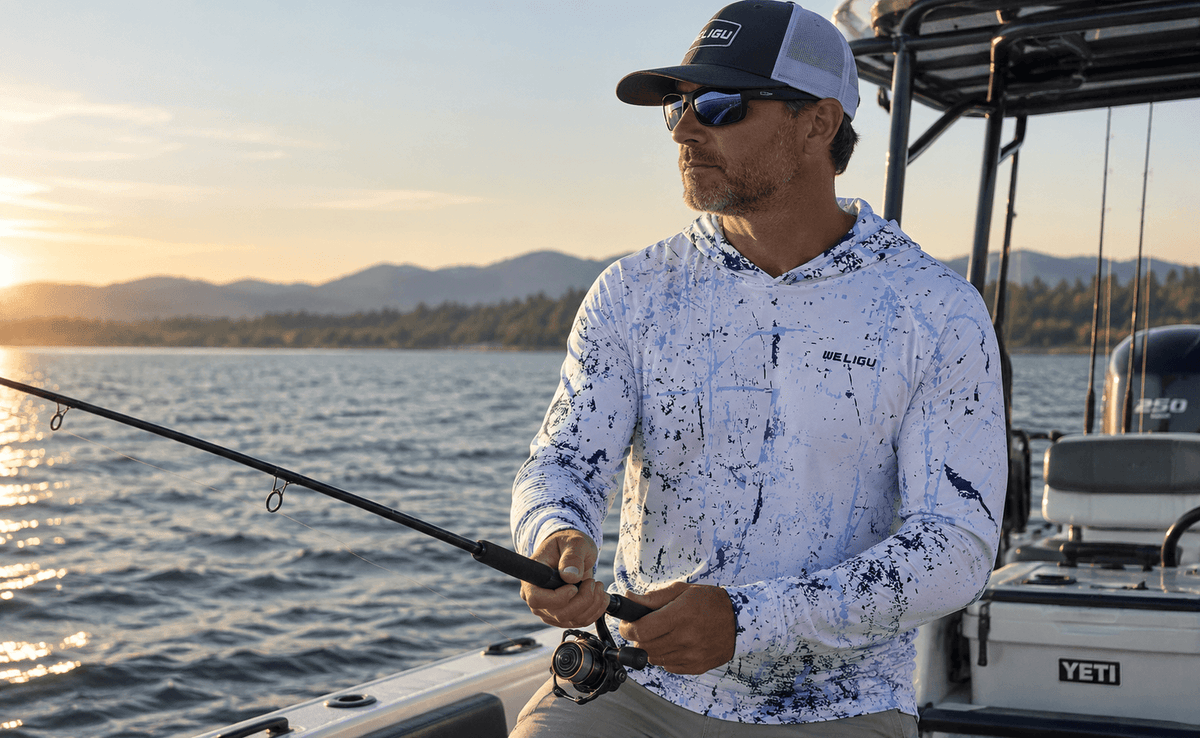
The same principle applies to fishing. Cool mornings on the water can turn into warm afternoons, especially when the sky clears.
For these conditions, something like a lightweight hooded performance shirt provides useful coverage without functioning like a heavy sweatshirt.
Lightweight shirts are especially practical for:
- hiking and trail walking
- fishing and boating
- camping
- road trips and travel
- yard work
- mild fall weather
- layering under jackets or vests
They are also useful when you simply prefer one versatile piece instead of repeatedly adding and removing heavier layers.
When a Heavyweight Shirt Is Better
Lightweight clothing is not the answer to every situation.
When temperatures remain consistently cold, you are spending long periods sitting still, or wind exposure is significant, additional insulation becomes important.
A heavier fleece, sweatshirt, insulated jacket, or similar layer will usually provide more warmth than a thin performance shirt.
The key is understanding the difference between coverage and insulation.
Long sleeves provide coverage, but they do not automatically provide substantial warmth.
That distinction becomes increasingly important as fall moves toward winter.
Why Activity Level Changes What You Should Wear
Outdoor clothing should match what your body is doing—not simply the number shown on a weather app.
A person sitting beside a campsite may need considerably more insulation than someone hiking uphill in exactly the same temperature.
The more active you are, the more body heat you generate.
That is why experienced hikers often start a walk feeling slightly cool rather than perfectly warm. Once they begin moving, their body temperature rises.
Overdressing can create another problem: sweat.
If your clothing becomes damp during strenuous activity, you may feel colder once you stop.
For active days, starting with a breathable long-sleeve performance shirt and carrying an additional layer is often more adaptable than wearing one very heavy garment from the beginning.
Lightweight Hoodies Can Be Especially Versatile
A lightweight hoodie occupies an interesting middle ground.
It gives you long-sleeve coverage plus a hood, but without necessarily adding the bulk associated with a traditional sweatshirt.
The hood can be useful when the sun becomes stronger, when there is a light breeze, or when you simply want additional head and neck coverage without carrying another piece of clothing.
For fishing, hiking, camping, and everyday outdoor use, that flexibility can make a performance hoodie surprisingly practical.
It is not intended to replace an insulated jacket in cold weather.
Instead, think of it as a flexible first layer that can be worn alone when conditions are mild and underneath warmer clothing when temperatures drop.
The Better Fall Strategy: Layer Instead of Overdress
Fall weather rarely stays consistent for an entire day.
That makes layering particularly useful.
A simple system might begin with a lightweight performance shirt next to the body. When temperatures drop, add a fleece, vest, or light jacket. When conditions warm up again, remove the outer layer.
This approach gives you considerably more control than relying on one thick shirt.
It also allows the same base layer to work across a wider range of conditions.
For more ideas on building a flexible outdoor clothing system, see our guide to how to layer for hiking.
What About Cotton?
Cotton remains comfortable for casual everyday wear, but it has limitations during active outdoor use.
It tends to absorb moisture and can take longer to dry than many performance fabrics. On a relaxed afternoon outdoors, that may not matter.
During a long hike, fishing trip, or changing fall weather, it can.
That does not mean every outdoor activity requires technical clothing. It simply means fabric choice becomes more important as activity level, moisture, and weather variability increase.
How to Choose Between Lightweight and Heavyweight
Instead of asking which type of shirt is universally better, ask what the day will actually involve.
Consider three things: temperature, activity level, and layering options.
If temperatures are mild, you expect to stay active, and you can carry an extra outer layer, lightweight clothing usually offers more flexibility.
If temperatures will remain cold and you expect long periods of low activity, prioritize insulation.
And when conditions are unpredictable, combining lightweight performance clothing with a separate warmer layer gives you the ability to adjust.
One Shirt Does Not Need to Do Everything
There is no single outdoor shirt that works perfectly from hot summer afternoons to freezing winter mornings.
That is not really the goal.
A useful outdoor wardrobe is built around pieces that work together.
Lightweight performance shirts handle movement, coverage, and changing temperatures. Heavier layers provide insulation when conditions demand it.
Understanding the difference makes it easier to dress for the day rather than simply dressing for the season.
And during early fall—when cool mornings can still turn into surprisingly warm afternoons—that flexibility matters.