
Best Shirts for Outdoor Activities: What Actually Matters?
Choosing a shirt for the outdoors sounds simple until you spend several hours outside.
A shirt that feels comfortable when you first put it on may feel completely different after a long walk, a warm afternoon, or a few hours near the water. Sweat builds up. Weather changes. Sleeves start to feel restrictive. Heavy fabric stays damp longer than expected.
That is why a good outdoor shirt is less about one specific activity and more about how well it handles the conditions you encounter along the way.
Whether you are hiking, fishing, camping, boating, working around the yard, or simply spending a long day outside, a few practical features tend to matter more than everything else.
1. Start With the Fabric
Fabric is one of the biggest differences between an everyday shirt and a shirt designed for active outdoor use.
Cotton is comfortable for casual wear, but it can absorb a considerable amount of moisture and take time to dry. Once wet, it may become heavier and less comfortable.
Performance fabrics are generally designed to manage moisture more efficiently.
For warm-weather activities, look for materials that feel:
- Lightweight
- Breathable
- Quick-drying
- Smooth against the skin
- Comfortable during repeated movement
You do not necessarily need the lightest shirt available. What matters is finding a fabric that provides enough coverage without feeling heavy once you begin moving.
This is especially useful for activities such as hiking and fishing, where conditions can change considerably over several hours.
2. Long Sleeves Can Be More Practical Than They Look
It is easy to assume that short sleeves are automatically more comfortable when the weather is warm.
That is not always the case.
A lightweight long-sleeve shirt provides more physical coverage for the arms while still allowing you to choose a breathable fabric.
This can be useful when spending extended periods in exposed environments such as trails, boats, campsites, docks, and open fields.
Long sleeves also reduce how much exposed skin you need to manage throughout the day.
For people who regularly spend hours outdoors, this is one reason a lightweight long sleeve performance shirt can become more useful than a standard cotton T-shirt.
The important distinction is lightweight coverage, rather than simply wearing more fabric.
3. Think About Sun Exposure, Not Just Temperature
A cool morning can be misleading.
You might begin a hike or fishing trip when temperatures are comfortable, only to spend the middle of the day under direct sunlight.
That is why outdoor clothing should be selected for the conditions you expect over the entire day, rather than only the temperature when you leave home.
Clothing with UPF-rated fabric can form part of a broader sun-protection strategy alongside sunscreen, hats, sunglasses, and shade.
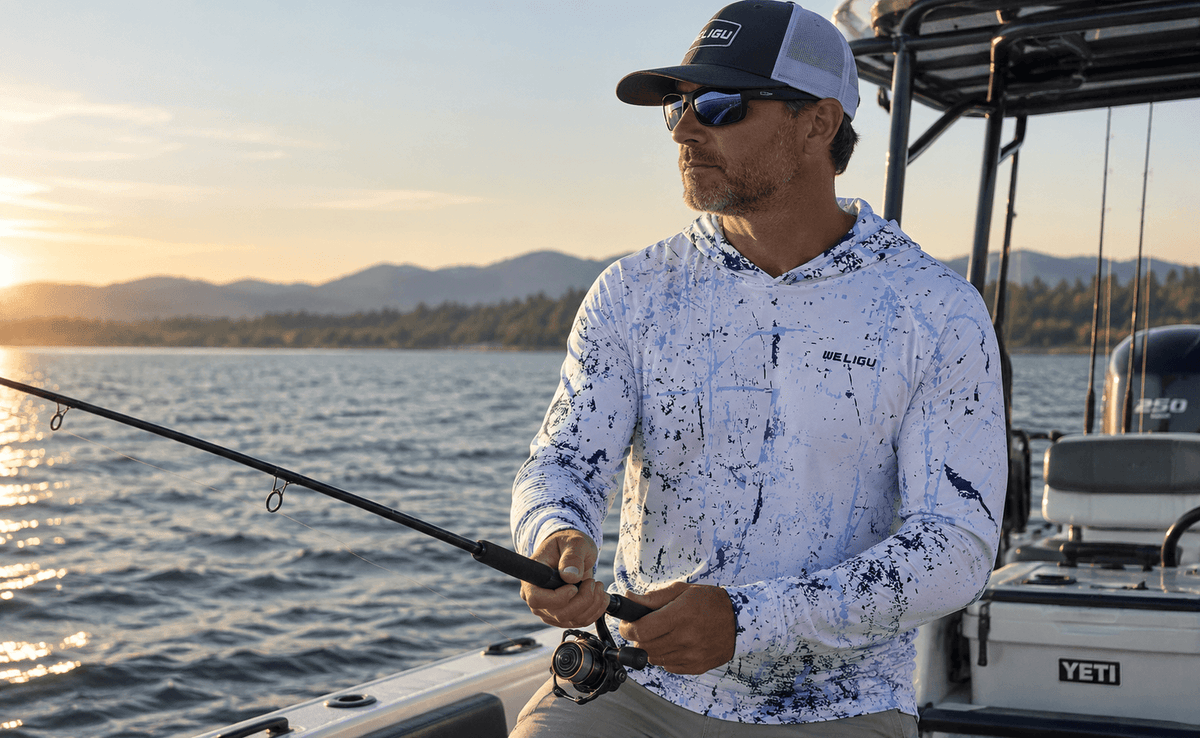
For activities with prolonged exposure, a hooded outdoor shirt can also provide additional coverage around the head and neck when needed.
The hood does not have to stay up all day. The advantage is simply having that extra coverage available without carrying another layer.
4. Breathability Matters When You Start Moving
A shirt can feel lightweight in your hand and still feel uncomfortable during activity.
That is because fabric weight and breathability are not exactly the same thing.
When you walk uphill, paddle, cast repeatedly, set up camp, or work outside, your body generates additional heat.
A useful outdoor shirt needs to help that heat and moisture escape.
This is where construction matters.
Look for shirts designed around airflow and moisture management rather than choosing solely by how thin the material appears.
The goal is straightforward: the shirt should continue to feel comfortable after you have been moving, not just when you first put it on.
5. Quick-Drying Fabric Is Useful Beyond Fishing
Quick-drying clothing is often associated with fishing and water sports, but its usefulness goes much further.
On a trail, sweat can leave your shirt damp.
At a campsite, unexpected rain can do the same.
While boating, spray is almost unavoidable.
Even during ordinary outdoor work, heat and humidity can leave clothing wet long before the day is finished.
Fabric that releases moisture and dries relatively quickly can therefore make a noticeable difference across many outdoor activities.
This is one reason performance shirts should not automatically be treated as "fishing-only" clothing.
A well-designed performance shirt can work across a much broader outdoor wardrobe.
6. Fit Should Allow Natural Movement
Outdoor clothing does not need to be extremely loose, but it should not fight against your movement.
Think about the movements you actually make outside:
Reaching overhead. Casting. Paddling. Bending down. Carrying equipment. Climbing over uneven terrain.
A shirt may look perfectly fitted while standing still but become restrictive during these movements.
For general outdoor use, a comfortable fit through the shoulders, chest, and arms is usually more practical than an aggressively slim silhouette.
If you intend to wear another layer underneath, allow enough room for that as well.
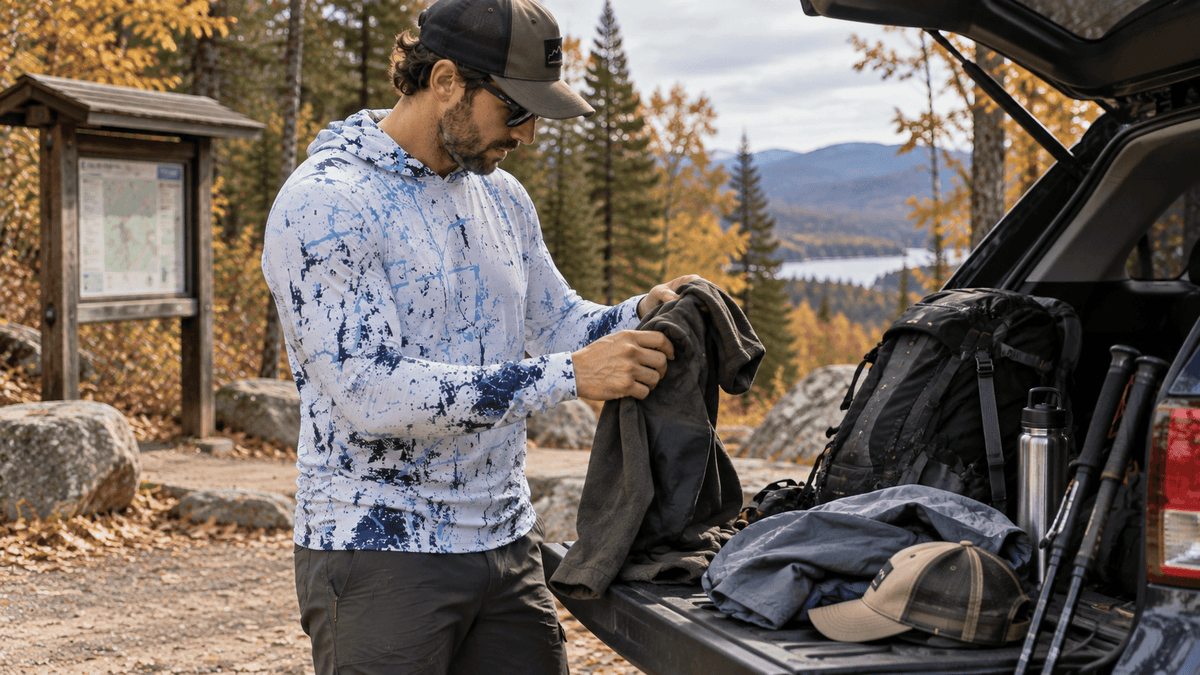
This becomes particularly useful during fall, when a lightweight performance shirt can serve as part of a simple hiking layering system instead of functioning as the entire outfit.
7. Consider the Activity, but Don't Over-Specialize
There is plenty of highly specialized outdoor clothing available.
Sometimes that specialization is useful.
But most people do not need a completely different shirt for every outdoor activity they enjoy.
If you fish on Saturday, hike on Sunday, work in the yard during the week, and occasionally go camping, versatile clothing may make more sense.
A practical outdoor shirt should be able to move between several environments without looking or feeling out of place.
For example:
| Activity | Features That Matter Most |
|---|---|
| Hiking | Breathability, mobility, quick drying |
| Fishing | Sun coverage, moisture management, lightweight fabric |
| Boating | Quick drying, sun coverage |
| Camping | Comfort, versatility, layering |
| Everyday outdoor use | Comfort, simple styling, durability |
Rather than building five separate wardrobes, start with pieces that cover several of these needs.
You can then add specialized clothing where it genuinely improves your experience.
8. Hooded or Non-Hooded?
Neither option is automatically better.
A traditional long-sleeve shirt is simple and versatile. It works well by itself and layers easily under jackets or other outerwear.
A hoodie adds optional coverage around the neck and head.
For exposed environments—especially open water or trails with limited shade—that extra coverage can be useful.
If you spend time across several different activities, browsing different men's outdoor performance tops can help you compare which construction makes the most sense for how you actually spend your time outside.
The key is not choosing the version with the most features.
It is choosing the features you will actually use.
Build an Outdoor Wardrobe Around Versatility
Outdoor clothing does not need to be complicated.
Start with the conditions you encounter most often.
If you spend long periods in the sun, prioritize coverage. If you are active in warm conditions, prioritize breathability and moisture management. If your days regularly move between cool mornings and warmer afternoons, choose clothing that works well as part of a layering system.
Above all, choose pieces you will actually wear.
The best outdoor shirt is rarely the one with the longest feature list. It is the one that remains comfortable after several hours outside and works across enough situations to earn a regular place in your wardrobe.
That principle applies whether the day takes you to a trail, a lake, a campsite, or simply somewhere beyond the front door.