
What to Wear Hiking in Fall: A Practical Layering Guide for Men
Why Fall Hiking Clothes Require More Planning
Summer hiking is relatively straightforward. When the weather is consistently warm, lightweight clothing is usually enough.
Fall is different.
A trail that feels cold at 8 a.m. may feel surprisingly warm by noon. Tree cover, elevation, wind, cloud cover, and even how quickly you are walking can change how comfortable you feel.
That makes versatility more important than simply choosing the warmest clothing available.
A practical fall hiking outfit should help you:
- stay comfortable when temperatures change
- manage sweat during climbs
- reduce wind exposure when conditions turn cooler
- add or remove layers without carrying excessive bulk
The goal is not to predict the weather perfectly. It is to build an outfit that can adapt when the weather does something different than expected.
Start With a Lightweight Base Layer
Your first layer sits directly against your skin, so comfort and moisture management matter.
During an active hike, even cool weather can produce a surprising amount of sweat. Cotton may feel comfortable at the trailhead, but once it becomes damp, it can stay wet for a long time and feel increasingly cold when you stop moving.
For many mild fall conditions, a lightweight performance shirt works better.
Look for fabrics designed to move moisture away from the skin and dry relatively quickly.
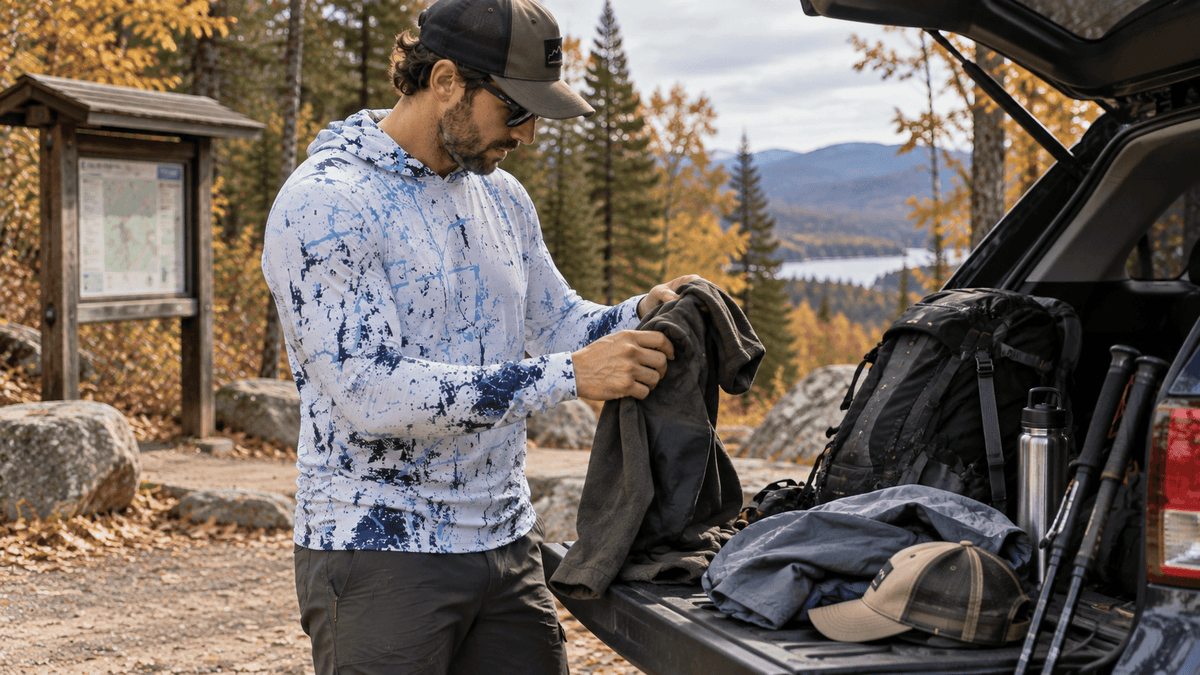
A long-sleeve shirt also provides useful coverage without requiring a heavy layer immediately.
For warmer fall days, it may be the only layer you need while moving.
Long Sleeves Make Sense in Changing Weather
One reason long sleeves work particularly well during fall is their flexibility.
They provide more coverage when the morning air is cool but do not necessarily add the bulk of a sweatshirt or jacket.
They can also be useful when hiking through exposed areas where sunlight remains strong even though temperatures have dropped.
This is easy to overlook.
Cool weather does not mean UV exposure disappears. At higher elevations and on open trails, sun exposure can still be significant.
A lightweight long-sleeve outdoor shirt therefore does several jobs at once: coverage, moisture management, and a comfortable first layer beneath additional clothing.
For this reason, lightweight performance shirts and outdoor long-sleeve styles can remain useful well beyond the hottest part of summer.
Add a Light Mid-Layer When Temperatures Drop
The second layer is where warmth begins.
You usually do not need an extremely heavy insulating layer for a typical fall day hike. A lightweight fleece, quarter-zip, or similar mid-layer is often easier to manage.
The important part is that it can be removed easily.
You might start the morning wearing it, put it in your backpack during a climb, and put it back on during lunch or when the trail reaches a windy ridge.
This flexibility is more valuable than wearing one heavy garment all day.
For colder late-fall conditions, a slightly warmer fleece or light insulated layer may make sense, but avoid automatically dressing for the coldest moment of the day.
You will generate heat once you start moving.
Keep a Wind or Rain Layer in Your Pack
Even when the forecast looks reasonable, a lightweight outer shell can be one of the most useful items in a fall hiking pack.
Wind can change how a temperature feels very quickly.
A 55°F afternoon in calm conditions can feel comfortable. The same temperature on an exposed ridge with steady wind can feel completely different.
A lightweight shell creates a barrier against that wind without requiring a bulky winter jacket.
If rain is possible, choose a shell designed for wet conditions.
Think of this layer as insurance. You may spend most of the hike carrying it rather than wearing it, and that is perfectly fine.
Don't Overdress at the Trailhead
This is one of the easiest mistakes to make.
You step out of the vehicle, feel cold, and immediately put on every layer you brought.
Twenty minutes later, you are climbing uphill and overheating.
Instead, consider how you are likely to feel once you begin moving.
Starting slightly cool can sometimes be more comfortable than starting perfectly warm and becoming sweaty almost immediately.
Of course, conditions vary. Cold temperatures, strong wind, rain, elevation, and personal tolerance all matter.
But for moderate fall weather, think about your clothing based on the next hour of activity, not only the first minute at the trailhead.
Choose Hiking Pants Based on Conditions
For many fall hikes, lightweight hiking pants are the most versatile option.
They provide coverage from brush, insects, cool wind, and changing temperatures while remaining easier to move in than heavy everyday pants.
Look for:
- comfortable stretch
- quick-drying material
- practical pockets
- enough room for unrestricted movement
If the forecast is particularly cold, layering lightweight thermal bottoms underneath hiking pants can provide additional warmth without requiring extremely heavy outer pants.
Don't Forget the Small Layers
Some of the most useful fall hiking gear takes up very little space.
A lightweight beanie can make a noticeable difference during a cold morning or windy rest stop.
Thin gloves are useful when temperatures fall unexpectedly.
Extra socks can be valuable if the trail is wet.
These items weigh very little compared with a heavy jacket, making them easy additions to a day pack.
What Should You Wear for a 50–60°F Fall Hike?
For mild fall weather around 50–60°F, a simple combination may be enough:
Lightweight long-sleeve performance shirt + hiking pants + light fleece + packable shell.
You may begin with the fleece on and remove it once you warm up.
If the afternoon becomes warmer, the long-sleeve performance shirt becomes your primary hiking layer.
If wind or rain arrives, the shell goes over everything.
That adaptability is exactly what makes layering effective.
What About 40–50°F?
Once temperatures begin dropping toward the 40s, insulation becomes more important.
A typical combination might include:
Performance base layer + fleece or light insulation + wind/rain shell + hiking pants.
A beanie and lightweight gloves are also worth carrying.
Conditions at this temperature range can vary considerably, particularly with wind, rain, elevation, and sunlight, so checking the forecast for the actual trail is important.
Avoid Building Your Outfit Around One Temperature
Weather apps give you a number.
Trails give you conditions.
Those are not always the same thing.
A forecast of 55°F does not tell you whether you will spend three hours in direct sun, walk beneath dense tree cover, climb 1,500 feet, encounter strong wind, or stop beside a cold lake.
Instead of asking:
“What should I wear at 55°F?”
A better question is:
“What combination of layers gives me enough options for this hike?”
That shift in thinking makes outdoor clothing much easier to plan.
A Simple Fall Hiking Clothing Checklist
Before leaving, consider bringing:
- lightweight moisture-managing shirt
- hiking pants
- removable mid-layer
- lightweight wind or rain shell
- appropriate hiking footwear
- moisture-managing socks
- hat or beanie
- lightweight gloves when colder weather is possible
For longer hikes or more remote terrain, your equipment requirements will obviously extend well beyond clothing.
Always plan around the specific trail, forecast, elevation, distance, and conditions.


