
How to Layer for Hiking: A Simple System for Changing Weather
A hiking trail rarely feels the same from beginning to end.
You might leave the parking lot on a cool morning, start sweating during a long uphill section, feel a cold breeze when you reach an exposed ridge, and then stop for lunch just as your body begins to cool down.
That is why experienced hikers usually do not rely on one heavy piece of clothing.
Instead, they use layers.
A good hiking layering system lets you adjust what you are wearing as your activity level and the weather change. More importantly, it helps you stay comfortable without carrying an unnecessarily heavy wardrobe in your backpack.
Here is a simple way to build one.
Why Layering Works Better Than One Heavy Jacket
The biggest advantage of layering is flexibility.
When you wear one heavy jacket, you essentially have two choices: wear it or take it off.
Layers give you more control.
As you warm up, you can remove one piece. When the wind picks up or you stop moving, you can put it back on.
This becomes especially useful during fall, spring and higher-elevation hikes, when conditions may change significantly over just a few hours.
A basic hiking clothing system usually has three parts:
Base layer → Mid layer → Outer layer
You will not always need all three.
The idea is to have them available when conditions require them.
Layer 1: Start With a Breathable Base Layer
Your base layer sits closest to your skin.
Its main job during active hiking is not simply to keep you warm. It should help manage moisture while allowing excess body heat to escape.
When you climb a steep section of trail, your body generates heat quickly. If your shirt traps too much heat and moisture, you may become uncomfortable even when the outside temperature is relatively cool.
Look for a base layer with:
- Lightweight fabric
- Moisture-wicking properties
- Good breathability
- Quick-drying performance
- Comfortable freedom of movement
For mild conditions, a lightweight performance shirt may be the only upper-body layer you need while actively hiking.
A long-sleeve performance shirt can also provide additional arm coverage without requiring a heavier garment.
What Does Moisture Wicking Actually Mean?
“Moisture wicking” is common outdoor clothing terminology, but the idea behind it is simple.
Instead of allowing sweat to remain concentrated against your skin, moisture-wicking fabric is designed to move moisture through the material so it can spread and evaporate more efficiently.
This becomes particularly useful during hiking because your activity level constantly changes.
You may sweat heavily during a climb and then generate much less heat when walking downhill or stopping for a break.
Clothing that dries relatively quickly can help reduce that uncomfortable damp feeling when your body begins cooling down.
Why Cotton Can Be Less Practical on Changing-Weather Hikes
Cotton is comfortable for everyday use, but it can become less convenient when you are sweating and temperatures are changing.
Once cotton absorbs significant moisture, it can take longer to dry.
That may not matter much during a short walk around town.
On a trail, however, you could finish a warm uphill section with a damp shirt and then reach a windy overlook where the temperature feels considerably cooler.
Synthetic performance fabrics are popular for hiking partly because they generally manage this transition better.
You do not necessarily need specialized technical clothing for every hike, but moisture management becomes increasingly important as hikes become longer or weather becomes less predictable.
Layer 2: Add Insulation When You Need It
The second layer provides warmth.
A lightweight fleece, quarter-zip or similar insulating garment can work well in cool conditions.
But one of the most common mistakes is putting it on too early.
If you are about to begin a long uphill climb, wearing too many layers can make you sweat unnecessarily.
It is often better to begin a hike feeling slightly cool.
After ten or fifteen minutes of steady movement, your body will usually generate considerably more heat.
Keep your insulating layer accessible in your backpack so you can put it on when you stop moving or enter colder conditions.
Layer 3: Protect Yourself From Wind and Rain
Your outer layer has a different job.
Rather than providing most of your insulation, it protects the layers underneath from environmental conditions.
Depending on the forecast, this could be:
- A lightweight windbreaker
- A water-resistant shell
- A waterproof rain jacket
Wind protection is particularly easy to underestimate.
A comfortable temperature in a sheltered forest can feel very different once you reach an exposed ridge.
Adding a thin wind-resistant shell may sometimes provide more practical comfort than adding another thick insulating layer.
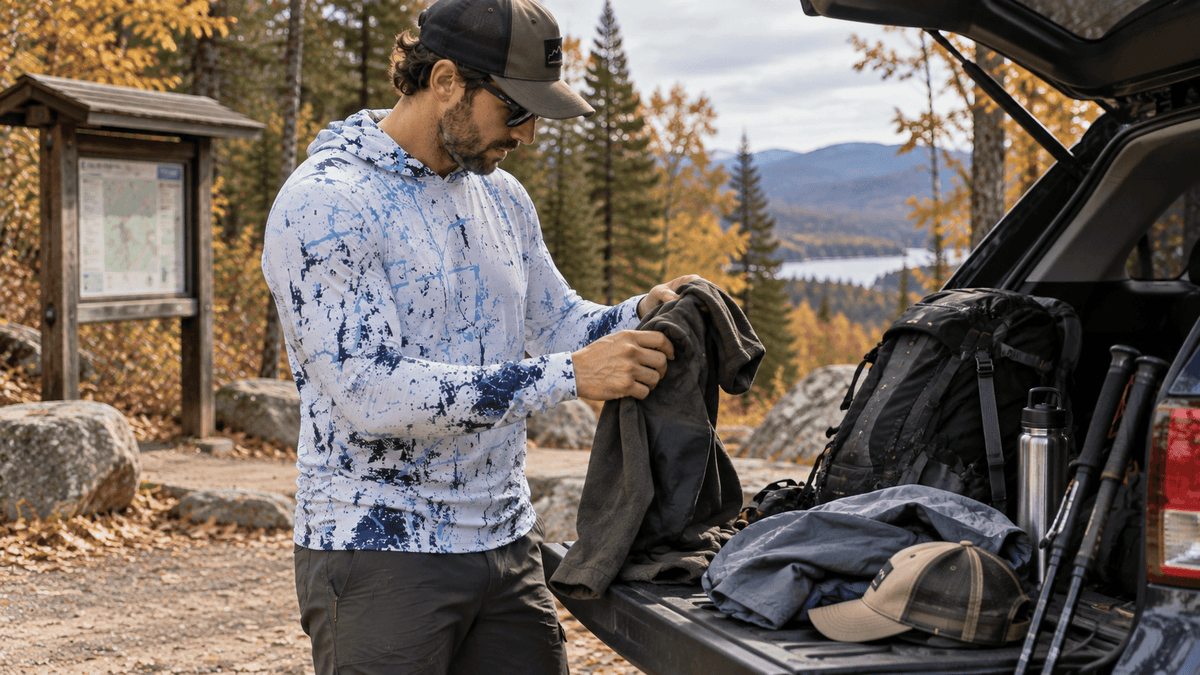
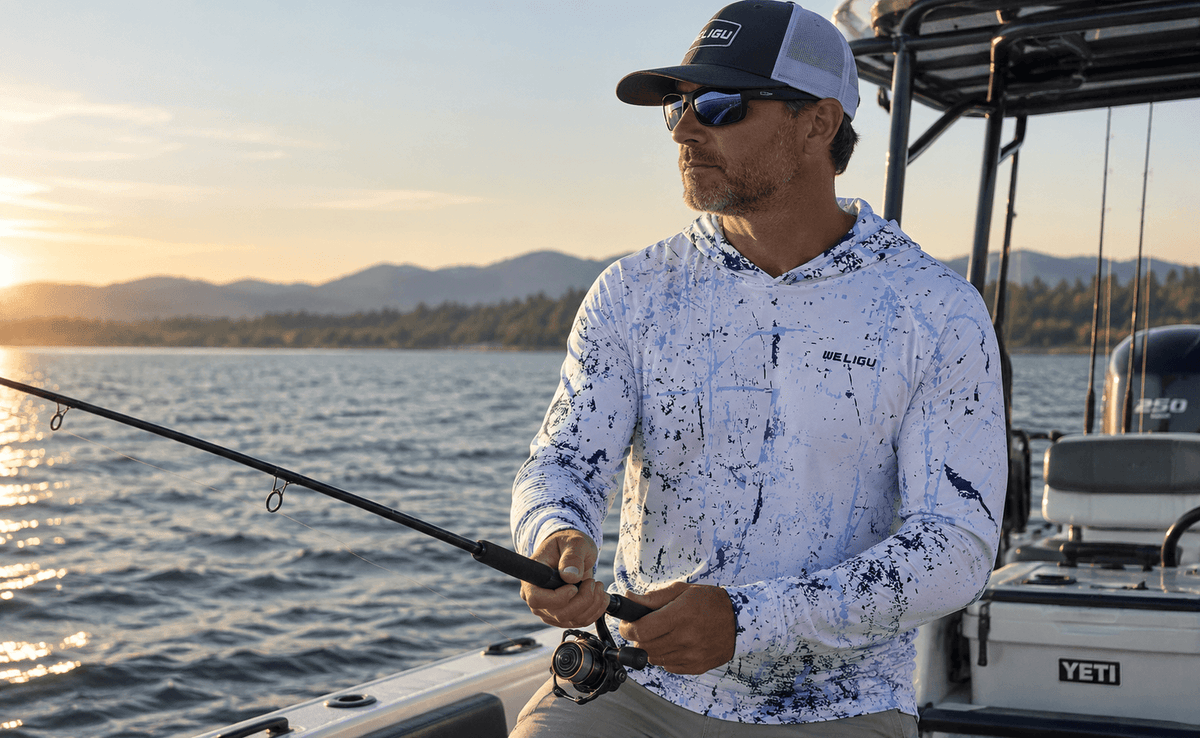
A Hoodie Can Be a Useful Base or Light Layer
A lightweight performance hoodie occupies an interesting position in a hiking wardrobe.
In warm-to-mild conditions, it can work as your primary hiking shirt.
The long sleeves provide coverage, while the hood gives you another option when you encounter sun or light wind.
Unlike a heavy sweatshirt, a technical outdoor hoodie should remain light enough for active movement.
This makes it particularly useful during transitional seasons when you may experience both warm and cool conditions during the same hike.
The key distinction is fabric weight.
A heavy cotton hoodie and a lightweight performance hoodie serve very different purposes on the trail.
Don't Wait Until You're Uncomfortable to Change Layers
Good layering is partly about timing.
Many hikers wait until they are already sweating heavily before removing a layer.
Others wait until they feel cold before putting one back on.
Try adjusting earlier.
If you know a steep climb is coming, remove your insulating layer before starting it.
If you are approaching an exposed summit and can already feel the wind increasing, put your shell on before you become cold.
Small adjustments throughout the hike are easier than trying to recover after overheating or becoming chilled.
What About Hiking in Direct Sun?
Layering is not only about cold weather.
Long hikes can involve hours of sun exposure even during cooler months.
That is one reason lightweight long sleeves can be useful throughout more of the year than many people expect.
They provide physical coverage without requiring you to wear a heavy layer.
A hat, sunglasses and sunscreen remain important for exposed areas, while a lightweight hood can provide another option for head and neck coverage when needed.
If sun exposure is a major part of your hike, you can read our guide to long sleeve fishing and outdoor shirts for more information about lightweight coverage.
A Simple Layering Example for a Fall Day Hike
Imagine you are starting a hike early in the morning when the air is cool.
You might begin with:
Base: Lightweight long-sleeve performance shirt or hoodie
Mid: Lightweight fleece
Outer: Packable wind or rain shell
After fifteen minutes of climbing, the fleece goes into your backpack.
Your performance shirt becomes your main hiking layer.
When you reach an exposed viewpoint and stop moving, the fleece comes back out.
If the wind becomes stronger, you add the shell.
Later, while descending into a sheltered forest, the shell comes off again.
That is the entire idea behind layering.
You are not trying to predict exactly what you will need for every minute of the hike.
You are giving yourself options.
How Many Layers Do You Actually Need?
For a normal recreational day hike in mild fall weather, three upper-body layers are usually enough to build a flexible system.
That does not mean you need to wear all three simultaneously.
Your backpack is part of the system.
If a layer is not being worn, it should ideally be lightweight and packable enough that carrying it is not a burden.
This is another reason versatile clothing tends to work well outdoors.
A shirt that can function comfortably on its own while also fitting underneath other layers gives you more options without adding unnecessary weight.
Choose Clothing Around Your Actual Activity
There is no universal hiking outfit.
Someone walking a flat wooded trail for two hours has different clothing needs from someone climbing several thousand feet to an exposed summit.
Think about:
Intensity: Steeper hikes generate more body heat.
Elevation: Higher terrain can be colder and windier.
Exposure: Open trails usually offer less protection from wind and sun.
Duration: Longer hikes increase your exposure to changing conditions.
Forecast: Temperature is only one factor; wind and precipitation matter too.
Your layering system should reflect the hike you are actually doing.