
What to Wear Hiking in Fall: A Practical Guide for Changing Weather
Fall can be one of the best times of year to hit the trail. Cooler temperatures make long walks more comfortable, crowded summer trails begin to quiet down, and changing leaves can completely transform familiar landscapes.
But fall hiking also brings one challenge that summer usually does not: conditions can change quickly.
A cool morning can turn warm by midday. A shaded trail can feel noticeably colder than an exposed ridge. Wind can pick up without much warning, and even a short afternoon shower can make temperatures drop.
That makes choosing what to wear hiking in fall less about finding one perfect jacket and more about building a simple clothing system that can adjust throughout the day.
Here is how to do it.
Why Fall Hiking Clothing Requires More Planning
During summer, hiking clothing is relatively straightforward. Lightweight clothing, sun coverage and good ventilation handle most conditions.
Fall is different.
You may start a hike when temperatures are in the 40s or 50s, climb for an hour and begin sweating, then reach an exposed overlook where wind suddenly makes it feel much colder.
The problem is not simply staying warm.
The goal is staying comfortable without overheating.
That is why experienced hikers often rely on several relatively light layers rather than one heavy piece of clothing.
Each layer serves a different purpose, and you can add or remove them as conditions change.
Start With a Lightweight Base Layer
The first layer is the clothing sitting closest to your skin.
For active hiking, it should help manage heat and moisture while allowing you to move comfortably.
A lightweight performance shirt works well because it can be worn alone when temperatures rise and underneath additional layers when the weather cools.
Look for features such as:
- Breathable fabric
- Moisture-wicking construction
- Lightweight material
- Comfortable stretch or freedom of movement
- Long-sleeve coverage
Cotton can feel comfortable at the trailhead, but once it becomes damp from sweat, it tends to stay wet longer.
Performance fabrics generally dry faster, which becomes especially useful when temperatures begin falling later in the day.
A lightweight men's outdoor shirt can therefore work as the foundation of a simple fall hiking system.
Long Sleeves Make Sense Beyond Summer
Long-sleeve shirts are often associated with sun protection during hot weather, but their usefulness does not disappear when summer ends.
Fall trails can still involve several hours of direct sunlight, particularly on exposed ridges, open fields and higher elevations.
Long sleeves provide additional coverage while also creating a light barrier against cool air.
The important part is choosing a shirt that does not feel heavy.
A breathable long-sleeve hiking shirt gives you enough coverage for cooler mornings while remaining practical when temperatures climb later in the day.
That versatility is particularly useful during September and early October, when daytime temperatures can still feel surprisingly warm.
Add a Mid Layer When Temperatures Drop
Your next layer should provide insulation.
For mild fall conditions, this might be a lightweight fleece, quarter-zip or thin insulated layer.
You may not need it while climbing.
In fact, wearing too much insulation during strenuous sections can cause unnecessary sweating. Instead, keep the layer in your backpack and put it on when you stop for a break or reach colder terrain.
This is one of the simplest ways to stay comfortable during changing conditions:
Start slightly cool rather than overly warm.
Once you begin moving, your body generates plenty of heat.
Carry a Lightweight Outer Layer
Even when rain is not expected, an outer shell can be useful on fall hikes.
Wind often becomes more noticeable at higher elevations and exposed viewpoints.
A lightweight shell helps reduce that wind chill without requiring a heavy winter jacket.
Depending on the forecast, consider carrying either:
- A lightweight windbreaker
- A water-resistant shell
- A waterproof rain jacket
You may never take it out of your backpack.
That is fine.
The point is having an extra layer available when conditions change.
What Pants Should You Wear for Fall Hiking?
For most mild fall hikes, lightweight hiking pants are the most versatile choice.
They provide more coverage than shorts while still allowing plenty of movement.
Look for pants that are comfortable when climbing, stepping over rocks or walking uneven terrain.
If temperatures are expected to stay warm, lightweight pants are usually enough.
For colder late-fall conditions, a thin base layer underneath can add warmth without requiring bulky insulated pants.
Avoid dressing for the coldest moment of the day from the beginning.
Again, layering gives you more flexibility.
Don't Forget Your Hands, Head and Neck
Small clothing changes can make a surprisingly large difference in cooler weather.
A lightweight cap works well during warmer parts of the day, while a beanie can be useful when temperatures drop.
Thin gloves take up very little backpack space but can make early mornings considerably more comfortable.
A neck gaiter is another versatile option.
It can provide extra warmth around the neck and face without requiring another heavy layer.
These accessories are easy to remove and store as temperatures change.
Think About Sun Exposure Even in Fall
Cooler temperatures can make people underestimate how much sun exposure they receive.
But temperature and UV exposure are not the same thing.
If you are hiking for several hours, particularly at elevation or through exposed terrain, sun protection still matters.
That may include sunscreen, sunglasses, a hat and clothing that provides good coverage.
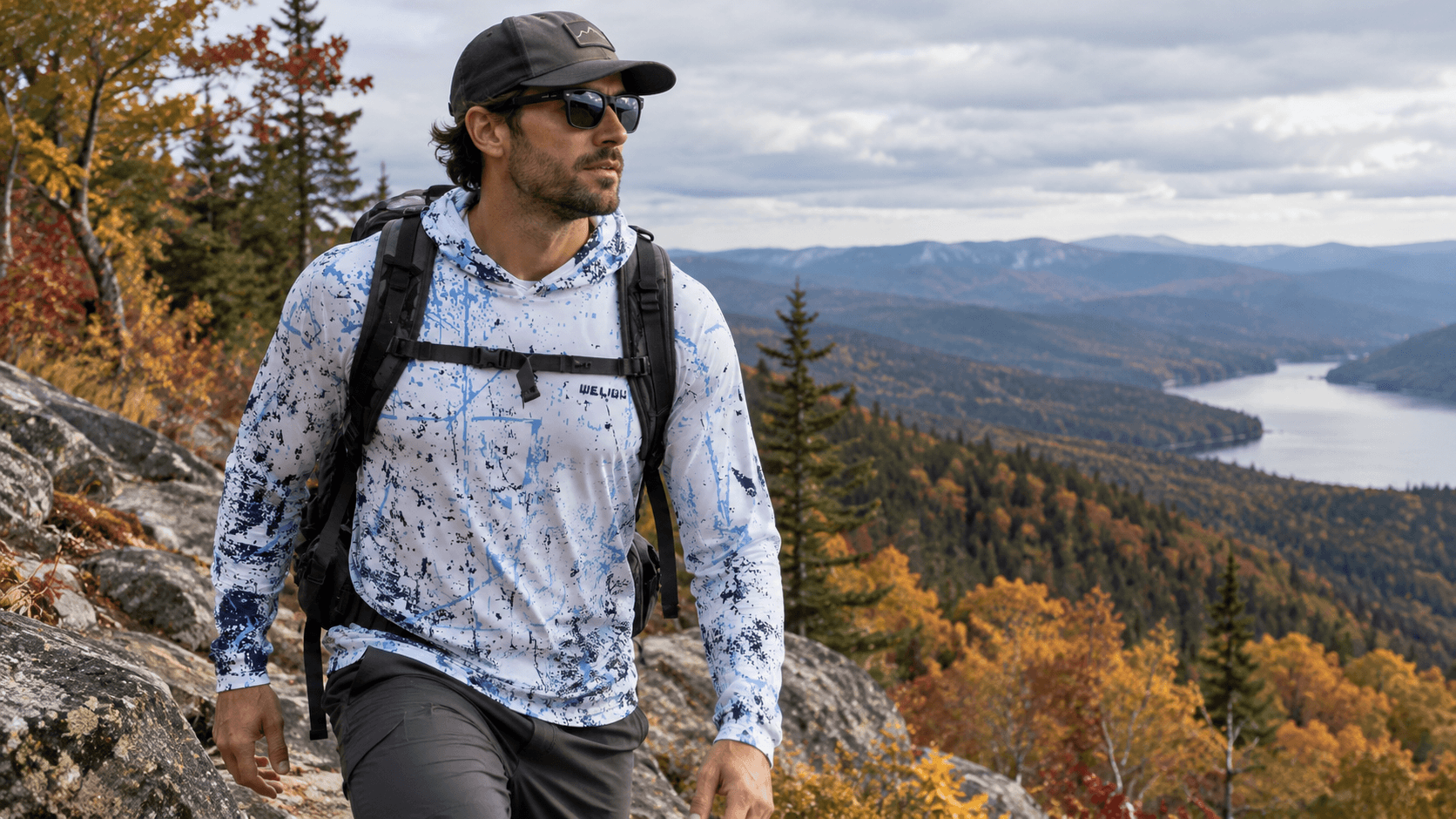
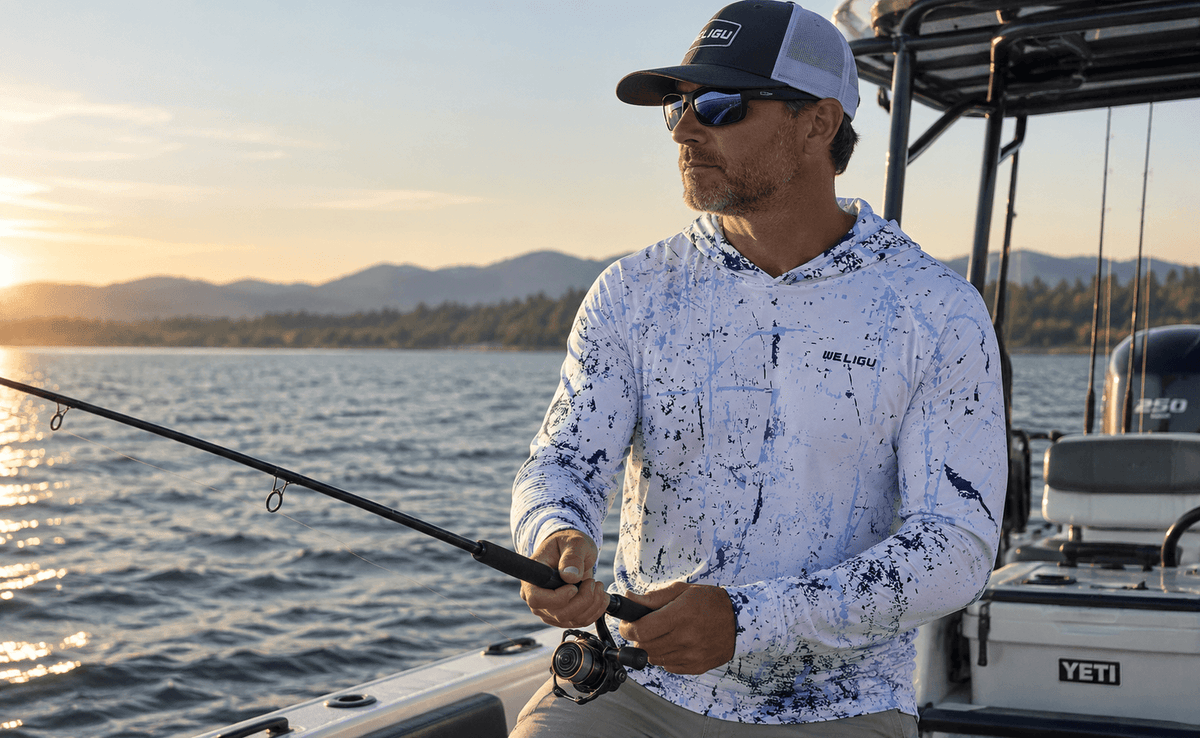
A lightweight long-sleeve outdoor hoodie can provide additional arm, shoulder and neck coverage without requiring a heavy layer.
The hood can also be useful during windy or exposed sections of trail.
Dress for the Hike, Not Just the Temperature
Checking the temperature before leaving home is useful, but it does not tell the entire story.
A 60°F day can feel very different depending on where you are hiking.
Before choosing your clothing, consider:
Elevation: Higher elevations are often colder and windier.
Sun exposure: Open ridges may feel much warmer than shaded forest trails.
Wind: Even moderate wind can make exposed areas noticeably colder.
Length of hike: Longer hikes increase the chance of experiencing changing conditions.
Elevation gain: Steep climbing generates considerably more body heat than walking flat terrain.
Weather forecast: Fall weather can change quickly, particularly in mountainous areas.
The clothing you choose should reflect the conditions you are likely to encounter throughout the entire hike.
A Simple Fall Hiking Outfit
You do not need a complicated wardrobe for most recreational fall hikes.
A practical setup might look like this:
Upper body: Lightweight moisture-wicking long-sleeve shirt or hoodie + packable fleece + lightweight shell.
Lower body: Comfortable hiking pants.
Feet: Moisture-managing socks + hiking shoes or boots appropriate for the terrain.
Accessories: Hat, sunglasses, light gloves and optional neck gaiter.
The key is that almost everything can be added or removed during the hike.
That flexibility matters more than simply wearing the warmest clothing available.
What to Avoid Wearing on a Fall Hike
One common mistake is dressing too warmly at the trailhead.
If you are already completely warm before you begin climbing, there is a good chance you will overheat once you start moving.
Another mistake is relying entirely on one heavy outer layer.
Once that jacket becomes too warm, removing it can leave you without enough protection.
Multiple lightweight layers give you more control.
Also avoid carrying clothing that is unnecessarily bulky. Your backup layers should ideally compress easily into your backpack when you are not using them.