What to Wear Hiking in Fall: A Practical Guide for Men
Fall can be one of the best times of year to hit the trail. Cooler temperatures make long hikes more comfortable, summer crowds begin to thin out, and changing leaves can completely transform familiar landscapes.
But fall hiking also brings one challenge: conditions can change quickly.
A cool morning can turn warm by midday. A sunny trail can become windy once you reach an exposed ridge. Add unexpected rain, damp clothing, or dropping temperatures late in the afternoon, and choosing what to wear becomes more important than it may seem.
The answer isn't simply to wear warmer clothes. A better approach is to build a lightweight, adaptable system that lets you add or remove layers as conditions change.
Here's what men should consider when dressing for a fall hike.
Start With a Moisture-Wicking Base Layer
Your first layer has one important job: help manage moisture next to your skin.
Even when the air feels cool, hiking generates heat. Uphill sections, carrying a pack, and faster walking can quickly cause you to sweat.
A heavy cotton shirt may feel comfortable at the trailhead, but once it becomes damp, it can stay wet for a long time. When you slow down or the temperature drops, that moisture can leave you feeling colder.
Instead, look for a lightweight performance shirt made from quick-drying, moisture-managing fabric.
A good hiking shirt should feel comfortable on its own during warmer parts of the day while remaining light enough to wear underneath another layer when temperatures fall.
Long sleeves can be particularly useful in fall because they provide more coverage without requiring you to immediately reach for a jacket.
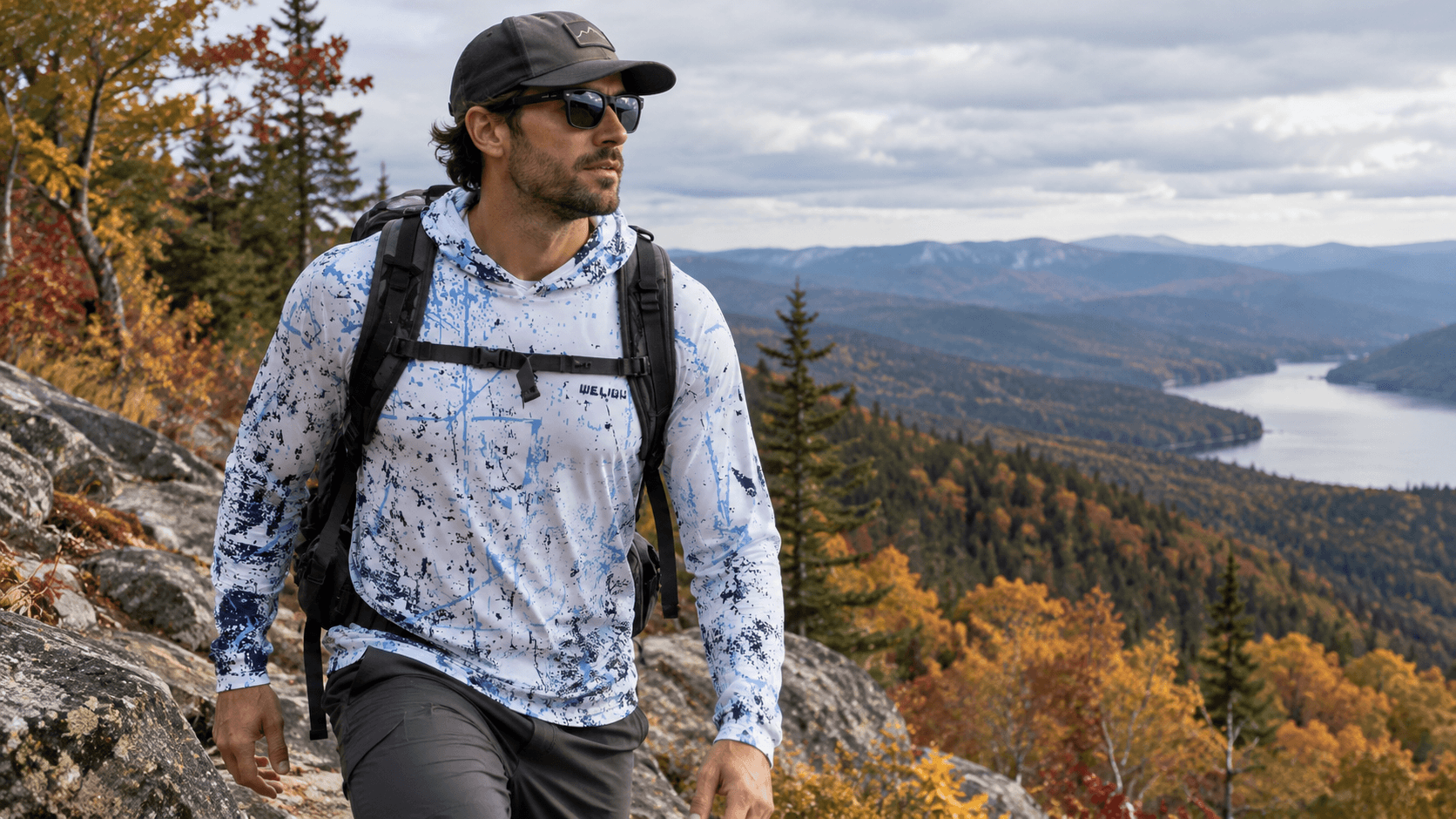
For many mild-weather hikes, a lightweight long sleeve outdoor shirt can serve as the foundation of the entire layering system.
Add a Light Mid-Layer When Temperatures Drop
The next layer provides warmth.
How much insulation you need depends heavily on where you're hiking, the elevation, wind conditions, and the time of day.
For mild fall weather, you may only need a light fleece or similar breathable layer.
The important thing is flexibility.
You don't necessarily want to start a hike wearing everything in your backpack. If you're already warm before you begin climbing, you'll probably start sweating once the trail gets harder.
Instead, start slightly cool and allow your body temperature to rise naturally as you move.
When you stop for lunch, reach a windy overlook, or temperatures begin dropping later in the day, that's when the additional layer becomes useful.
Carry a Lightweight Outer Layer
Fall weather isn't always predictable.
Even if the forecast looks clear, a lightweight wind or rain layer can be worth carrying—especially on longer hikes.
Your outer layer should protect you from wind and light precipitation without adding unnecessary bulk.
This creates a simple three-part system:
Base layer → insulation layer → weather protection
You may never wear all three at the same time, and that's the point.
Layering gives you options.
Instead of dressing for the temperature when you leave home, you're dressing for the range of conditions you may encounter throughout the day.
Why Long Sleeves Work Well for Fall Hiking
Long sleeves aren't only about warmth.
They can provide useful coverage when you're moving through brush, walking exposed trails, or spending several hours outdoors.
Early fall can still bring strong sunlight, particularly during long days on open terrain. A lightweight long sleeve shirt gives your arms consistent coverage without requiring a heavy layer.
Breathability matters here.
A thick shirt may feel fine during the first few minutes of a hike but quickly become uncomfortable once you're climbing.
That's why lightweight performance fabrics are often more practical than simply choosing the warmest shirt available.
The goal is coverage without unnecessary heat.
A breathable performance hoodie can also work well when you want additional coverage around the head and neck while keeping the overall system lightweight.
Choose Hiking Pants Based on the Trail
Your upper body isn't the only place where clothing matters.
For most fall hiking, lightweight hiking pants are more versatile than heavy pants.
Look for enough freedom of movement for climbing, stepping over logs, or navigating uneven terrain. Quick-drying fabric is helpful if you're walking through wet vegetation or encounter light rain.
Conditions should determine how heavy your pants need to be.
A mild September afternoon requires something very different from a cold November morning at higher elevation.
Avoid choosing fall hiking clothes based purely on the season.
Choose them based on temperature, weather, terrain, and activity level.
Don't Forget Your Feet
A comfortable shirt won't matter much if your feet are wet or covered in blisters.
Your footwear should match the trail rather than simply being labeled as "hiking shoes."
For maintained, relatively dry trails, lightweight hiking shoes may be enough. Rougher terrain, wet conditions, or longer hikes may justify footwear with additional support and protection.
Socks matter too.
Moisture-managing hiking socks can help keep your feet more comfortable during long days on the trail.
If rain is likely, bringing an extra pair of socks in your pack is a small precaution that can make a surprisingly big difference.
Dress for the Warmest Part of the Hike Too
One of the easiest fall hiking mistakes is overdressing.
The trailhead may be 48°F in the morning, but temperatures could climb significantly by early afternoon.
Add physical activity and direct sunlight, and a hiking outfit that felt comfortable at 8 a.m. may feel far too warm several hours later.
That's another reason lightweight layers work better than one heavy garment.
As temperatures rise, you can remove the insulation or outer layer and continue hiking comfortably in your base shirt.
Later, those layers can go back on when the temperature falls.
What About Sun Protection in Fall?
Summer may be ending, but UV exposure doesn't disappear with cooler temperatures.
Open trails, higher elevations, water, and long periods outdoors can still mean significant sun exposure.
This is particularly easy to overlook because cool weather doesn't feel like "sunburn weather."
Clothing can provide consistent coverage throughout the hike.
A lightweight long sleeve or hooded shirt with UPF-rated fabric can therefore remain useful well beyond summer—especially when you want sun coverage without repeatedly applying sunscreen to large areas of exposed skin.
That makes sun-protective clothing part of a broader outdoor clothing system rather than something reserved only for fishing trips or hot summer days.
A Simple Fall Hiking Clothing Checklist
You don't need an overly complicated wardrobe for most fall hikes.
A practical setup might include:
- Lightweight moisture-wicking long sleeve shirt
- Light fleece or insulating mid-layer
- Packable wind or rain shell
- Quick-drying hiking pants
- Moisture-managing socks
- Trail-appropriate hiking shoes
- Hat or lightweight hood
- Extra layer for unexpected temperature drops
For shorter hikes in stable weather, you may use only a few of these pieces.
For longer trips, elevation changes, or uncertain forecasts, carrying additional layers gives you more flexibility.
Adjust Your Clothing as You Hike
Good fall hiking clothing isn't just about what you wear when you leave the parking lot.
It's about managing your layers throughout the day.
If you start getting hot, remove a layer before you're soaked with sweat.
If you're approaching an exposed ridge, put your wind layer on before you become cold.
If you stop for an extended break, add insulation while your body is still warm.
Small adjustments help keep your clothing system working the way it's supposed to.