How to Dress for a Full Day Outdoors in Hot and Humid Weather?
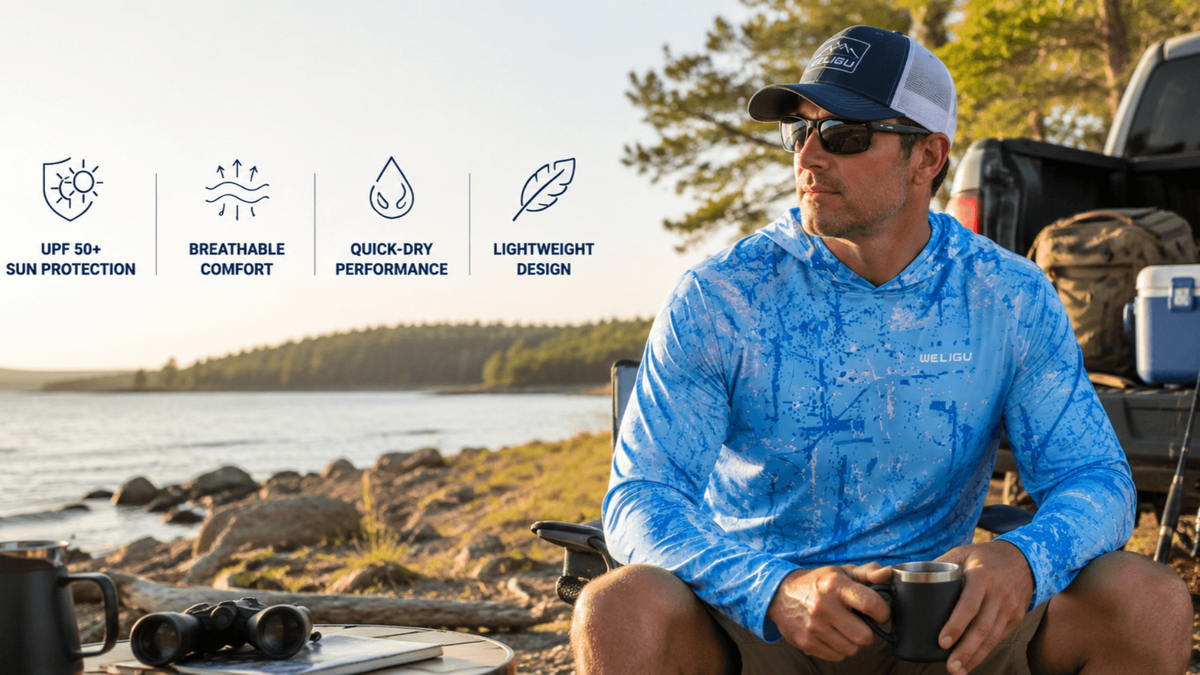
A breathable shirt allows heat and moisture to escape rather than trapping them close to your body. In hot weather, that can make a meaningful difference over several hours.
A shirt does not need to hang loosely like an oversized T-shirt, but there should be enough room for air to circulate and for your shoulders and arms to move naturally.
This is particularly useful when fishing, paddling, hiking, setting up camp, or doing anything that involves repetitive upper-body movement.
The test is simple: after putting the shirt on, forget about how it looks in the mirror for a moment. Reach overhead. Rotate your shoulders. Bend your arms.
If you immediately notice the shirt pulling somewhere, you will probably notice it even more after six hours outside.
Don't Automatically Reach for Short Sleeves
When you are spending most of the day in direct sunlight, a lightweight long-sleeve shirt offers something a short-sleeve shirt cannot: continuous coverage for your arms.
The distinction is important. We are not talking about wearing a heavy long-sleeve cotton shirt on a 90-degree afternoon. Modern performance shirts can be remarkably light.
For activities with little shade—especially boating, fishing, open-trail hiking, and coastal travel—the additional coverage can be useful.
A hood can add another layer of coverage around the neck and head when needed, while staying out of the way when it isn't.
If sun exposure is a regular part of your outdoor routine, it is also worth understanding how UPF-rated fabrics work.
Think About the Entire Day, Not Just the Temperature
Checking the forecast before leaving home is useful, but temperature alone does not tell the whole story.
Consider where you will actually be.
A 90°F afternoon under tree cover feels very different from the same temperature on open water. Wind can make a boat ride comfortable in the morning and surprisingly cool toward evening. Coastal humidity creates different clothing demands than a dry inland trail.
For a full outdoor day, it helps to dress for changing conditions rather than one number on the weather app.
A simple setup might include:
- A lightweight performance shirt as your main layer
- Comfortable, quick-drying shorts or lightweight pants
- A hat with useful sun coverage
- Sunglasses
- A light extra layer if you expect to stay out after sunset
Pay Attention to Sun Exposure Around Water
Water changes the experience of spending a day in the sun.
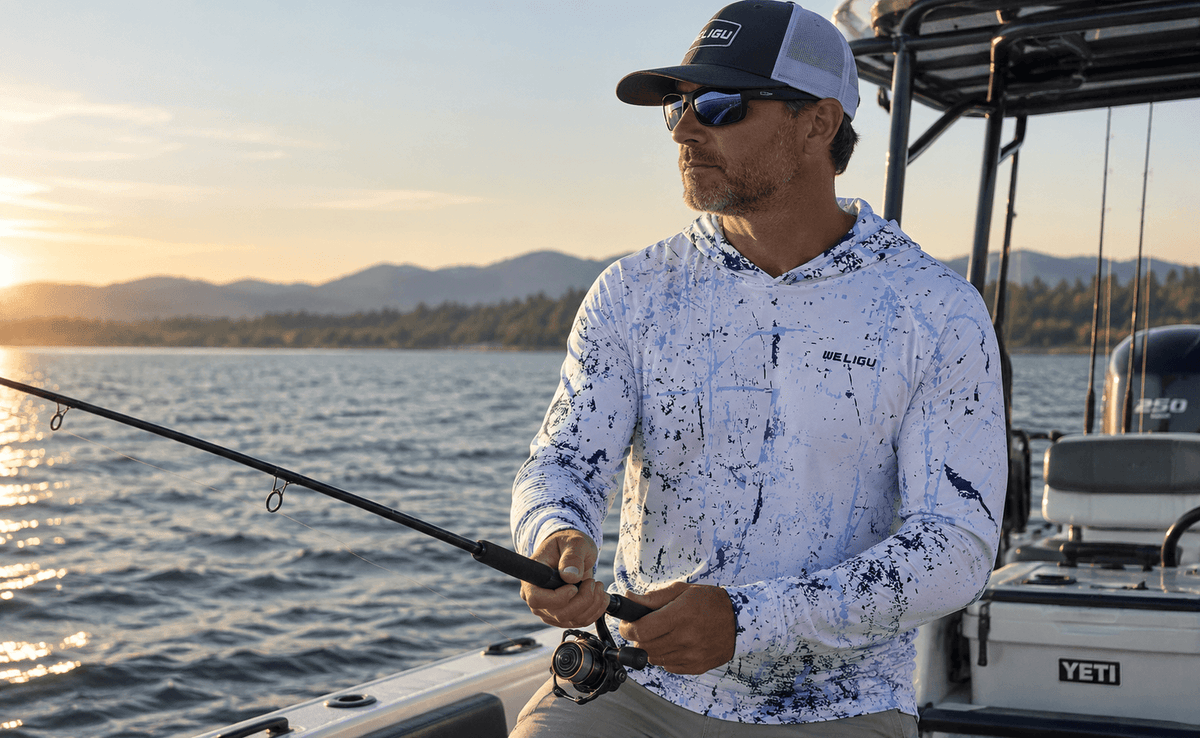
When you are fishing or boating, there may be very little natural shade, and you can remain exposed for hours without noticing how much time has passed.
This is one reason long-sleeve performance shirts have become such a familiar sight on the water.
Coverage is particularly useful across the arms, shoulders, and upper body. A hood can also be practical during the brightest part of the day.
Of course, clothing does not replace the need for appropriate sunscreen on exposed skin. Think of sun-conscious clothing as one part of a broader approach to spending long periods outdoors.
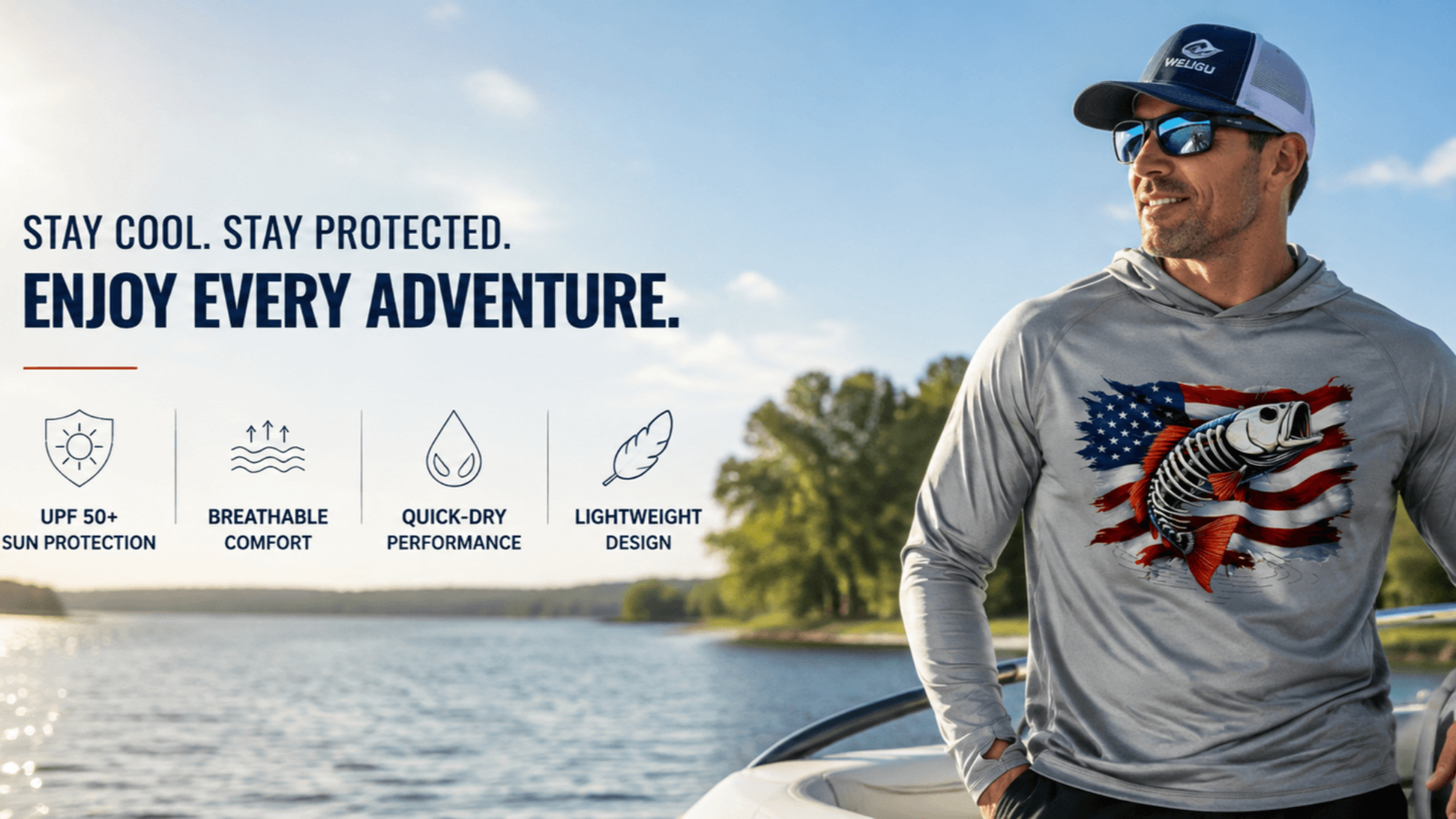
For days on the water, WELIGU's UPF 50+ fishing hoodie combines long-sleeve coverage with lightweight, quick-drying fabric.
Lighter Colors Can Be a Practical Choice
Color is often treated as purely aesthetic, but it can matter when dressing for strong summer sun.
Light-colored outdoor shirts are popular for good reason. They tend to feel visually appropriate in summer, pair easily with neutral shorts and pants, and can be more comfortable to wear under bright conditions than very dark clothing.
White, light blue, pale gray, and muted coastal colors are particularly versatile.
They also move easily between different settings.
A light performance shirt that looks at home on a boat can still work when you stop for lunch or spend the afternoon walking around town. That versatility matters when you would rather pack lightly than bring a separate outfit for every part of the day.
Don't Overlook the Small Details
The difference between an acceptable outdoor shirt and one you keep reaching for often comes down to details.
Look at the seams. Check the cuffs. Notice how the hood sits when it is down. See whether the shirt bunches around your waist when you sit.
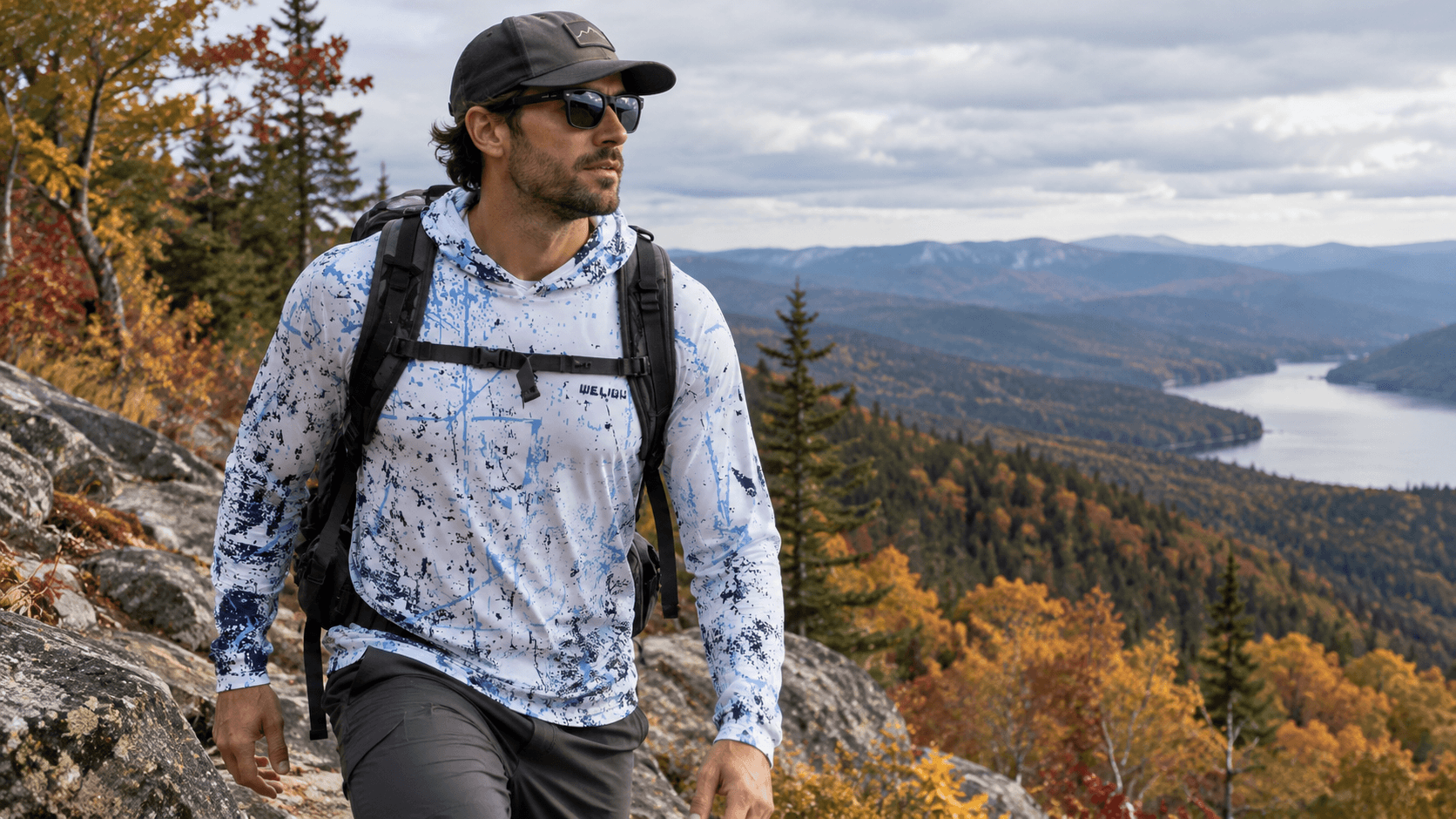
If you carry a backpack, consider whether prominent seams will sit directly beneath the straps.
If you fish, think about shoulder movement while casting.
If you drive long distances on outdoor trips, consider how the fabric feels against your back after sitting for several hours.
These things rarely appear at the top of a product description, but they matter in real use.
One Good Shirt Should Work for More Than One Activity
Outdoor wardrobes can become unnecessarily specialized.
A shirt for fishing. Another for hiking. Another for boating. Another for travel.
Unless you need highly technical equipment for a particular activity, there is plenty of overlap.
A lightweight, breathable, quick-drying sun shirt can work for a morning on the water, a weekend hike, a road trip, yard work, or an afternoon outside with friends.
That is a better way to think about versatile outdoor clothing: not as clothing that does everything perfectly, but as clothing that performs well in many of the situations you actually encounter.