
Article: How Should a Men's Workout Tank Top Fit? A Practical Guide to Comfort and Movement
How Should a Men's Workout Tank Top Fit? A Practical Guide to Comfort and Movement
A workout tank top might look like one of the simplest pieces of gym clothing. No sleeves, minimal construction, and not much to think about.
Until you start training in one that doesn't fit properly.
The armholes feel too tight during a shoulder press. The fabric bunches around your waist when you sit down. Or the chest fits well, but the shirt hangs so loosely that it shifts every time you bend forward.
A good men's workout tank top should make movement easier, not become another thing you have to adjust between sets.
Whether you're lifting weights, using gym machines, running on a treadmill, or getting through a full-body workout, the right fit comes down to a few practical details.
Here's what to look for.
What Is the Ideal Fit for a Men's Workout Tank Top?
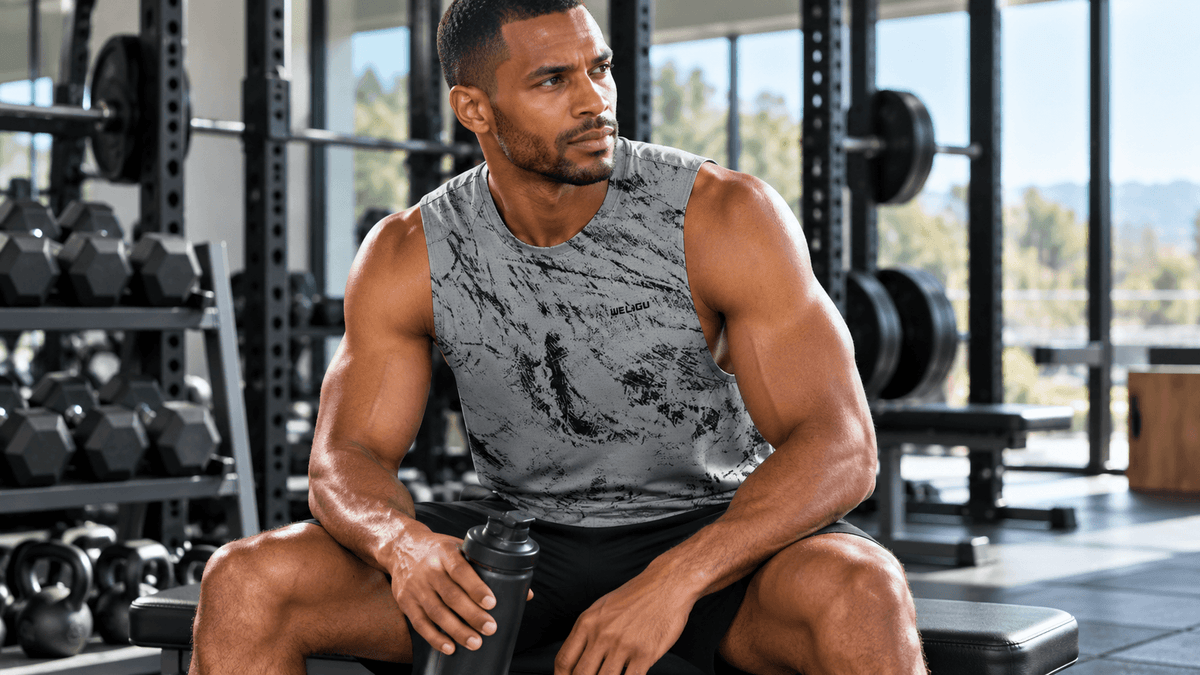
For most gym activities, a workout tank top should sit comfortably around the shoulders and chest, allow unrestricted arm movement, and have enough length to stay in place when you reach or bend.
It shouldn't feel like a compression shirt unless that's the style you specifically want.
It also shouldn't be so oversized that the fabric gets in your way.
The ideal fit depends on your body shape, training style, and personal preference. But there are a few signs that usually indicate you've found a good balance:
-
The shoulder straps sit securely without digging into your skin.
-
The chest feels comfortable when you take a deep breath.
-
The armholes allow your arms to move freely.
-
The fabric doesn't pull tightly across your upper back.
-
The hem stays reasonably in place when you raise your arms.
-
You don't need to keep adjusting the shirt during exercise.
A tank top that meets these basic requirements is usually a better starting point than choosing one based only on how it looks in a mirror.
1. Start With the Shoulders
Shoulder fit is one of the most overlooked details in men's gym tank tops.
Unlike a T-shirt, a tank top doesn't have sleeves to define where the shoulder seam should sit. Instead, the width and position of the straps influence how the garment feels across your upper body.
Wider shoulder straps can provide a more secure feel and greater coverage, while narrow straps expose more of the shoulders and upper back.
Neither is automatically better.
For weight training, many men prefer a tank with enough shoulder coverage to stay comfortably in place during presses, rows, and other upper-body movements.
Try raising both arms overhead, then reaching forward as though you're holding a barbell.
The straps shouldn't slide excessively or dig into your neck.
If they do, the cut may not suit your shoulder shape, even if the rest of the shirt fits.
2. Get the Chest Fit Right
The chest area should follow your body's shape without restricting breathing or movement.
This is particularly important during exercises that involve expanding the rib cage or bringing the arms together, such as bench presses, chest flyes, and push-ups.
A fitted workout tank top can create a clean, athletic silhouette. But fitted shouldn't mean uncomfortable.
When trying one on, take a deep breath and move your arms across your body.
If the fabric pulls sharply or feels restrictive, consider a different size or cut.
On the other hand, excessive fabric around the chest may shift during certain movements.
The goal is a comfortable fit that stays relatively consistent whether you're standing, sitting, or moving.
Fitted vs. Loose Workout Tank Tops
A fitted tank sits closer to the body and generally has less excess fabric.
A loose tank provides more room through the chest and torso.
For lifting weights, either can work. A fitted style may feel more secure, while a relaxed cut may appeal to someone who prefers additional airflow or less contact against the skin.
Neither fit guarantees better workout performance.
Choose the one that feels comfortable during the exercises you actually do.
3. Pay Attention to Armhole Size
Armholes can make a surprisingly big difference in how a tank top feels.
If they're too small, the edges may rub against the underarms when you move.
If they're extremely large, the shirt may shift more than you'd like or provide less coverage than expected.
For general gym training, look for armholes that allow a full range of shoulder movement without uncomfortable rubbing.
Try a few simple motions:
-
Raise your arms overhead.
-
Reach both arms forward.
-
Rotate your shoulders.
-
Bend forward as if picking up a dumbbell.
If the armhole edges dig into your skin or the fabric pulls across your upper body, the cut may be too restrictive.
For men who prefer a more covered appearance, a standard athletic tank with moderately sized armholes may be more practical than a deeply cut stringer.
4. Choose the Right Length
Length matters more than many people realize.
A tank top that's too short may ride up when you reach overhead, exposing more of your midsection than intended.
One that's excessively long can bunch around your hips during squats, seated exercises, or floor work.
For a balanced everyday gym fit, the hem should generally reach around the upper hip area, with enough extra length to accommodate movement.
Your torso proportions will affect where that falls.
The easiest test is to raise both arms above your head, bend forward, and sit down.
If you're constantly pulling the hem back into position, the length or overall cut may not be right for you.
A slightly longer tank can work well for taller men, while a more compact cut may suit those with shorter torsos.
Use the garment's actual measurements rather than assuming the same labeled size will fit identically across brands.
5. Consider the Fabric, Not Just the Fit
Even a well-cut tank top can feel uncomfortable if the fabric doesn't suit your workout.
During physical activity, your body produces heat and perspiration. The material you wear affects how that moisture is absorbed, transported, and released.
Cotton is familiar and comfortable for many everyday situations, but it can retain moisture during sweaty workouts.
Many athletic tank tops use synthetic or blended fabrics designed for moisture management and relatively quick drying.
Breathability matters, too.
A lightweight fabric with a comfortable knit can help reduce the heavy, damp feeling that sometimes develops during long training sessions.
When comparing workout tank tops, consider:
-
Moisture management: Does the fabric help move perspiration away from the skin?
-
Breathability: Does it feel comfortable as your body warms up?
-
Stretch: Can you move without the material pulling tightly?
-
Fabric weight: Does the shirt feel unnecessarily heavy?
-
Care requirements: Is it practical to wash after regular workouts?
These characteristics often matter more in daily use than a long list of marketing claims.
For a broader explanation of how fabric influences comfort, read our guide to what makes a good outdoor shirt. Many of the same principles—breathability, moisture management, and freedom of movement—also apply to gym clothing.
6. Match the Fit to Your Training
Different workouts place different demands on your clothing.
A tank top that feels ideal for a short weightlifting session may not be your favorite choice for running or high-intensity circuits.
For Weight Training
Look for a comfortable shoulder cut, sufficient room through the chest, and fabric that doesn't restrict reaching or pulling.
A fitted or regular athletic tank can work well, depending on personal preference.
If you're training with machines or benches, consider how the fabric feels against equipment when you're seated or lying down.
For Running and Cardio
Lightweight fabric, comfortable armholes, and minimal rubbing are especially useful.
During repetitive movements, even a small area of friction can become irritating.
Choose a fit that allows your arms to swing naturally without the fabric constantly shifting.
For General Fitness
If your routine includes a mix of lifting, cardio, stretching, and bodyweight exercises, versatility matters.
A moderately fitted tank with comfortable coverage is often easier to use across different movements than a highly specialized cut.
WELIGU's Core Tank Tops are designed around a closer-fitting athletic silhouette. If you prefer a fitted style, compare the available measurements with a tank you already wear comfortably before choosing a size.
7. Don't Assume a Larger Size Means a Better Fit
Sizing up can provide more room, but it doesn't always solve a fit problem.
If a tank top is too narrow through the shoulders, going up a size may make the chest and waist excessively loose without correcting the shoulder shape.
Likewise, if the armholes are cut too deeply, sizing down may make the rest of the garment uncomfortable.
Fit is determined by both size and construction.
Before ordering online, compare the size chart with a tank top you already own.
Pay particular attention to chest width and garment length.
If you're between sizes, think about whether you prefer a closer or more relaxed feel—and whether the fabric has enough stretch for your activities.
Common Workout Tank Top Fit Mistakes
A few small mistakes can make an otherwise good tank top frustrating to wear.
Choosing based only on appearance. A shirt can look great while standing still and feel restrictive during training.
Ignoring armhole construction. Comfortable arm movement is essential for almost every gym activity.
Buying too tight for the sake of definition. A fitted appearance shouldn't come at the expense of comfort.
Assuming every brand uses the same sizing. Size labels vary, so actual measurements are more useful.
Forgetting about garment length. A tank that rides up or bunches excessively may distract you throughout your workout.
Overlooking fabric care. Regular washing and appropriate drying help maintain comfort and garment shape.
How to Tell If Your Tank Top Fits Properly
Before deciding on a tank top, try this quick movement test.
Stand naturally and check that the straps sit comfortably.
Raise your arms overhead and make sure the shirt doesn't pull uncomfortably across your chest.
Rotate your shoulders and reach forward.
Bend at the waist, then sit down.
Finally, perform a few movements similar to your usual workout.
You should be able to move without excessive rubbing, pulling, or repeated adjustments.
If the shirt passes these tests, you've probably found a fit worth considering.
Frequently Asked Questions
Should men's workout tank tops be tight or loose?
Both can work. A fitted tank provides a closer silhouette with less excess fabric, while a loose tank offers more room. The best choice depends on comfort, personal preference, and the type of exercise you do.
Should a gym tank top cover the shoulders?
It depends on the design. Wider straps provide more shoulder coverage, while narrow straps expose more skin. For general training, choose a style that stays securely in place and allows comfortable movement.
How long should a men's workout tank top be?
For many men, a length around the upper hip works well. The hem should remain reasonably comfortable when reaching, bending, and sitting without bunching excessively.
Are fitted tank tops good for weightlifting?
Yes, provided they allow unrestricted movement. A fitted tank can be comfortable for lifting, but it shouldn't pull tightly across the chest, shoulders, or upper back.
What's the difference between a gym tank top and a regular tank top?
Gym-oriented tank tops often emphasize mobility, moisture management, and lightweight comfort. Regular casual tank tops may prioritize appearance or everyday softness. The distinction depends on the garment's actual construction rather than its name.
Final Thoughts
A good workout tank top doesn't need to be complicated.
It needs to fit your shoulders comfortably, give your arms room to move, sit naturally through your chest and waist, and stay in place during the exercises you enjoy.
The right fabric adds another layer of comfort, particularly during longer or sweatier sessions.
Whether you prefer a fitted athletic silhouette or something more relaxed, judge a tank top by how it feels in motion—not just how it looks on a hanger.
For more practical clothing options, explore WELIGU's latest arrivals, including styles made for active days and everyday wear.
Comfort that lasts. Function with purpose. Style without the noise.