Do You Need Camo for Dove Hunting? What to Wear
Do you need camo for dove hunting? Usually, no. Full camouflage isn't required for every dove hunt, but wearing muted earth tones or camo can help break up your outline, especially when you're sitting in an exposed position. Just as important are staying still, using natural cover, and choosing lightweight clothing that keeps you comfortable in early-season heat.
Why Dove Hunters Wear Camouflage
Doves approach hunting areas from above, often giving them a broad view of the field before they come within range.
A hunter sitting beside a hedgerow, fence line, dead tree, or field edge can create a noticeable silhouette.
Camouflage helps break up that outline.
Instead of seeing one large, solid shape, the bird sees colors and patterns that more closely resemble the surrounding vegetation.
That's particularly useful when you're hunting near:
- Tree lines
- Brush
- Standing crops
- Cut fields
- Fence rows
- Water holes
- Field edges
However, camouflage alone won't make you invisible.
A perfectly camouflaged hunter who constantly turns, stands up, or waves his arms around can be easier for approaching birds to notice than someone wearing simple brown clothing who stays still.
That brings us to the most important factor.
Movement Often Matters More Than Perfect Camouflage
One of the easiest mistakes for new dove hunters is focusing too much on the pattern they're wearing and not enough on their movement.
Imagine you're sitting against a tree wearing excellent woodland camouflage.
A dove approaches.
You see it early and immediately turn your head to follow it.
Then you reposition your feet.
Then you reach for your shotgun.
Those movements can stand out against an otherwise still background.
Instead, try to remain relaxed and minimize unnecessary movement as birds approach.
Keep your equipment close.
Avoid repeatedly standing up.
And when possible, let approaching birds get closer before making large movements.
Good concealment is a combination of camouflage and discipline.
Do You Need Full Camo?
Usually, no.
For many dove hunts, you don't need the same level of concealment you might use for turkey hunting.
A practical dove hunting outfit could be as simple as:
Upper body:
Lightweight camouflage or earth-tone long-sleeve shirt
Lower body:
Brown, tan, olive, or camouflage pants
Head:
Neutral or camouflage hat
The goal is simply to avoid creating a large, bright shape that contrasts sharply with your surroundings.
That means something like a light gray or tan shirt may work surprisingly well in certain fields.
A bright white shirt, on the other hand, can be much easier to spot.
What Colors Work Best for Dove Hunting?
Start with the environment rather than choosing camouflage based purely on appearance.
Dry fields
Think:
- Tan
- Brown
- Khaki
- Muted olive
These colors tend to work naturally around harvested crops and dry late-summer vegetation.
Green field edges
Use more:
- Olive
- Dark green
- Brown
- Mixed woodland patterns
Timber and wooded edges
Patterns incorporating:
- Bark
- Branches
- Leaves
- Dark brown
- Gray
- Muted green
can help break up your outline against trees.
This is why realistic bark-and-leaf patterns can be useful when you're sitting directly against timber.
The best pattern isn't necessarily the most complicated one.
It's the one that resembles the place where you're actually sitting.
Don't Forget Your Face
Your clothing might blend perfectly into the background while your face remains one of the brightest objects in the scene.
This becomes more noticeable when you're sitting in shade.
There are several ways to reduce that contrast.
A brimmed hat can help shade your face.
Some hunters use face paint.
Others prefer a lightweight face covering.
For warm early-season hunts, however, heavy masks can quickly become uncomfortable.
A lightweight, breathable face covering can provide concealment without trapping as much heat.
And that's important because dove season often begins while summer temperatures are still hanging around.
Early-Season Dove Hunting Changes What You Should Wear
For many hunters, the biggest clothing challenge isn't camouflage.
It's heat.
Opening-day dove hunts can mean sitting outside for hours under strong late-summer sun.
Heavy hunting clothing that feels perfectly comfortable in November may become miserable in September.
That's why early-season hunting clothing should prioritize:
Lightweight fabric
You don't want unnecessary weight while sitting or walking between hunting positions.
Breathability
Airflow becomes especially important when temperatures climb.
Moisture management
Sweat is unavoidable on many early-season hunts. Clothing that dries quickly is generally more comfortable than heavy fabric that stays wet.
Sun coverage
Long sleeves can sound counterintuitive in hot weather, but lightweight coverage can help protect exposed skin during long periods outdoors.
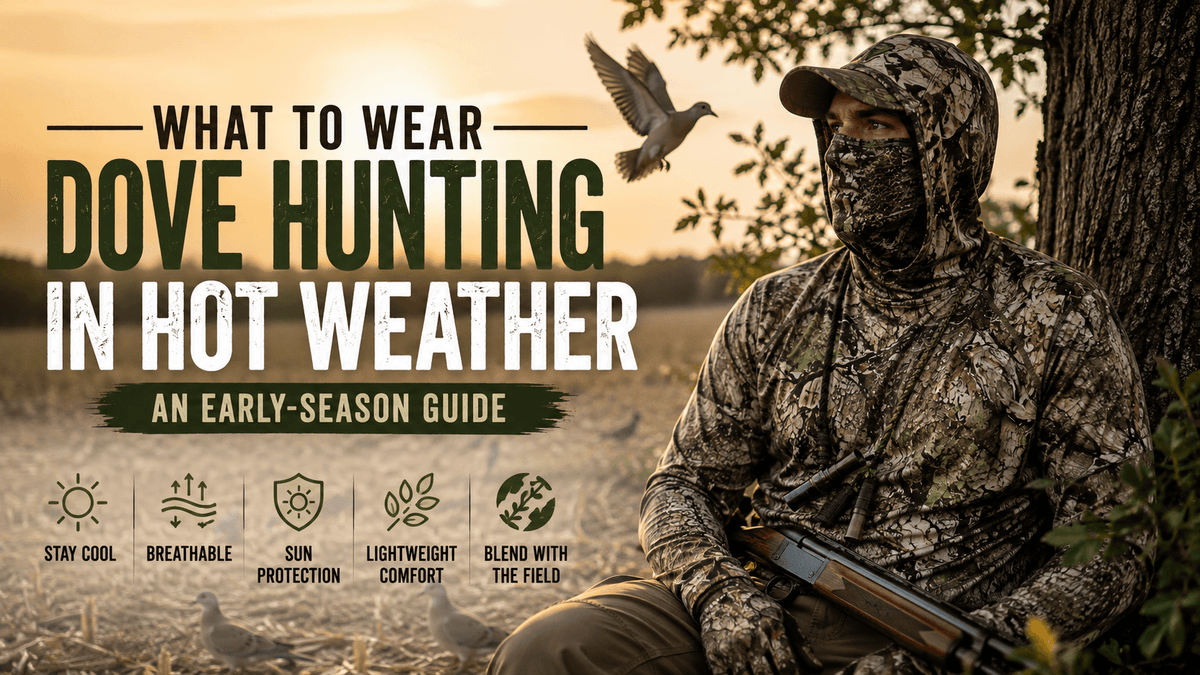
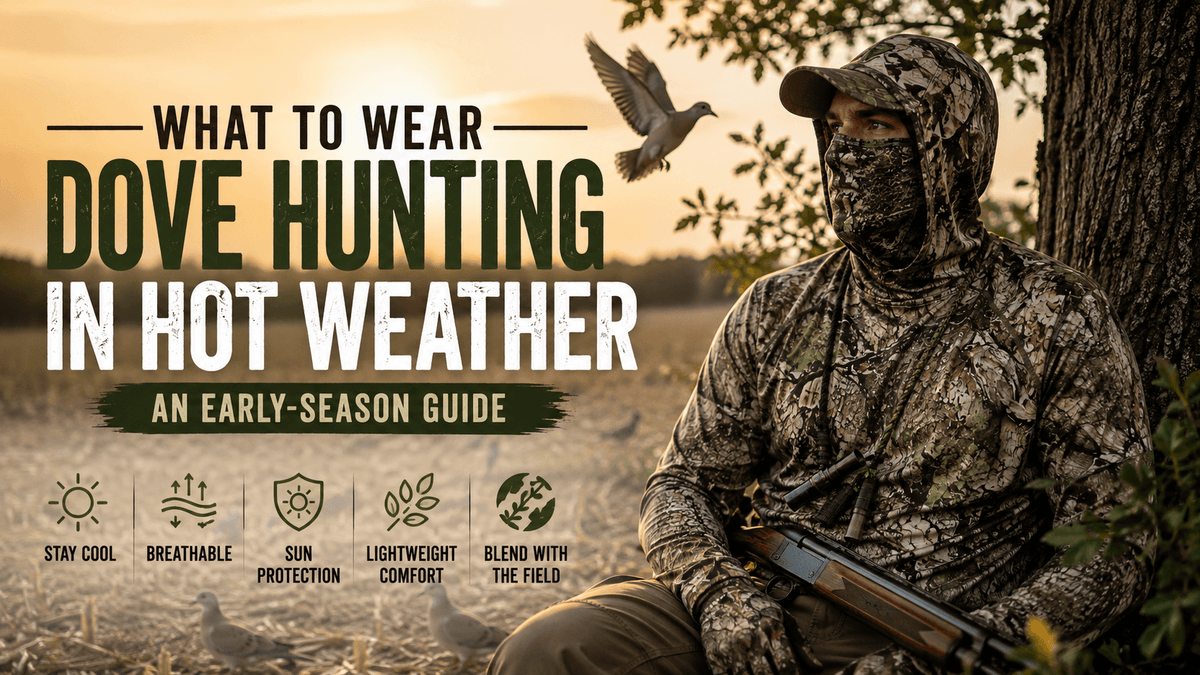
This is one reason lightweight hunting hoodies and long-sleeve shirts can make sense for early-season hunting.
A Hood Can Be Surprisingly Useful
Hoods aren't only for cold weather.
A lightweight hunting hood can help reduce exposure around the neck, ears, and sides of the head while also helping break up your outline.
When you're sitting near brush or timber, that additional coverage can make your upper body appear less distinct.
Pair it with a lightweight face covering and you can achieve substantial coverage without necessarily wearing heavy hunting gear.
The important distinction is lightweight hunting hoodie, not insulated hoodie.
Early-season hunting calls for very different clothing than late-season hunting.
Match Your Camo to Your Hunting Position
Before deciding what to wear, ask yourself:
Where will I actually be sitting?
If you're hunting beside a large tree, bark-style camouflage makes sense.
If you're sitting near green brush, something incorporating green vegetation may blend better.
If you're hunting an open harvested field, muted brown and tan colors may be more appropriate.
Hunters sometimes think about camouflage based on the entire property.
But your immediate surroundings matter more.
A property might contain green woods, brown fields, and gray tree trunks all within a few hundred yards.
Choose your clothing for your specific setup.
Use Natural Cover Whenever Possible
Your clothing doesn't have to do all the work.
Natural cover can dramatically improve concealment.
Look for positions near:
- Trees
- Bushes
- Fence lines
- Tall grass
- Crop edges
- Shadows
Instead of sitting several feet in front of a tree, position yourself closer to it so your silhouette blends into the trunk.
Even simple shade can help reduce contrast.
This also allows you to rely less on elaborate camouflage patterns.
What Should You Avoid Wearing?
You don't necessarily need specialized hunting clothing for every piece of your outfit, but there are a few things worth avoiding.
Bright colors
White and other highly contrasting colors can make you stand out against natural vegetation.
Large reflective surfaces
Some materials, watches, sunglasses, or equipment can reflect sunlight.
Heavy cold-weather clothing
Opening dove season isn't the time to test your insulated deer hunting jacket.
Clothing that restricts movement
You still need to shoulder and swing a shotgun comfortably.
Your hunting shirt should allow natural movement through the shoulders and arms.
Comfort matters more than many hunters realize.
A Simple Dove Hunting Clothing Setup
You don't need an enormous hunting wardrobe to get started.
A practical early-season setup might include:
Lightweight camo long-sleeve shirt or hoodie
For concealment, sun coverage, and comfort.
Lightweight outdoor pants
Choose muted natural colors or camouflage.
Comfortable boots or outdoor shoes
Depending on terrain and vegetation.
Hat
Useful for both sun protection and concealment.
Optional lightweight face covering
Especially useful when hunting exposed positions.
Add eye and hearing protection appropriate for shooting, and you have a straightforward setup suitable for many dove fields.
Do you have to wear camo for dove hunting?
No. Full camouflage isn't required for most dove hunts. Neutral earth tones can work well, especially when you use natural cover and minimize movement.
What color should you wear dove hunting?
Choose colors that match your immediate surroundings. Tan, brown, khaki and muted olive work well around many dry fields, while darker greens and woodland patterns can make more sense near brush or timber.
Should you cover your face when dove hunting?
It's optional, but a hat, shade or lightweight face covering can help reduce contrast when birds approach exposed positions.
So, Is Camo Necessary for Dove Hunting?
No.
Dove hunting doesn't always require full camouflage.
Hunters can—and regularly do—hunt successfully while wearing simple earth-tone outdoor clothing.
But camouflage becomes more valuable when you're sitting in exposed positions where approaching birds can easily see your silhouette.
The best approach is somewhere between obsessing over camouflage and ignoring concealment entirely.
Wear colors that match your environment.
Break up your outline.
Use available natural cover.
Minimize movement.
And most importantly for early-season hunting, choose clothing that keeps you comfortable enough to stay focused.
Because the best camouflage pattern in the world won't help much if you're constantly moving around because you're overheating.