What to Wear Dove Hunting in Hot Weather: 10 Practical Tips
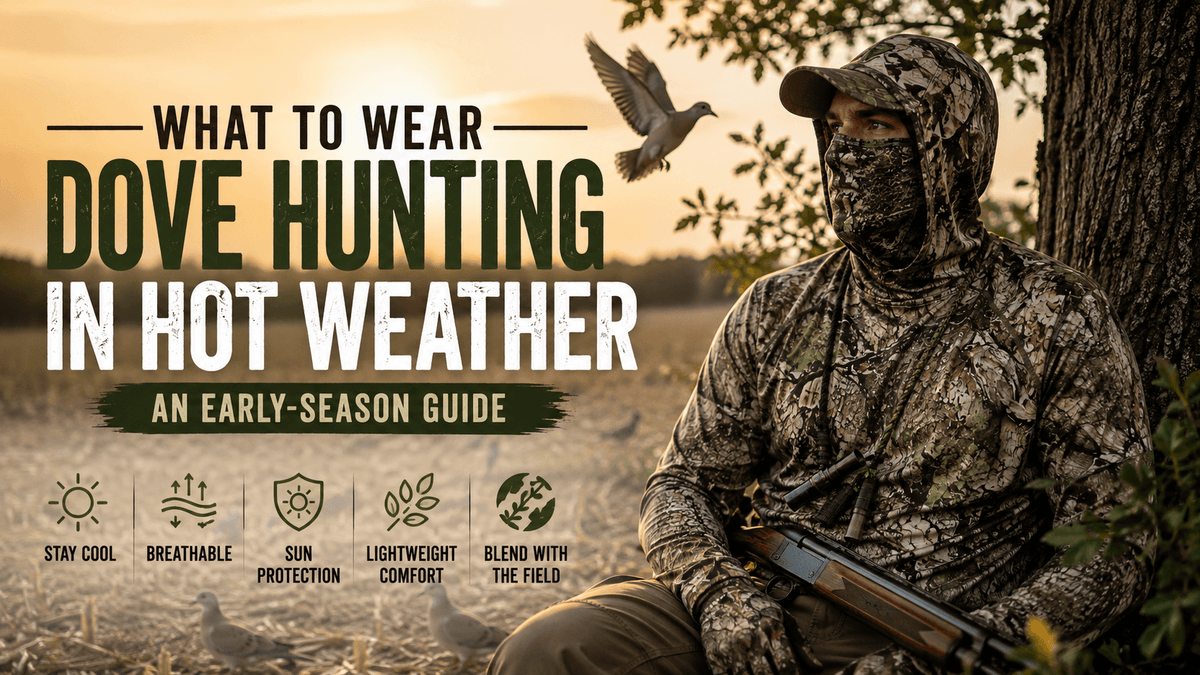
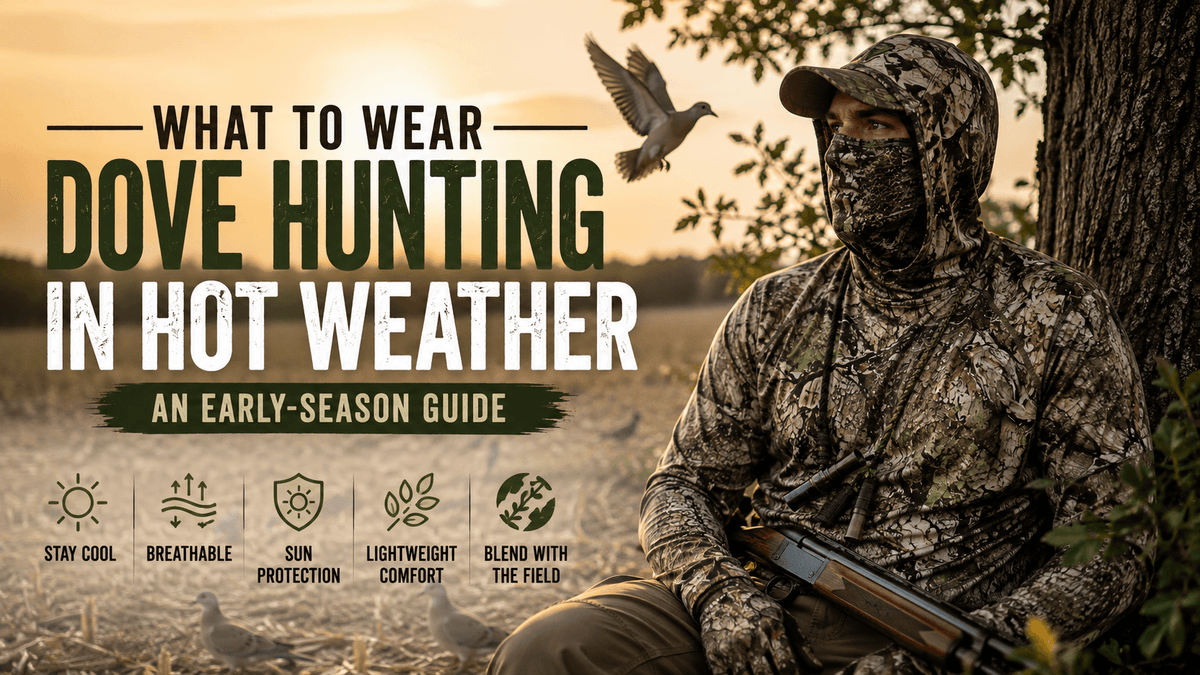
What should you wear dove hunting in hot weather? Start with a lightweight, breathable long-sleeve shirt, lightweight pants, a brimmed hat or cap, eye protection, and terrain-appropriate boots. Choose muted earth tones or camouflage that matches the field, brush, or tree line around you.
Early-season dove hunting often means long periods in direct sun, so the goal is not simply to wear less clothing. The better approach is to stay covered while choosing lightweight, quick-drying gear that allows heat and moisture to escape.
1. Start With a Lightweight Long-Sleeve Shirt
It can be tempting to reach for a T-shirt when temperatures are high.
But a lightweight long-sleeve shirt can actually make more sense for long hours outdoors.
Long sleeves provide additional coverage from direct sunlight and can help protect your arms from vegetation and insects.
The important word is lightweight.
A heavy cotton hunting shirt may absorb sweat and stay damp. A lightweight performance-style hunting shirt is generally better suited to active warm-weather conditions.
Look for features such as:
- Lightweight fabric
- Breathable construction
- Quick-drying material
- Comfortable stretch
- Ventilation panels
You want coverage without the feeling of wearing a jacket.
2. Breathability Matters More Than Insulation
For early-season hunting, insulation can quickly become a disadvantage.
Think about everything that happens before you even start hunting.
You may have to carry:
your shotgun,
ammunition,
a stool or chair,
water,
decoys,
and other equipment.
Then you may walk across an exposed field to reach your position.
Even moderate temperatures can start feeling hot quickly.
That's why breathable clothing matters.
Mesh or ventilated panels around high-heat areas can allow additional airflow and make a noticeable difference when you're sitting outside for several hours.
A good early-season hunting shirt should help you manage heat—not trap it.
3. Do You Need Camo for Dove Hunting?
This is where dove hunting differs somewhat from turkey hunting.
You don't necessarily need an elaborate head-to-toe camouflage system for every dove hunt. For a deeper look at when camouflage actually helps, read our guide to [whether you need camo for dove hunting].
But that doesn't mean clothing doesn't matter.
Doves can detect movement, and hunters sitting against an exposed background can stand out.
The safest general approach is to wear muted, natural colors that fit your surroundings.
Depending on the terrain, that could mean:
brown, tan, olive, gray, or woodland camouflage.
If you're sitting against trees or brush, a camouflage pattern can help break up your outline.
If you're hunting a dry field with relatively little green vegetation, extremely green camouflage may actually look less natural than brown or earth-toned clothing.
The environment should determine the pattern.
4. Match Your Camo to Early-Season Terrain
One of the easiest mistakes to make is choosing camouflage based on what looks most impressive online.
Instead, look at where you're actually hunting.
Wooded Field Edge
If your position is backed by trees, bark-inspired patterns can work particularly well.
Look for combinations of:
brown + gray + branches + bark + muted foliage.
These patterns help break up your upper body against tree trunks and shaded woodland.
Dry Agricultural Fields
Late-summer fields often contain much more:
tan + brown + dry grass + muted green.
A pattern dominated by bright green may not match the surroundings particularly well.
Brush and Mixed Vegetation
If you're hunting around thicker vegetation, a pattern containing branches, leaves, and several earth tones can provide a useful compromise.
The key principle remains the same:
Match the background—not the product name.
5. Sun Protection Deserves More Attention
Early dove hunting can involve a lot of direct sun exposure.
Unlike hunting deep inside timber, you may spend hours sitting near an open field.
That makes sun coverage an important part of your clothing decision.
A lightweight long-sleeve shirt can help keep your arms covered without requiring sunscreen to be repeatedly applied to the same areas.
A hood can provide additional coverage around the neck and sides of the head when needed.
You should still use appropriate sun protection on exposed skin.
And don't forget:
sunglasses and a brimmed hat can be just as important as your shirt.
The objective isn't simply concealment.
It's being comfortable enough to stay in position for the duration of the hunt.
6. What About a Face Cover?
Unlike turkey hunting, a full face covering isn't usually the first thing most dove hunters need to think about.
But it can still be useful in certain situations.
For example, if you're sitting directly against a tree or brush with very little cover, exposed skin can create additional contrast.
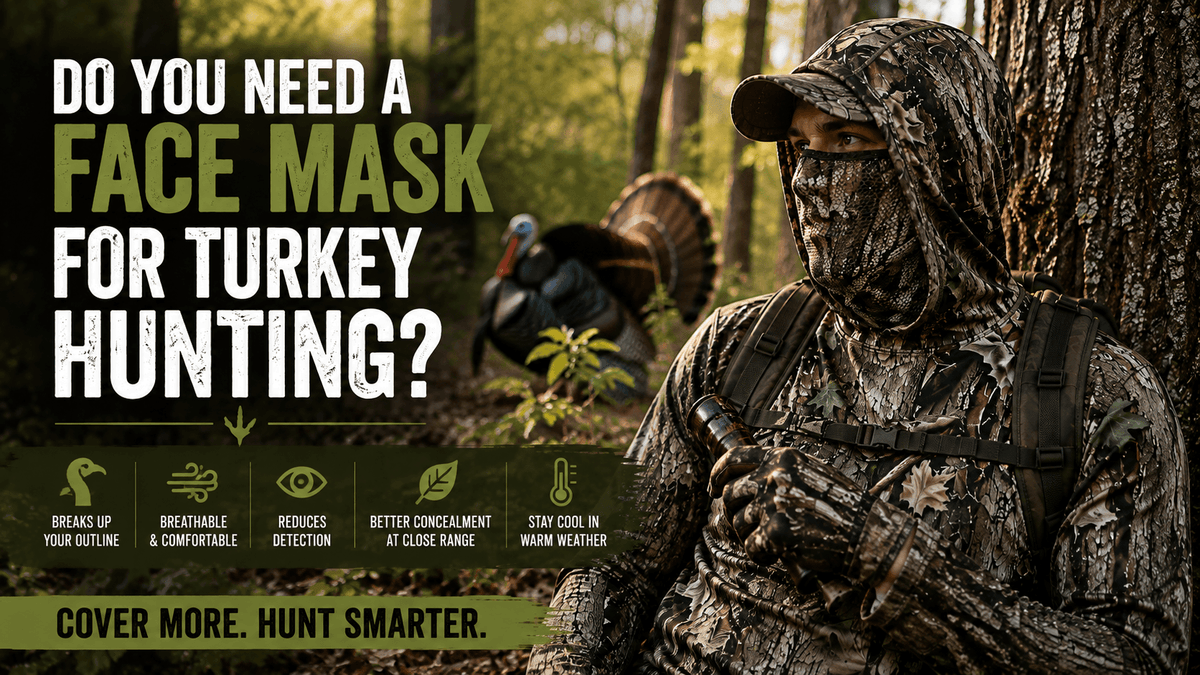
A lightweight mesh face covering can help reduce that contrast.
The important part for early season is breathability.
There's little benefit in covering your face if the material is so warm that you're constantly pulling it down and adjusting it.
An integrated face covering can be particularly convenient because you can leave it down while walking and pull it into position once you're settled.
That gives you the option of additional concealment without carrying another separate piece of gear.
7. Don't Overlook Your Lower Body
Your shirt gets most of the attention, but your pants matter too.
Heavy insulated hunting pants usually aren't necessary for hot-weather dove hunting.
Instead, consider lightweight pants that provide:
- Mobility
- Breathability
- Enough durability for vegetation
- Comfortable sitting
- Protection from insects and brush
Shorts might sound appealing in hot weather, but they provide much less protection when walking through vegetation.
Lightweight pants are often the more practical compromise.
8. Keep Your Footwear Practical
Your footwear should be determined by the terrain rather than by how “serious” it looks.
If you're walking across relatively dry agricultural fields, you may not need heavy insulated hunting boots.
Lightweight boots can reduce fatigue and heat buildup.
However, if you're dealing with:
mud,
wet vegetation,
rough ground,
snakes,
or heavy brush,
additional boot protection may make sense.
As with clothing, choose footwear for the conditions you're actually going to encounter.
9. Carry More Water Than You Think You'll Need
This isn't technically clothing advice, but it matters enough to include.
Warm-weather hunting increases the importance of hydration.
Sitting still can make hunters underestimate how much heat they're dealing with—especially when they've already walked into the field carrying equipment.
Bring enough water for the hunt.
And don't wait until you're extremely thirsty to start drinking.
Clothing can help you manage heat, but it can't replace proper hydration.
10. Think About Movement, Not Just Camouflage
A perfect camouflage pattern won't compensate for constant unnecessary movement.
Doves may notice movement as they approach.
That means your position and behavior matter.
Try to use natural cover whenever possible:
a tree,
brush,
a fence line,
or existing vegetation.
Then let your clothing support that concealment.
This is another reason comfort matters.
If your shirt is too hot, your face covering is uncomfortable, or your pants restrict movement, you'll spend more time adjusting your clothing.
A lightweight camo hunting hoodie with face coverage can be useful when you want sun coverage and optional concealment without adding multiple layers.
A Simple Hot-Weather Dove Hunting Outfit
You don't need an enormous gear system.
For many early-season hunts, a practical setup might be:
Upper body: Lightweight breathable long-sleeve hunting shirt or hoodie
Lower body: Lightweight hunting or outdoor pants
Head: Brimmed hat or lightweight hunting cap
Face: Optional lightweight mesh face covering
Eyes: Sunglasses or appropriate shooting glasses
Feet: Lightweight terrain-appropriate boots
Extra: Plenty of water and sun protection
Then adjust according to your hunting location.
That's usually more practical than wearing heavy hunting gear simply because it has camouflage printed on it.
What Color Should You Wear Dove Hunting?
There isn't one universal answer.
Look at your surroundings.
If you're sitting in:
dry grass → tan and brown
wooded cover → bark, brown and gray
green vegetation → muted greens and browns
mixed brush → multi-tone camouflage
The objective isn't to disappear completely.
It's to reduce unnecessary contrast between you and the environment.
Avoid extremely bright clothing that makes you stand out against your background.
At the same time, always follow any hunter-orange or other visibility requirements applicable to your location and season.
Comfort Can Help You Hunt Better
There's a tendency to think hunting clothing has to look heavy, technical, and complicated to work.
Early-season dove hunting is a good reminder that this isn't always true.
Sometimes the more practical system is simply:
lightweight + breathable + covered + comfortable.
When you're comfortable, you're less likely to constantly move.
You're more likely to stay in the field longer.
And you're less distracted by your clothing.
That's exactly what good outdoor apparel should accomplish.
Frequently Asked Questions About Hot-Weather Dove Hunting
What should I wear dove hunting in hot weather?
Wear a lightweight breathable long-sleeve shirt, lightweight pants, a hat, eye protection, and terrain-appropriate boots. Choose earth tones or camouflage that matches your surroundings.
Should I wear long sleeves dove hunting in hot weather?
Long sleeves can provide useful sun, insect, and vegetation coverage. The key is choosing lightweight, breathable, quick-drying fabric rather than heavy cotton.
Do I need camouflage for dove hunting?
Not always. Muted earth tones can work well in many situations, while camouflage can help break up your outline when hunting near trees, brush, or other natural cover.
What colors are best for dove hunting?
Match the immediate surroundings. Tan and brown work well around dry fields, while bark, gray, brown, and muted greens can work better around wooded or brushy areas.