How to Dress for Early Season Hunting: Staying Cool in Hot Weather
1. Start With Lightweight, Breathable Clothing
For warm-weather hunting, fabric weight matters.
Heavy clothing can trap heat quickly, especially when you're walking to a stand, scouting, setting up equipment, or moving through uneven terrain.
A lightweight hunting shirt or hoodie gives you coverage without the bulk of traditional cold-weather hunting gear.
Look for fabrics that allow heat and moisture to escape rather than holding them close to your body.
This becomes especially important during active portions of the hunt. Even relatively short walks can generate considerable body heat when temperatures are already warm.
What to look for
Choose early season hunting clothes with:
- Lightweight synthetic fabric
- Breathable construction
- Moisture-wicking properties
- Quick-drying performance
- Comfortable stretch or unrestricted movement
Cotton can feel comfortable initially, but once it becomes saturated with sweat it tends to stay wet longer. Quick-drying performance fabrics are generally more practical when you're spending several hours outdoors.
2. Don't Automatically Choose Short Sleeves
When temperatures climb, a T-shirt might seem like the obvious choice.
But short sleeves aren't always the most practical option for hunting.
A lightweight long-sleeve hunting shirt can provide additional protection from direct sunlight, brush, insects, and vegetation while still remaining comfortable if the fabric is breathable.
That makes lightweight long sleeves particularly useful when moving through wooded areas or sitting in exposed locations.
The important distinction is lightweight coverage versus heavy coverage.
You don't necessarily need less fabric. You need fabric that performs better in warm conditions.
3. Consider a Lightweight Hunting Hoodie
A hoodie might sound too warm for early season hunting, but not every hoodie is designed for cold weather.
Traditional fleece hoodies are made primarily for warmth. Lightweight performance hunting hoodies serve a different purpose.
A thin hood provides optional coverage for your head and neck without requiring another heavy layer.
For hunters spending long periods outdoors, this can be useful when sunlight changes throughout the day or when additional concealment is needed.
A lightweight hunting hoodie can also simplify your clothing system because one garment can provide torso, arm, neck, and head coverage.
The key is choosing a lightweight performance hoodie rather than an insulated sweatshirt-style hoodie.
4. Use Face Coverage When Concealment Matters
Hunters spend plenty of time thinking about camouflage patterns, but exposed skin can still stand out.
The face is particularly noticeable because its shape and movement contrast with natural surroundings.
A face covering can help break up that outline.
However, adding a separate face mask during hot weather isn't always comfortable. It also means carrying another piece of gear.
An integrated face cover can be a practical alternative, especially for hunters who want the option to increase concealment without adding another full layer.
When concealment isn't necessary, the face cover can simply remain lowered.
This type of flexible coverage can be especially useful for turkey hunting, bowhunting, and other situations where hunters may be relatively close to game.
5. Choose Camouflage for the Environment, Not Just the Season
Early-season vegetation can look very different from the woods later in fall.
Trees may still have substantial foliage. Ground vegetation can be green, and the landscape may contain a mixture of leaves, bark, branches, shadows, and dry vegetation.
That's why camouflage shouldn't be chosen solely because it's labeled "early season."
Instead, look at where you'll actually hunt.
Woodland environments often benefit from patterns containing combinations of:
- Bark textures
- Branch shapes
- Leaves
- Natural brown and gray tones
- Muted greens
- Irregular light and shadow
6. Pay Attention to Moisture Management
Sweat is almost unavoidable during warm-weather hunting.
The real problem begins when clothing holds onto that moisture.
Wet fabric can become uncomfortable, cling to the skin, and take a long time to dry once you stop moving.
That's why moisture management is one of the most important characteristics of good hot-weather hunting clothes.
Performance fabrics designed to move moisture away from the skin and dry relatively quickly can make long periods outdoors considerably more comfortable.
This matters especially when your hunt involves alternating between activity and inactivity.
You might walk for twenty minutes, then sit quietly for two hours.
Clothing that handles that transition well is often more useful than simply choosing the thinnest shirt available.
7. Don't Forget Sun Protection
Hunting clothing isn't only about camouflage.
Early-season hunters may spend hours exposed to sunlight, particularly in open fields, agricultural areas, edges, marshes, or lightly wooded terrain.
Long sleeves and a hood provide physical coverage, while clothing designed with UPF protection can add another layer of sun protection.
For hunters already accustomed to fishing or other outdoor activities, this approach will feel familiar: covering up with lightweight performance fabric can sometimes be more comfortable than exposing more skin to direct sun.
This is one reason performance hunting shirts and lightweight hoodies can work particularly well during warm conditions.
8. Keep Your Lower Body Lightweight Too
It's easy to focus on the shirt or hoodie and forget about pants.
Heavy hunting pants can become uncomfortable quickly in warm weather.
For early-season conditions, consider lightweight hunting pants that provide enough protection from vegetation without excessive insulation.
Features worth considering include:
- Breathable fabric
- Flexible knees
- Lightweight construction
- Useful pockets
- Quick-drying materials
Your entire clothing system should work together.
Wearing an extremely breathable shirt won't help much if the rest of your clothing traps excessive heat.
9. Bring a Light Extra Layer for Early Mornings
Early season doesn't mean temperatures remain hot all day.
Morning conditions can sometimes feel surprisingly cool, particularly before sunrise.
Instead of wearing heavier clothing from the beginning, consider carrying a light additional layer that can be removed as temperatures rise.
This gives you more flexibility throughout the hunt.
A simple early-season layering system might look like this:
Base layer: Lightweight moisture-managing shirt
Main layer: Lightweight camo hunting shirt or hoodie
Optional layer: Thin jacket or vest for cooler mornings
Once temperatures rise, remove the extra layer rather than spending the rest of the day overheating.
10. Think About Movement Before You Leave Home
A hunting shirt can feel comfortable while standing in front of a mirror and still become annoying in the field.
Before choosing clothing for a long hunt, consider how you'll actually move.
Can you comfortably:
- Raise both arms?
- Draw a bow?
- Shoulder your equipment?
- Crouch?
- Sit for extended periods?
- Turn your upper body?
- Walk without the fabric pulling?
Early-season clothing should be lightweight without being restrictive.
This becomes especially important when you're wearing a hood or integrated face covering. Those features should provide coverage without interfering with your field of vision or normal head movement.
What to Wear for Different Early Season Hunts
Not every warm-weather hunt requires exactly the same clothing.
Dove Hunting
Dove seasons often begin while temperatures are still high.
Lightweight, breathable clothing and sun protection can be especially valuable when sitting near open fields with limited shade.
Depending on local requirements and hunting conditions, visibility considerations may also influence what you wear.
Turkey Hunting
Turkeys have excellent vision, so concealment often becomes more important.
Long sleeves, camouflage, and face coverage can help reduce exposed skin and break up the hunter's outline.
For warm conditions, those features should come from lightweight materials rather than heavy layers.
Early Season Deer Hunting
Early deer seasons can involve warm temperatures combined with periods of walking, climbing, or sitting.
Breathable clothing and moisture management become particularly useful when moving to a hunting location and then remaining still for an extended period.
Bowhunters may also benefit from relatively close-fitting clothing that doesn't create unnecessary bulk around the arms.
What Makes a Good Hot-Weather Hunting Shirt?
If you're shopping specifically for hunting clothes for hot weather, don't judge a garment only by its camouflage pattern.
The pattern matters, but comfort and function matter just as much.
Prioritize a combination of:
Breathability + lightweight construction + moisture management + coverage + freedom of movement.
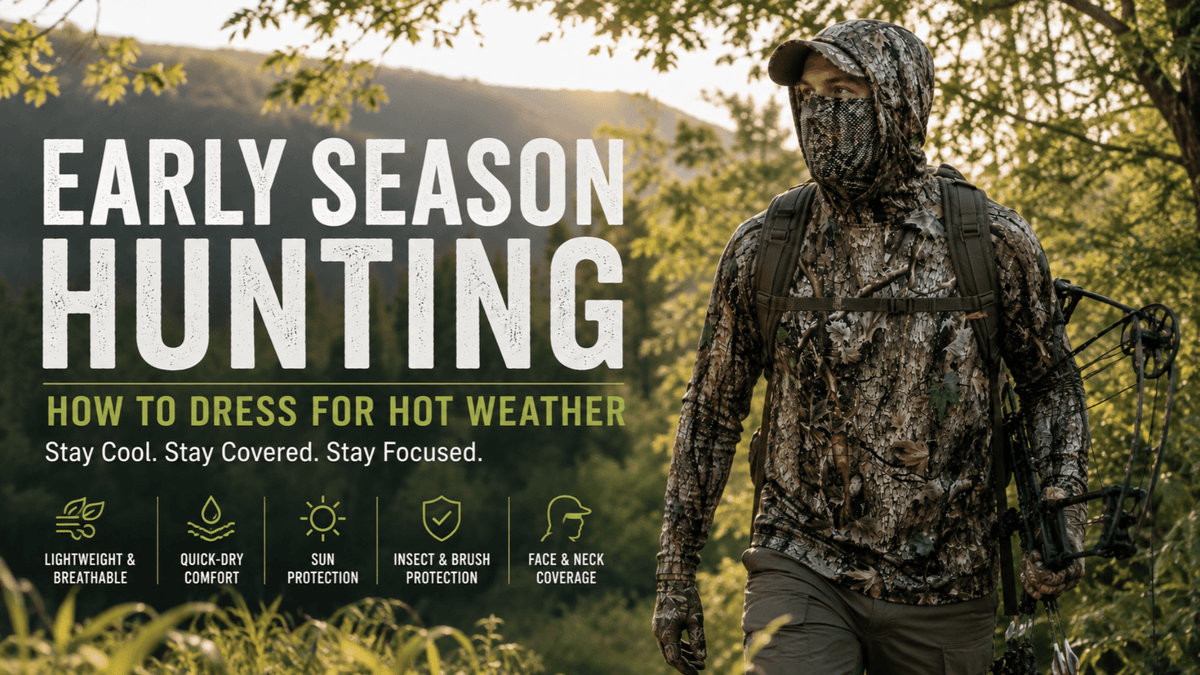
Features such as a hood, face cover, ventilation panels, and sun-protective fabric can provide additional versatility without requiring multiple separate pieces of gear.
This is also where you can naturally insert the WELIGU product module:
Lightweight Coverage for Early Season Hunts
WELIGU Men's Camo Hunting Hoodie with Face Cover
Designed for warm-weather hunts where coverage and concealment still matter.
- Lightweight performance fabric
- Breathable construction
- Integrated face cover
- Hooded coverage
- Long sleeves
- Woodland camouflage
- Designed for early-season movement and long hours outdoors