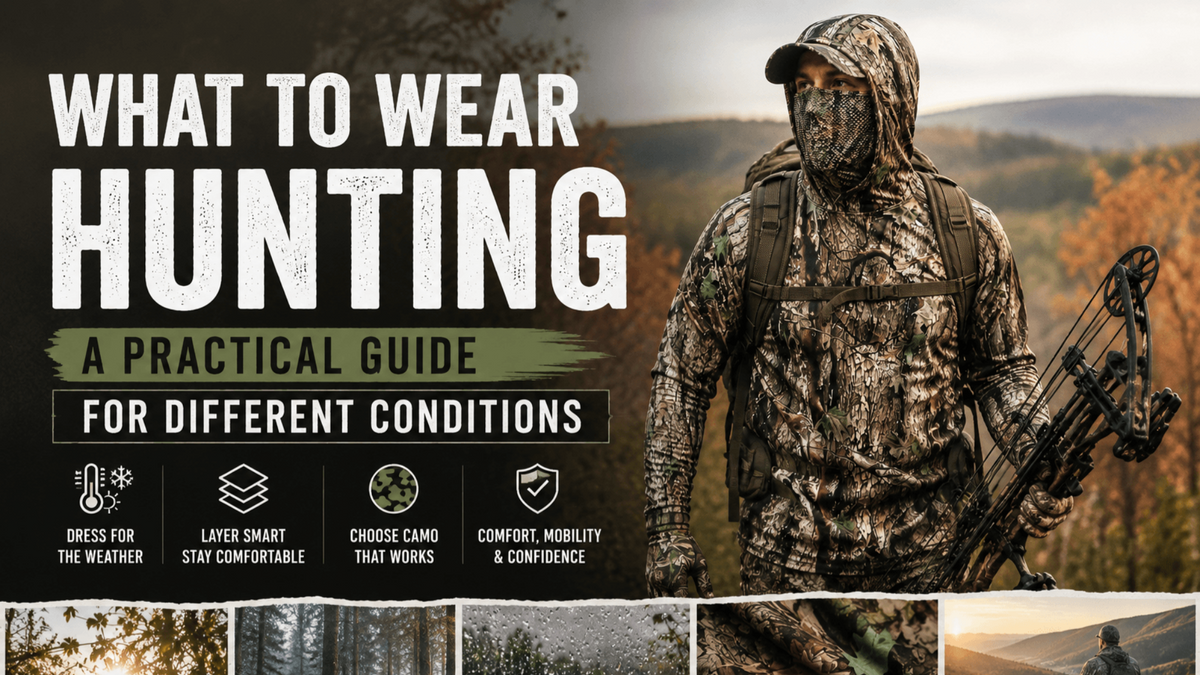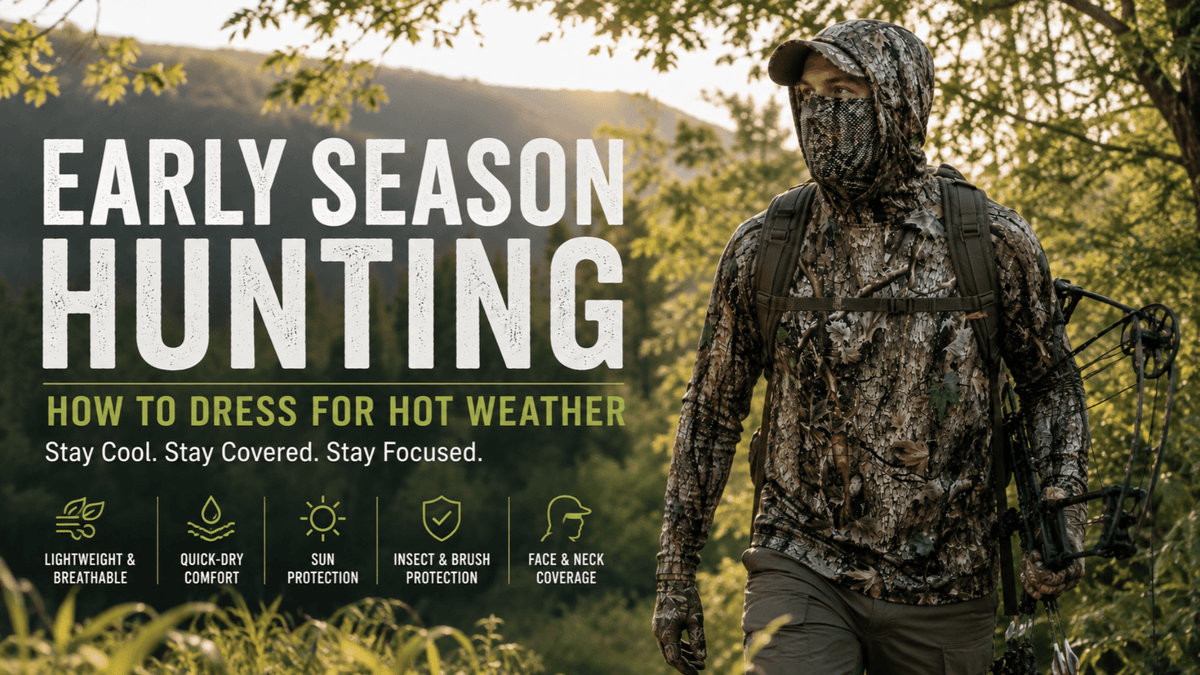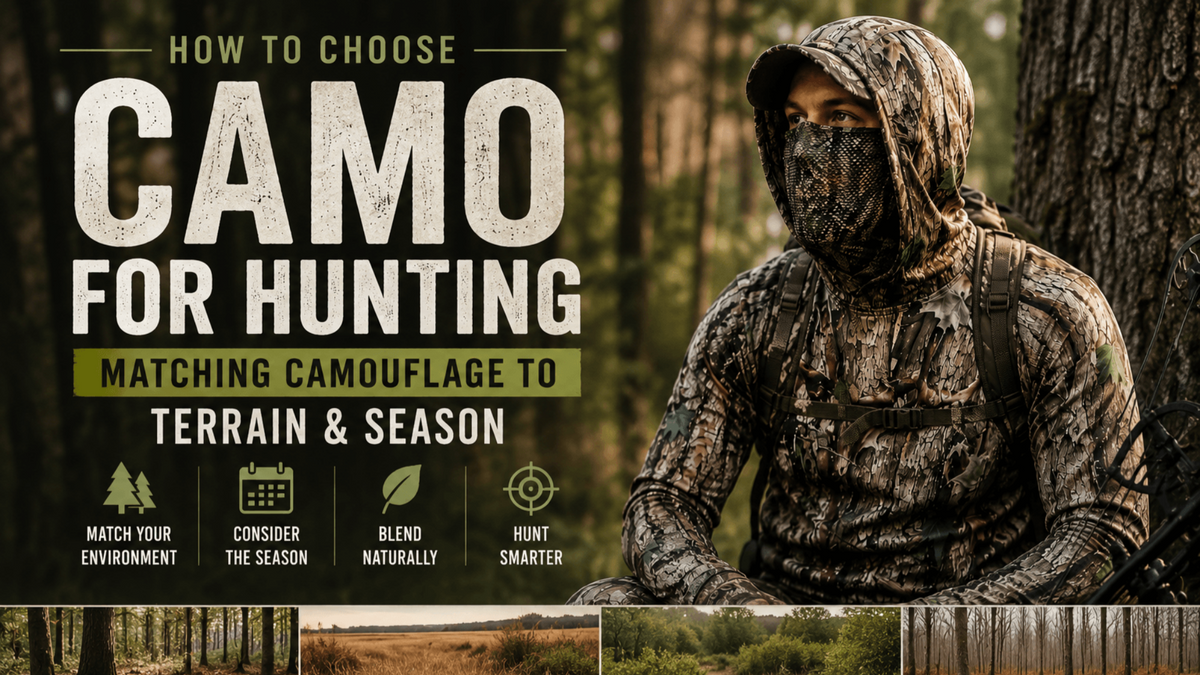
How to Choose Camo for Hunting: Matching Camouflage to Terrain and Season
Woodland Hunting: Bark, Branches and Leaves
Wooded environments are one of the most natural places for traditional hunting camouflage.
Think hardwood forests, tree stands, wooded edges, and areas with heavy leaf litter.
Patterns containing combinations of:
- Bark
- Branches
- Brown leaves
- Gray
- Muted green
- Dark shadows
can work particularly well in these environments.
The goal is not necessarily to look exactly like one tree.
Instead, the mixture of vertical bark textures, irregular branches, and leaves helps disrupt the shape of the body against a complicated woodland background.
When bark-and-leaf camo makes sense
This type of pattern can be particularly useful when:
- Hunting from wooded ground positions
- Sitting near tree trunks
- Moving through hardwood forests
- Hunting areas with heavy leaf litter
- Vegetation is transitioning from green to brown
Green Camouflage: Best for Heavy Vegetation
Green camouflage tends to make the most sense when vegetation is still alive and dense.
Think:
- Early season
- Thick brush
- Green woodland
- Southern vegetation
- Areas with heavy foliage
During these conditions, brown-only camouflage may sometimes look darker than the surrounding environment.
Adding muted greens can help the clothing blend into the vegetation.
However, more green is not automatically better.
Bright or highly saturated green can stand out.
Natural environments usually contain relatively muted colors, especially when viewed from a distance.
That is why subdued olive, forest green, and mixed green-brown patterns tend to be more versatile than extremely bright greens.
Brown and Gray Camo for Late-Season Conditions
As autumn progresses, many hunting environments lose much of their green vegetation.
Leaves fall.
Grass dries.
Tree trunks become more exposed.
The landscape gradually shifts toward:
- Brown
- Tan
- Gray
- Dark brown
- Muted orange
This is when camouflage with more bark, branches, dead leaves, and neutral tones can become particularly useful.
A pattern that worked perfectly in dense September vegetation may appear surprisingly green by November.
That does not necessarily mean you need an entirely new hunting wardrobe.
It simply means season should be considered when choosing which camouflage pieces to wear.
Open Fields and Grassland Need Different Camo
Not every hunter spends the day surrounded by trees.
Dove hunting, upland hunting, and other types of hunting can place you around:
- Agricultural fields
- Dry grass
- Brush
- Fence lines
- Field edges
- Open terrain
Traditional dark woodland camouflage may appear too heavy in these environments.
Patterns containing lighter:
- Tan
- Brown
- Beige
- Dry-grass colors
may fit the surroundings more naturally.
This illustrates an important rule:Choose camouflage for your background—not simply for the animal you are hunting.
Two hunters pursuing the same species in different states may need completely different camouflage.
Does Camo Pattern Matter for Deer Hunting?
Camouflage can certainly be useful for deer hunting, but hunters sometimes put too much attention on finding the “perfect” deer pattern.
Your overall hunting setup matters more.
Consider:
- Your position
- Movement
- Background
- Wind
- Silhouette
- Local regulations
A hunter sitting against a tree with reasonably appropriate camouflage and minimal movement may be less noticeable than someone wearing an extremely realistic pattern while standing exposed against the skyline.
Early-season deer hunting may favor greener patterns.
Later in the season, browns, grays, bark, and fallen-leaf patterns may fit better.
For a broader clothing setup, see our guide to What to Wear Hunting.
What About Turkey Hunting?
Turkey hunting is one situation where hunters often pay particularly close attention to visual concealment.
Exposed areas such as the:
- Face
- Neck
- Hands
can contrast strongly with a woodland background.
That is why many turkey hunters use more complete camouflage coverage.
A hood, gloves, or face covering can help reduce exposed skin when appropriate.
Camouflage selection should again reflect the season.
Spring turkey environments can contain considerably more green vegetation than many fall hunting environments.
For a complete setup, read:
Dove Hunting Is Different
Dove hunting frequently takes place in more open environments and warmer weather.
That changes clothing priorities.
Rather than building an elaborate head-to-toe woodland camouflage system, hunters may benefit more from clothing that combines:
- Muted colors
- Reasonable concealment
- Lightweight fabric
- Breathability
- Sun coverage
This is especially relevant during early dove seasons when temperatures can still be high.
This creates another connection between your hunting articles instead of leaving each blog post isolated.Pattern Matters — But Movement Matters More
One of the easiest mistakes is focusing so much on camouflage that movement gets ignored.
Imagine someone wearing an extremely realistic woodland pattern.
If they suddenly:
- Turn their head
- Raise an arm
- Stand up
- Adjust equipment
that movement can still attract attention.
Good camouflage works best when combined with controlled movement.
When possible:
- Use natural cover.
- Avoid unnecessary movement.
- Keep your silhouette away from exposed skylines.
- Position yourself against a visually complicated background.
- Move slowly when movement is necessary.
Think of camouflage as helping your surroundings do more of the concealment work.
Don't Forget Your Face and Head
You can wear camouflage from your shoulders to your boots and still leave one highly visible area exposed.
Your face.
This is especially noticeable when the rest of your clothing is dark or patterned.
There are several ways hunters deal with this:
- Face paint
- Separate face masks
- Neck gaiters
- Hooded face coverings
- Integrated face masks
Each approach has advantages.
For hunters who prefer carrying fewer separate pieces, an integrated face cover can be convenient.
It can remain lowered while walking and be pulled up when additional concealment is useful.
WELIGU's Men's Camo Hunting Hoodie with Face Cover is designed around this idea, combining a lightweight hunting hoodie and adjustable facial coverage in one piece.
Comfort Still Comes First
There is little benefit in wearing perfect camouflage if the clothing makes you miserable after an hour.
Hunting often involves switching between very different activity levels.
You might:
Walk → stop → sit → walk again.
That makes temperature regulation important.
For early-season and active hunting, look for clothing that provides:
- Breathability
- Quick-drying performance
- Lightweight construction
- Freedom of movement
Heavy camouflage designed for cold conditions may be unnecessary during warm September hunts.
Likewise, a lightweight hunting shirt alone will not be enough when temperatures drop significantly.
The solution is layering.
Start with lighter clothing and add insulation according to conditions.
Should All Your Camo Match?
Not necessarily.
Your shirt, pants, hat, and other pieces do not have to come from exactly the same camouflage collection.
In many environments, nature itself does not match perfectly.
There are:
- Green leaves
- Gray trunks
- Brown branches
- Tan grass
- Dark shadows
all within the same view.
A camouflage shirt paired with neutral brown or olive pants can still create an effective outdoor setup.
What About Solid Colors?
You do not always need camouflage.
Muted solid colors can work well in many hunting situations.
Common outdoor colors include:
- Olive
- Brown
- Tan
- Gray
- Dark green
Solid colors are also versatile because the same clothing can often be used for:
- Hiking
- Camping
- Fishing
- Yard work
- General outdoor activities
For hunters who do not want a closet full of specialized clothing, combining a few camouflage pieces with practical solid-color outdoor clothing can make sense.
How Many Camo Patterns Do You Actually Need?
Probably fewer than outdoor marketing sometimes suggests.
For many recreational hunters, one versatile woodland pattern plus a practical layering system can cover a significant portion of the season.
Instead of buying a completely different outfit for every situation, focus first on clothing that is:
Comfortable → functional → appropriate for your most common terrain.
Then add specialized pieces only when there is a genuine need.
That approach creates a hunting wardrobe you are more likely to actually use.