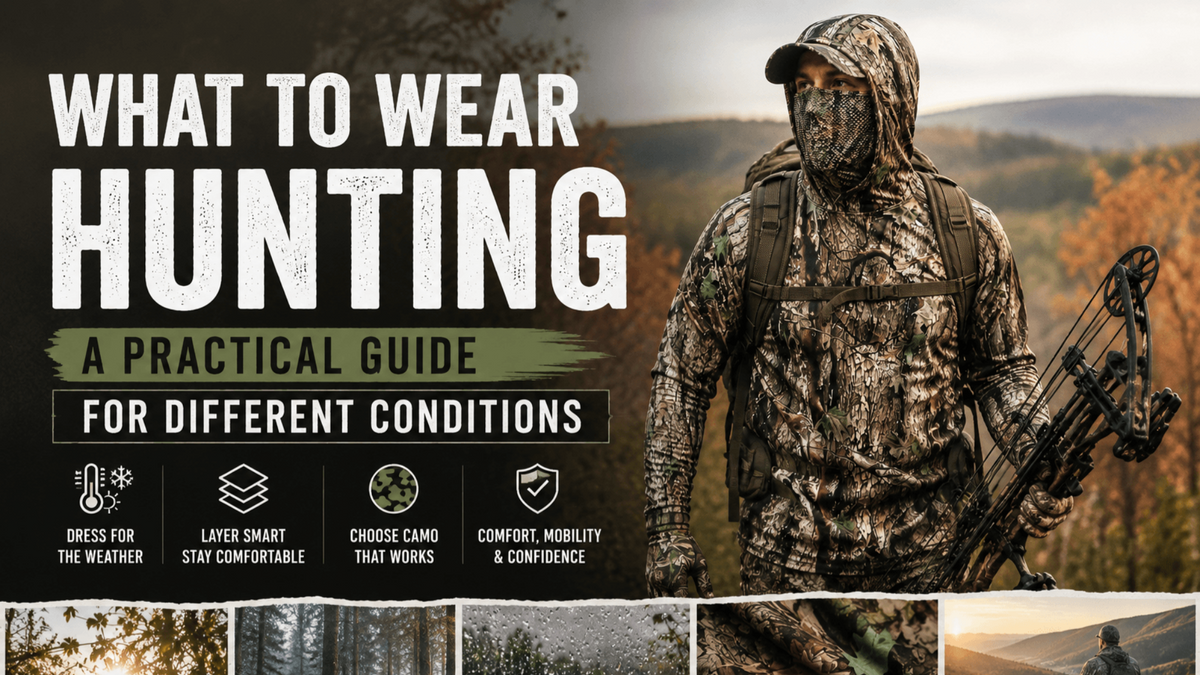
What to Wear Hunting: A Practical Guide for Different Conditions
What to Wear for Early-Season Hunting
Early season often brings some of the most challenging clothing conditions.
The morning may begin comfortably, but temperatures can rise quickly. Humidity, insects, and direct sunlight add to the problem.
For warm-weather hunting, prioritize:
- Lightweight fabric
- Breathability
- Quick-drying performance
- Comfortable movement
- Useful sun coverage
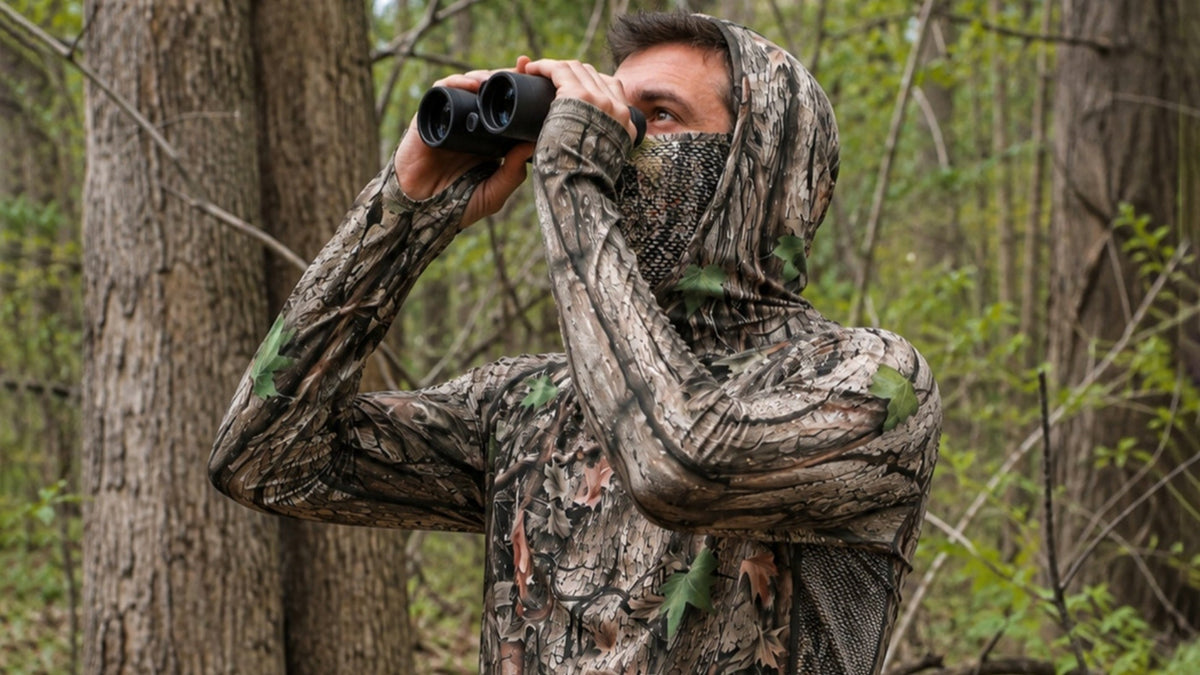
Long sleeves may seem unusual in hot weather, but a lightweight long-sleeve hunting shirt can provide coverage from sun, brush, and insects without the weight of a traditional heavy shirt.
The key word is lightweight.
A thick cotton shirt and a performance long-sleeve hunting shirt may provide similar coverage but feel completely different during a warm afternoon.
For more detail, link the words early-season hunting clothing to your existing warm-weather hunting article once published.
What to Wear When Temperatures Start Dropping
As the season progresses, your clothing system should change gradually rather than jumping immediately to heavy winter gear.
Start adding insulation in removable layers.
A practical setup might include:
Base layer
For moisture management and next-to-skin comfort.
Hunting shirt or lightweight hoodie
Your main camouflage or outdoor layer.
Insulating mid-layer
Added when temperatures require it.
Outer shell
For wind or wet weather when necessary.
The advantage of this system is flexibility.
If the temperature rises or you begin walking, you can remove a layer instead of spending the rest of the hunt overheating.
When you stop moving, put it back on.
Simple layering works because hunting conditions rarely remain constant all day.
Does Hunting Clothing Have to Be Camouflage?
Not always.
Camouflage can be useful, especially when concealment is important, but hunting clothing does not necessarily have to be a perfectly matched camo set.
Earth tones such as brown, olive, gray, and muted green can work in many outdoor environments.
What matters is how your clothing interacts with your surroundings.
Consider:
- Background color
- Vegetation
- Light and shadow
- Season
- How exposed your position will be
A dark forest environment may call for something different from dry grassland or a harvested field.
Rather than asking whether one camouflage pattern is universally best, ask:
What will be behind me when I am hunting?
That usually leads to a better choice.
Choose Camo That Matches the Environment
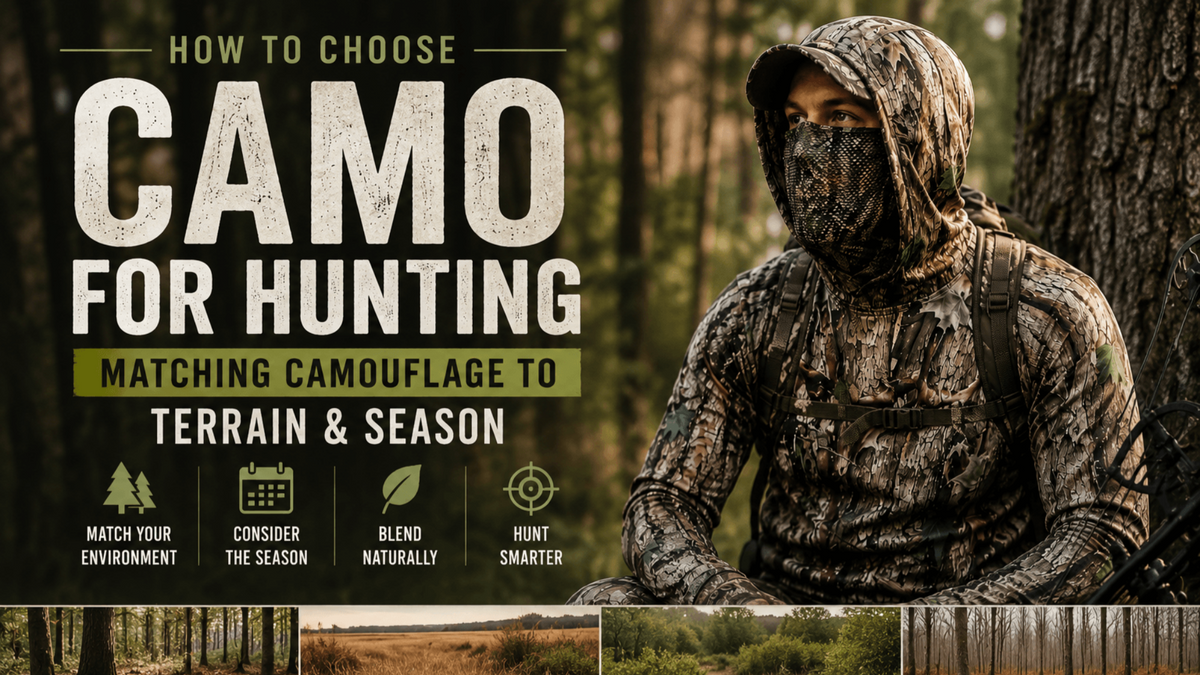
Camouflage is most useful when the pattern belongs in the landscape around you.
A bark-and-leaf pattern can work naturally in wooded areas with visible trunks, branches, and leaf litter. Greener patterns may make more sense where vegetation remains dense.
In dry, open terrain, lighter brown and grass-oriented patterns may fit better.
There is no reason to force one pattern into every hunting situation.
It also does not matter much if every piece comes from the exact same camouflage collection.
A patterned hunting shirt combined with brown or olive pants can still create a practical outdoor setup.
If you want a deeper guide, this is where your future article How to Choose Camo for Different Hunting Environments should be internally linked.
Think About Movement as Much as Camouflage
The best camouflage pattern in the world cannot make large, sudden movement disappear.
That is why fit matters.
A hunting shirt should allow you to:
- Raise your arms comfortably
- Turn your shoulders
- Sit without bunching
- Walk without restriction
- Carry gear naturally
If a shirt constantly pulls across your shoulders or requires adjusting every few minutes, it is not helping.
Comfort and concealment are more closely connected than they may seem.
When your clothing feels natural, it is easier to remain still and focus on what is happening around you.
When Does a Hood Make Sense?
A lightweight hood can make a hunting shirt more versatile.
You do not have to wear it constantly.
Leave it down when it is not needed and pull it up when you want additional coverage around the neck and head.
Unlike a heavy sweatshirt hood, a lightweight performance hood is designed to provide coverage without adding substantial insulation.
This can be particularly useful during early-season hunting when sun and insects may be as relevant as cold weather.
What About an Integrated Face Cover?
An integrated face cover is another optional feature that can reduce the number of separate items you carry.
This is particularly relevant for hunting situations where exposed facial skin may stand out against the surrounding vegetation.
A built-in cover can be pulled up when concealment is useful and lowered when it becomes unnecessary.
The important part is comfort.
A face covering should not:
- Interfere with vision
- Restrict breathing unnecessarily
- Affect hearing
- Interfere with safe equipment handling
If it becomes uncomfortable, having the ability to lower it quickly is valuable.
Choose Hunting Pants for the Terrain
Pants should be selected according to the ground you will actually be covering.
For warm conditions, lightweight outdoor pants can provide a useful balance between coverage and comfort.
More rugged terrain may require tougher material that can deal with:
- Brush
- Branches
- Rocks
- Tall grass
Cold conditions call for additional insulation or layering.
As with your shirt, freedom of movement matters.
Try sitting, crouching, stepping up, and bending your knees before deciding whether a pair of pants is comfortable enough for a full day outside.
Footwear Can Make or Break the Day
A carefully planned clothing system will not help much if your feet are uncomfortable.
Choose boots according to:
- Terrain
- Walking distance
- Moisture
- Temperature
Wet areas may require waterproof footwear, while warmer and drier conditions may favor something lighter and more breathable.
Whatever you choose, make sure the boots are broken in before a long hunt.
Opening morning is not the ideal time to discover a new pair rubs your heel.
Don't Forget Rain and Wind
Weather can change faster than expected.
A lightweight rain shell can be useful when showers are possible, while a wind-resistant layer may make a considerable difference during exposed hunts.
These pieces do not always need to be worn.
Packable clothing is valuable because it stays out of the way until conditions change.
Again, the goal is flexibility rather than carrying the heaviest possible gear.
Hunter Orange and Local Regulations
Camouflage and earth tones are not the only considerations when getting dressed.
Depending on the state, season, species, and hunting method, hunter-orange or other visibility requirements may apply.
Those rules vary significantly.
Always check the current regulations published by the relevant state wildlife agency before heading into the field.
Do not assume that clothing appropriate for one hunt—or one state—meets the requirements for another.
Legal visibility requirements take priority over camouflage preferences.
What Should You Wear for Different Types of Hunting?
Different hunts create different clothing priorities.
Dove Hunting
Early dove season often means heat and open sun.
Prioritize lightweight clothing, breathability, moisture management, and sun coverage.
Turkey Hunting
Turkey hunting places greater emphasis on visual concealment, especially around the face and hands.
A lightweight camo setup, face coverage, and clothing that allows you to sit quietly can be especially useful.
Deer Hunting
Deer seasons often extend across much wider temperature ranges.
Early-season deer hunts may require lightweight clothing, while later hunts can require insulating layers and greater weather protection.
This topic deserves its own guide later in the Hunting Journal.
Duck and Waterfowl Hunting
Water, wind, mud, and cold conditions can make waterproofing and insulation more important.
Again, the environment changes the clothing priorities.
This is why one universal “best hunting outfit” does not really exist.
Keep the System Simple
It is easy to turn hunting clothing into an expensive collection of specialized pieces.
You do not necessarily need to.
A simple wardrobe can cover many conditions:
- Lightweight long-sleeve hunting shirt
- Comfortable outdoor pants
- Base layer
- Insulating mid-layer
- Packable rain or wind shell
- Hat
- Gloves when needed
- Appropriate boots
Add or remove pieces depending on the hunt.
Clothing that works across fishing, hiking, camping, and other outdoor activities can also offer better value than gear designed for only one narrow situation.