What to Wear for Early Season Hunting: A Practical Guide for Warm Weather
1. Start With a Lightweight Hunting Shirt
Your shirt is one of the most important pieces of an early-season setup.
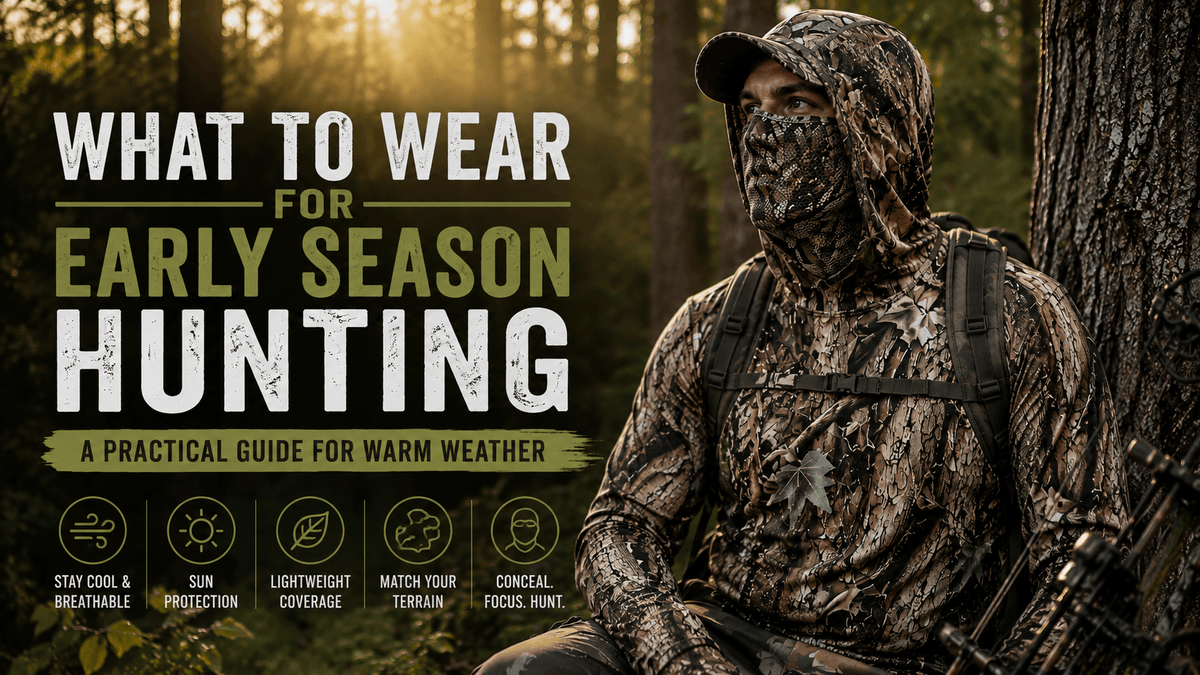
Instead of starting with an insulated jacket, consider a lightweight long-sleeve hunting shirt or performance hoodie.
Look for fabric that feels light against the skin and allows heat and moisture to escape.
Synthetic performance fabrics can be particularly useful because they generally dry much faster than heavy cotton.
A good warm-weather hunting shirt should provide enough coverage for brush and sunlight without feeling like a traditional hunting jacket.
Why Long Sleeves Still Make Sense
It might seem logical to wear short sleeves when it's hot.
But lightweight long sleeves have several advantages in the field.
They can help protect your arms from direct sunlight, vegetation, insects, and exposed skin that may stand out against your surroundings.
The important distinction is lightweight coverage rather than heavy coverage.
2. Pay Attention to Ventilation
Breathability isn't just about fabric.
Construction matters too.
Ventilated areas—especially around the sides, underarms, or back—can allow additional airflow where heat tends to build up.
This becomes increasingly valuable when you're:
walking to a hunting location,
setting up equipment,
moving through wooded terrain,
or hunting during warmer afternoons.
Warm-weather turkey hunting apparel, for example, is commonly designed around breathable layers and moisture management rather than insulation.
If you're choosing between two otherwise similar hunting shirts for early season, the one with better ventilation will often be the more practical option.
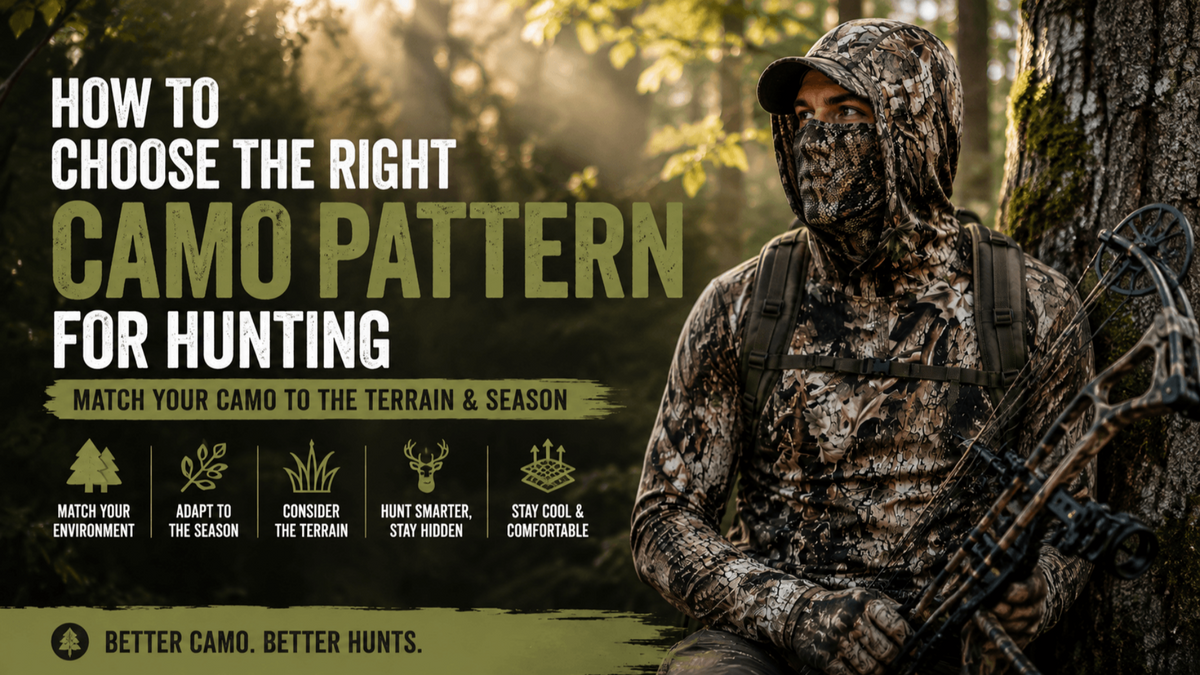
3. Match Your Camo to the Environment
Camouflage shouldn't be selected only because a pattern looks good.
Think about where you'll actually be hunting.
Hardwood Woods
Look for patterns containing combinations of:
brown + bark + branches + muted green
These patterns work particularly well when you're sitting against mature trees or moving through wooded terrain.
Dry or Late-Summer Terrain
Consider patterns containing:
tan + brown + gray + muted vegetation
A very bright green camouflage pattern may actually create more contrast in dry late-summer environments.
Green Vegetation
If you're hunting around dense vegetation, brush, or areas that still have substantial foliage, patterns with additional muted green can help blend the hunter into the surrounding vegetation.
The important principle is:
Match the pattern to the background—not simply the season printed on the product label.
Different stages of foliage can favor substantially different camouflage palettes. Outdoor Life, for example, distinguishes between mixed tree-and-leaf patterns for earlier conditions and greener patterns once vegetation becomes much fuller.
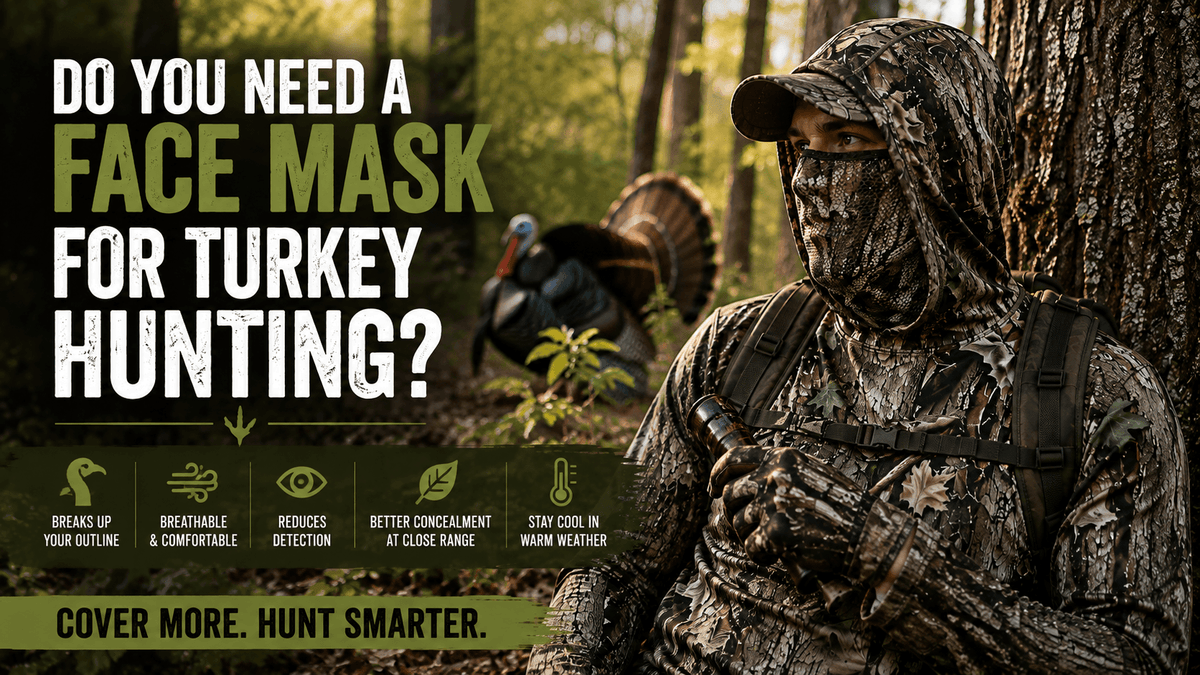
4. Don't Forget Your Face
A camouflage shirt can cover most of your upper body while leaving one particularly visible area exposed:
your face.
This can matter when hunting animals with strong visual awareness, especially turkey.
Face coverings can help reduce the visual contrast between exposed skin and the surrounding camouflage.
But during warm weather, a heavy face mask can quickly become uncomfortable.
A better early-season option is often a lightweight, breathable face covering.
Some hunting hoodies integrate the face covering directly into the garment, eliminating the need to carry a separate mask.
That creates a simple system:
hood down when moving → hood up when needed → face covered when approaching or waiting.
For hunters who prefer carrying less equipment, that can be especially convenient.
5. Keep Your Lower Body Lightweight Too
There's little benefit in wearing a highly breathable shirt if you're pairing it with extremely heavy insulated pants.
For warm conditions, look for hunting pants that offer:
- Lightweight construction
- Reasonable abrasion resistance
- Comfortable mobility
- Breathability
- Enough room for unrestricted walking and sitting
Your terrain should influence the decision.
If you're crossing thick brush, durability becomes more important.
If you're spending most of the hunt sitting near an open field, lightweight comfort may matter more.
There isn't one perfect pair of pants for every hunt.
6. Think in Layers—even When It's Hot
Layering isn't only for winter.
Early-season temperatures can still change significantly between dawn and afternoon.
You might start your hunt in cool morning air and find yourself sitting in much warmer conditions a few hours later.
A simple system works well:
Light base layer → lightweight hunting shirt/hoodie → packable outer layer if needed
As temperatures rise, remove the outer layer.
That is usually more comfortable than wearing one heavier garment all day.
Spring turkey hunting presents the same challenge: cooler starts followed by warmer conditions, making adaptable layering useful rather than relying on one heavy garment.
7. Reduce Unnecessary Movement
Good camouflage isn't only about the pattern you're wearing.
Movement matters.
Constantly adjusting your sleeves, swatting insects, wiping sweat, or pulling at uncomfortable clothing can make concealment much less effective.
Comfort therefore becomes part of concealment.
When you're comfortable, you're more likely to stay still.
This is one reason lightweight hunting clothing can be valuable during early season.
The goal isn't simply to feel cooler.
It's to stay comfortable enough that your clothing doesn't become a distraction.
A Simple Early-Season Hunting Setup
You don't need an enormous gear list.
For many warm-weather hunts, a straightforward setup can work well:
Upper body: Lightweight breathable camouflage hoodie or long-sleeve shirt
Face: Lightweight face covering or integrated face mask
Hands: Thin camouflage gloves when additional concealment is useful
Lower body: Lightweight hunting pants
Feet: Terrain-appropriate hunting boots
Extra layer: Packable wind or rain shell
Add or remove pieces depending on temperature, vegetation, insects, and the amount of walking you'll be doing.
What About Dove Hunting?
Dove season is a particularly good example of why hunters shouldn't automatically reach for heavy hunting apparel.
Many early dove hunts take place in warm, exposed conditions.
In these environments, staying cool and managing sun exposure may be more important than wearing elaborate head-to-toe camouflage. Muted earth tones or lightweight camouflage can both work depending on the hunting setup and available cover.
That makes breathable long sleeves especially practical.
What About Turkey Hunting?
Turkey hunting places greater emphasis on concealment.
Turkeys have excellent vision, so hunters commonly pay more attention to exposed skin, face coverage, hands, movement, and matching camouflage to the surrounding vegetation.
A lightweight camouflage hoodie with a breathable face covering can therefore make particular sense when conditions are warm enough that heavier turkey gear becomes uncomfortable.
One important safety consideration: turkey hunters should be particularly cautious with red, white, and blue clothing, since those colors can resemble coloration on a gobbler's head.
Always follow the hunting regulations and safety requirements for your state and hunting area.
Comfort Is Part of Good Hunting Gear
Hunters sometimes think about camouflage and comfort as two separate things.
During early season, they're closely connected.
A pattern can match your environment perfectly, but if the garment makes you hot enough that you're constantly moving and adjusting your clothing, that camouflage loses some of its advantage.
Good warm-weather hunting clothing should therefore balance:
Concealment + Breathability + Coverage + Mobility
Not maximum insulation.
Not maximum bulk.
Just enough protection and concealment for the conditions you're actually hunting in.